In the tech universe, grand deals aren't uncommon. Yet, this one momentarily halted the industry, provoking contemplation worldwide. The immensely popular AI entity, and ChatGPT creator, purchased a small startup. A mere four-member team. A cozy office. Their product is still nascent. Yet, the valuation hit a staggering ₹900 crores.
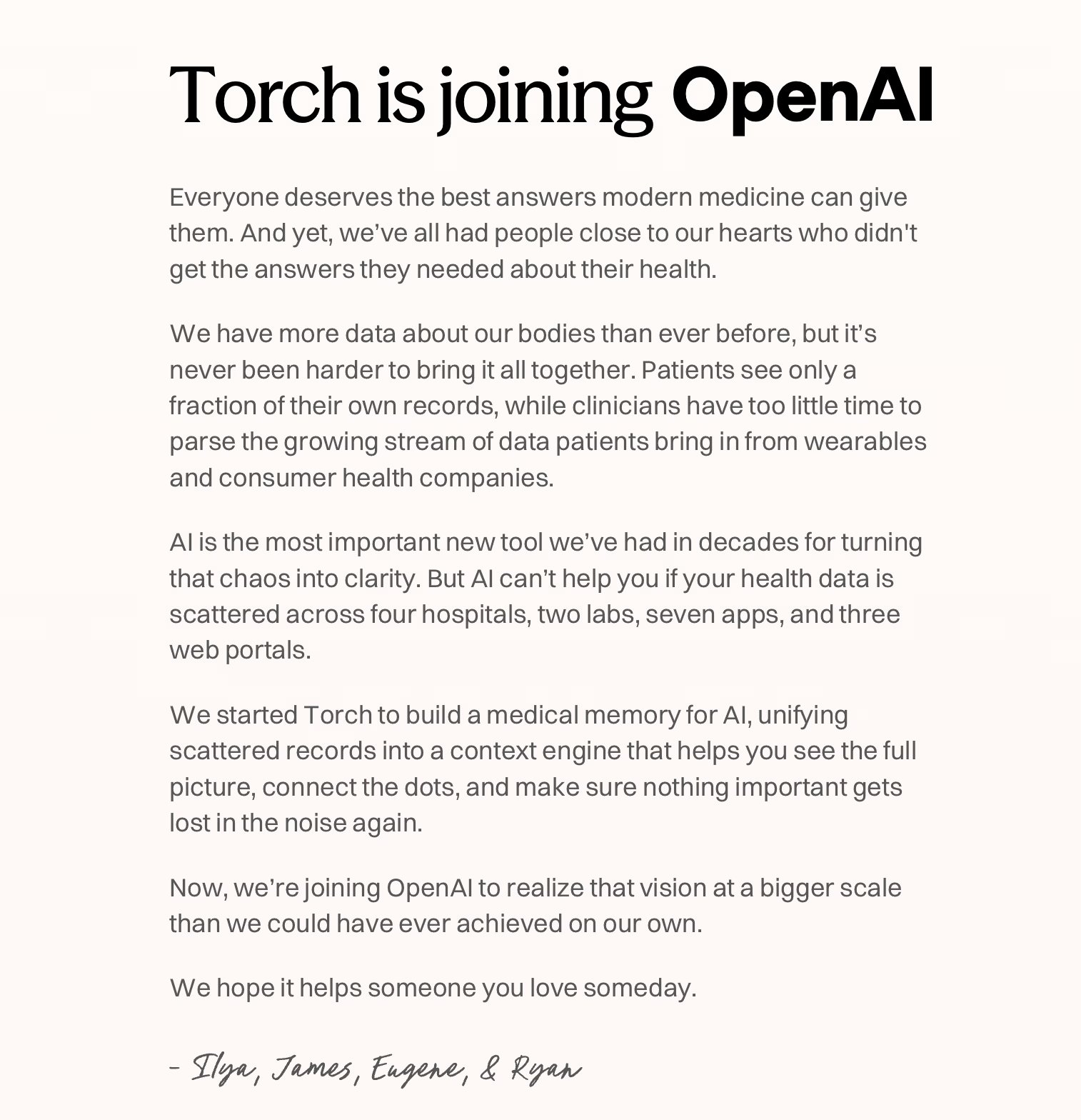
This startup, named Torch, focuses on health tech. Its mission? To interpret human health-related data cohesively. Be it reports, medication lists, doctor communications, or fitness app data. The goal? To amalgamate everything within a singular system, enabling AI to grasp human health in context.
Now, this compact team is directly ensconced within the world’s largest AI company. Their mission is freshly redefined: Transforming chat-based AI into a health assistant.
A four-member team valued above typical film budgets raises eyebrows. Why such a hefty sum?
AI and Health
Currently, health data is the world's most fragmented dataset. Different hospitals. Varied apps. Diverse reports. Multiple files. Individuals struggle to consolidate their complete health records. For artificial intelligence, the challenge is notably greater.
The tech behind
was developed to address this very challenge—unifying health data. Not for machines to merely answer questions but to understand an individual's full medical narrative and analyze their health.
The AI realm aspires to transcend mere question-answering. The next frontier is health, where individuals seek comprehension of their reports, inquire about medication effects, and wish to discern fitness and ailment patterns. Increasingly, they hope for these insights from a digital assistant, as well as a doctor.
Herein lies the essence of this acquisition. It's not just a company purchase; it's an endeavor to secure a premier vantage point in the future health market.
Source: aajtak
Company Acquisition or Talent Acquisition?
This transaction is being dubbed a 'talent acquisition' in industry lingo, implying a focus more on the team than the technology. The four members at Torch are veterans of significant health tech projects, possessing deep understanding of hospitals, clinic networks, and medical data systems. This expertise will now be harnessed in AI company's health projects.
Recently, OpenAI initiated a health segment where users upload health reports and query AI. From deciphering report meanings to ascertaining elevated levels and advising medication precautions, this service remains in its infancy. Yet, with Torch’s tech integration, the service promises to become increasingly context-based and personalized.
AI won't merely dispense information; it will evolve to comprehend and respond to personal health narratives.
The impact of OpenAI's acquisition extends beyond technology. It is a beacon for the entire health industry. AI isn’t destined solely for chatting or photo editing. It might soon advise medically, track health, and provide preliminary disease recognition.
Consequently, major tech firms are aggressively investing in health sectors. Fitness data. Medical records. Wearable devices. Smart clinics. Everything now links with AI. The company establishing a strong foothold first will dominate the next decade. The acquisition of a four-person team for nine hundred crores is emblematic of this race.
Privacy Risks...
Nonetheless, a pertinent question arises: When personal health data integrates with AI systems, what about confidentiality and security? Will people feel comfortable sharing their medical reports with a tech company? Will AI advisories reduce doctor visits? These questions remain unanswered, heralding one of the most significant future debates.
It will be fascinating to observe how OpenAI, post this acquisition, integrates health features into ChatGPT and the results thereof.