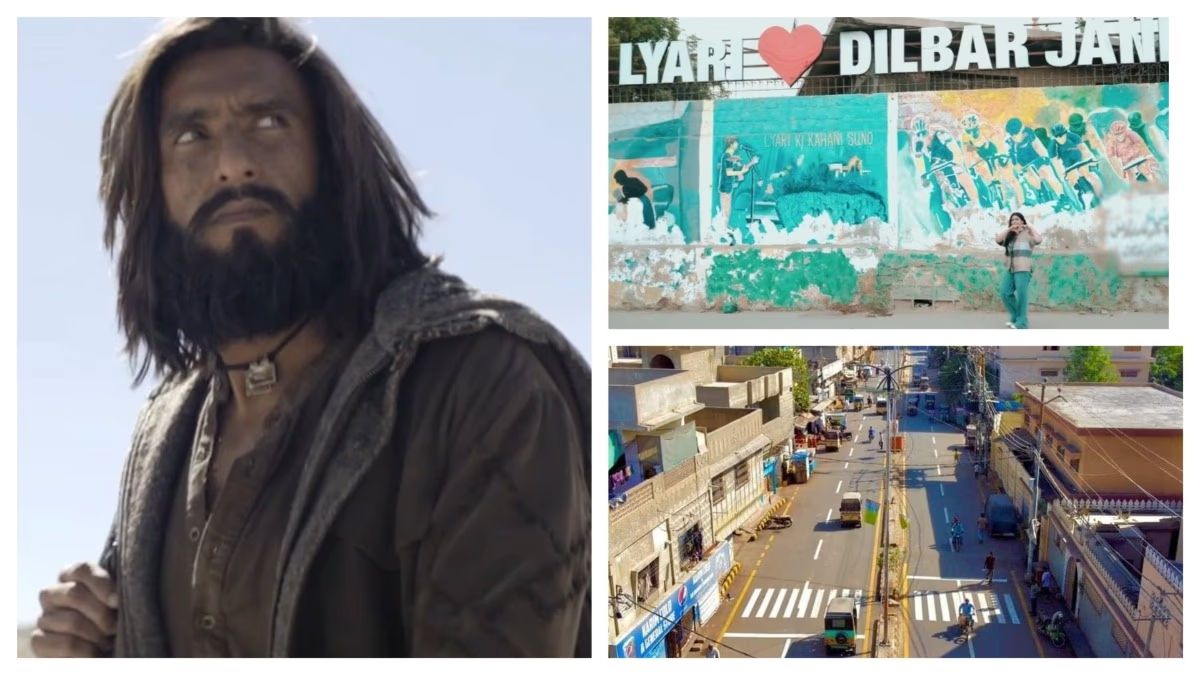
Lyari Town in Karachi is back in the spotlight due to the film 'Dharundhar'. In Pakistan, there’s an uproar over its depiction of characters and events. Some communities claim the film portrays the area solely as a hub of crime, neglecting its identity rooted in sports, boxing, cultural heritage, and hard-working people. Conversely, some argue Lyari's gang-war reality cannot be concealed.
Where is Lyari?
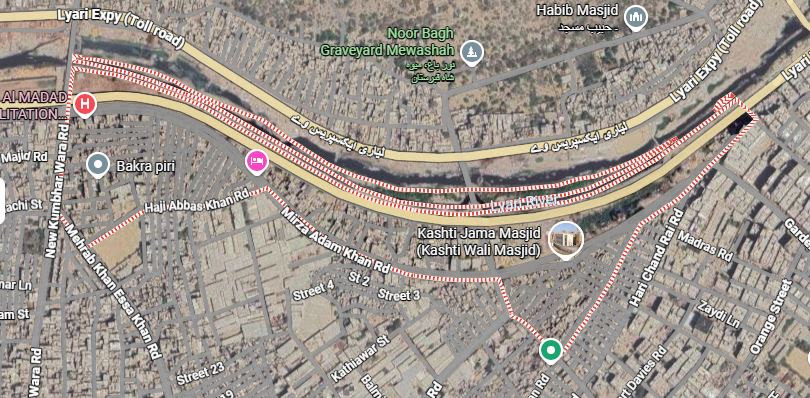
Nestled in central Karachi, Lyari is often referred to as the 'Mother of Karachi'. Originally settled by Sindhi fishermen and Baluch nomads, it quickly became home to various other communities. Over 200 years ago, refugees from Iran's Balochistan settled here, and Sindhi traders expanded their businesses. Founded in 1795, Karachi also attracted Muslims from Kutch-Gujarat. This community, situated along Lyari River, covers just six square kilometers but houses over a million people, marking it as one of Karachi's densest populations.
Source: aajtak
Why is there so much uproar about Lyari?
Lyari's residents have long criticized the media and cinema for branding them as merely a 'Gangster Town'. Following 'Dharundhar', this complaint resurfaced. The film frequently references Lyari’s streets, old neighborhoods, and notorious gangs, evoking mixed reactions.
In conversation with BBC, some locals noted that the film once again framed the area as a 'Crime Hub', adversely affecting daily life, education, and businesses.
Meanwhile, others boldly state that yes, this was Lyari's history. How could illustrating it be wrong if Lyari’s gang wars lasted 40–50 years? They argue that if films about global mafias, cartels, and gang-lords are made, why balk at Lyari's portrayal?
This debate has propelled Lyari back into national headlines, reminiscent of the discussions sparked in Jharkhand and Bihar after the release of 'Gangs of Wasseypur'.
The Beginning of Lyari’s Gang-Wars: Why and How?
Poverty, unemployment, and political neglect laid the foundation for crime in Lyari. From the 1980s to 2013-14, it was synonymous with the Noora Gang, Raisani Network, Rehman Dakait, Uzair Baloch, and Arzi Baji, marking it as Pakistan’s most infamous gang-war zone.
Primarily, Lyari gained notoriety for its arms and drug networks, with smuggling thriving via port routes. Karachi politics, especially the local leadership of Bhutto's PPP, allied with gangsters, bolstering gang power. The battles for territory and extortion continue to this day. Despite attempts to frame it as a narrative against Pakistan by India, the truth is that even a report on Dawn’s website recently highlighted how Lyari’s gangs, Wasiyullah Lakho, Samad Kathiawari, and Zameen Chhanga, were involved in extortion across Karachi. This year, 118 extortion cases came to light, significantly involving these gangs. Five gangsters were killed in encounters during police operations, while over 30 criminals remain at large. Shootings and murders in Lyari no longer surprise anyone.
Significant Figures of Lyari, Not Just Imaginative Names
1. Rehman Dakait -
Portrayed by Akshay Khanna in 'Dharundhar'. Lyari’s most notorious figure. Emerging from the Baluch community, Rehman inspired fear across the 1990s and 2000s with his stories of extortion, drugs, murders, and political alliances. He was killed in a police encounter in 2010.
2. Uzair Baloch -
Played by Ranveer Singh in ‘Dharundhar’. Regarded as Rehman Dakait’s successor. Accused of associations with Lyari's gangsters, political networks, and Iran’s smuggling groups. Arrested in 2016, he faces several court charges. His influence in Lyari was akin to ruling the area.
3. SP Chaudhry Aslam -
Sanjay Dutt depicts him in the film. The renowned Karachi police officer tasked with eradicating Lyari’s gangs. He joined Karachi Police in the 80s as an ASI and was frequently embroiled in controversies. Following the Lyari operation, he was assassinated by the TTP in 2014.
The Lyari Operation (2013–14): Aiming for Gang Cleansing
Pakistan Rangers and police launched a large-scale operation, significantly suppressing the gang-war. Yet, total eradication remains unclaimed. Karachi Police and Pakistan Rangers orchestrated a major crackdown on the Uzair Baloch Network, Rehman Dakait Gang, and Baba Ladla Group, aiming to dismantle parallel gangster-governments. In September 2013, the federal government authorized Rangers for a targeted operation. The operation involved extensive house searches, armed encounters, and seizures over several months, similar to the post-1993 Mumbai blasts targeting Dawood Ibrahim’s gang. Many of Uzair Baloch’s close associates, Baba Ladla’s companions, and several sub-commanders were captured or killed. Karachi's everyday violence—grenade attacks, shootings, and extortions—diminished considerably.
Two Faces of Lyari
On one side, there’s a new Lyari emerging from police operations: sports, young artists, new businesses, cafes, community building. On the other, the old Lyari persists—gang-wars, murders, smuggling, and political conspiracies. The release of 'Dharundhar' has once again brought these two images to the forefront.
The debate may continue. What cinema shows, what society desires, and where the truth stands is yet to be resolved. Clearly, Lyari is not merely a criminal story, nor has it fully rid itself of this legacy. It is a transforming region, poised between past wounds and new aspirations.