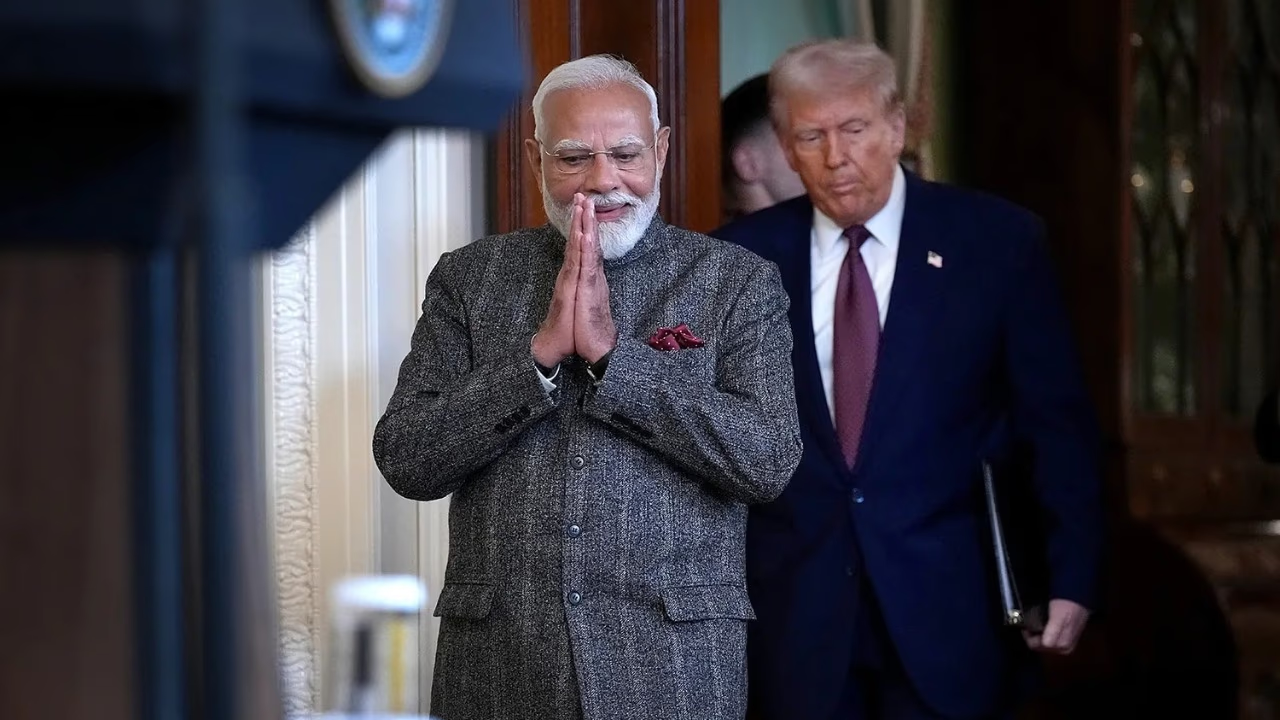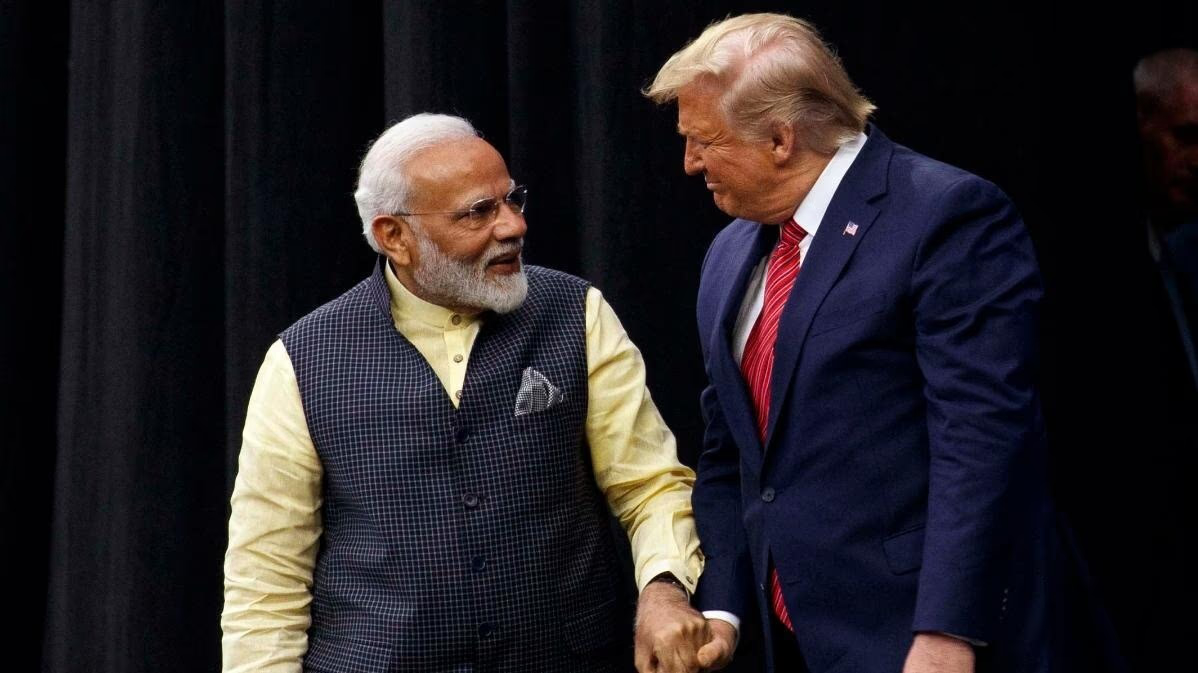
On Monday, President Donald Trump announced a groundbreaking trade deal with India, reducing tariffs on Indian goods in the U.S. from 50% to 18%. The additional 25% penalty associated with Russian oil purchases has also been removed. This is seen as a critical step towards easing tension in India-U.S. trade relations, yet crucial details of the deal are still unclear, leading to numerous questions and speculations.
Following the U.S. announcement, India confirmed the tariff rate has been lowered to 18%. However, there has been no explicit statement on halting Russian oil purchases, the $500 billion trade figure, or any intention to completely eliminate Indian tariffs.
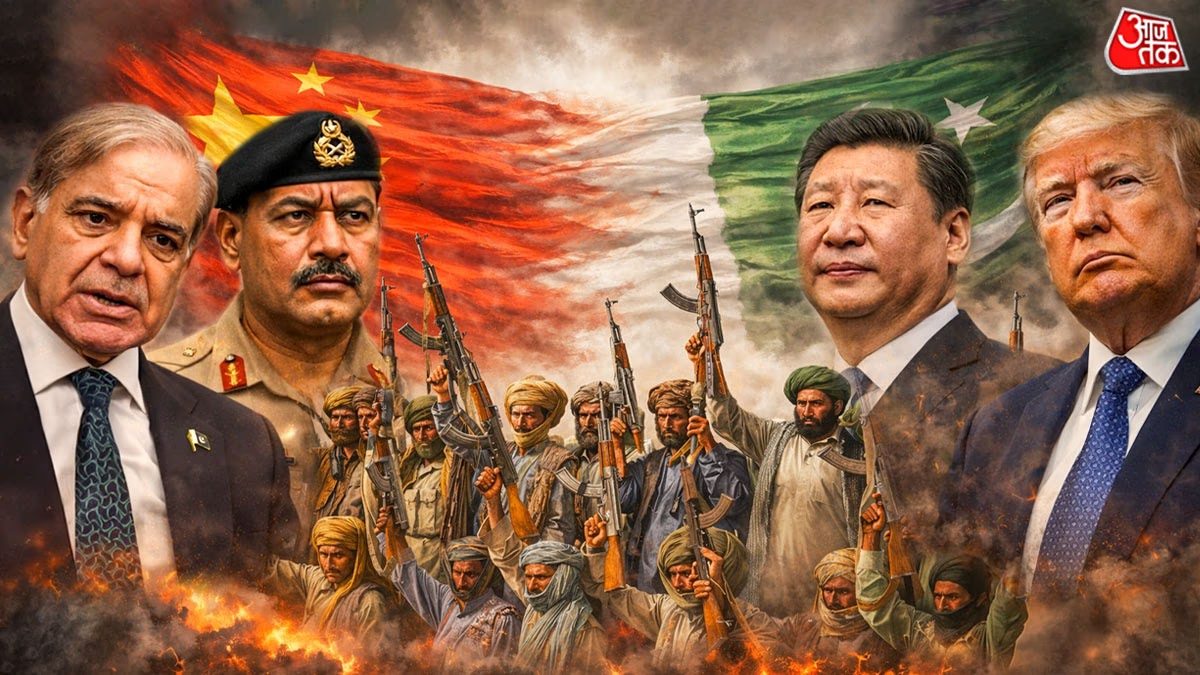
Source: aajtak
"Stock Market Surge"
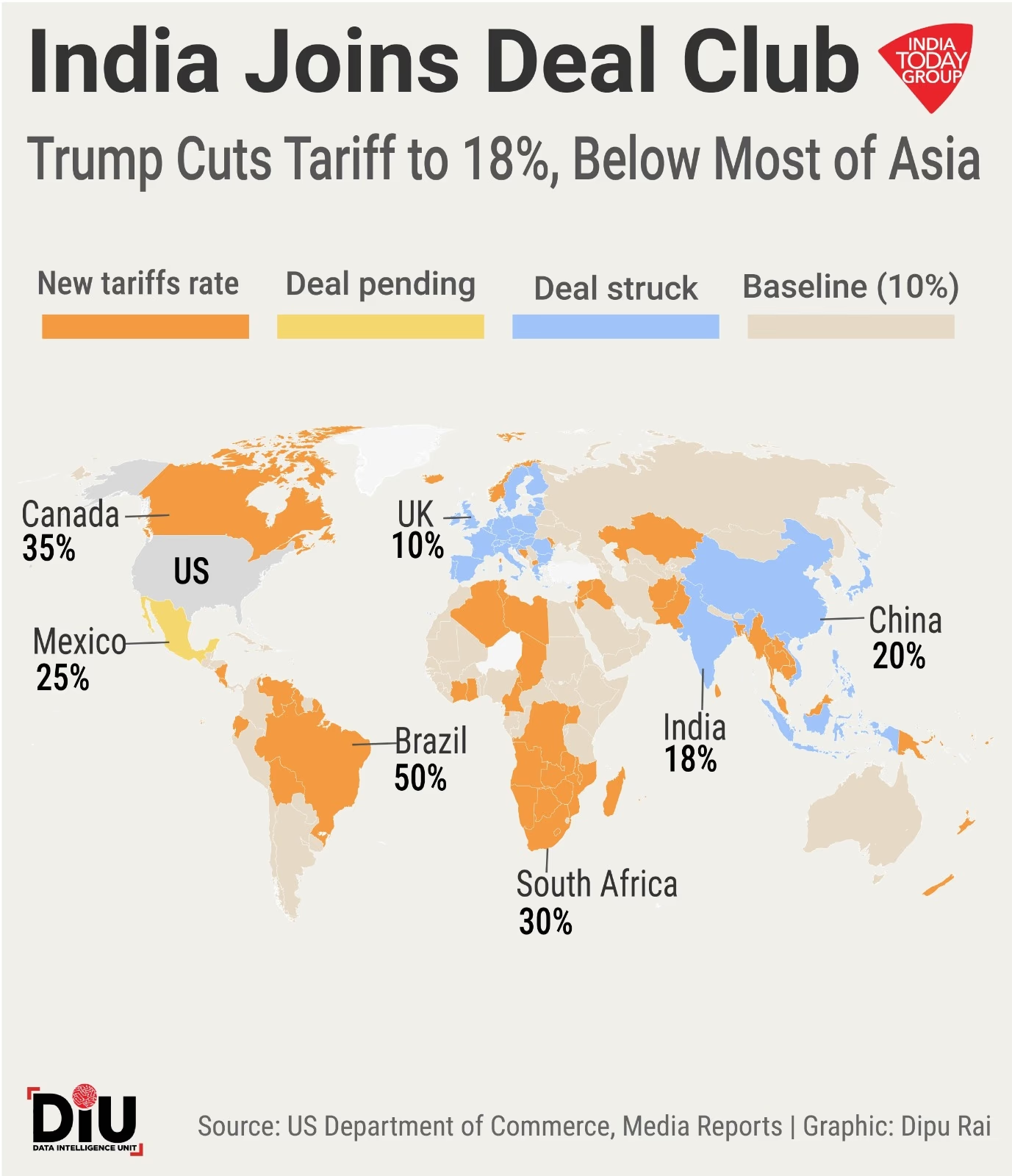
News of the deal sent waves of enthusiasm through Indian markets. The stock market soared, and the Indian rupee gained strength against the U.S. dollar. Investors and exporters are relieved, finding themselves better positioned in the American market compared to countries like China (20%) and Vietnam (20%). Indonesia and the Philippines (19%) also see higher tariffs, positioning India to attract more global manufacturing orders.
Source: aajtak
Is Russian Oil at Stake?
Despite the tariff reduction, the conditions behind the deal are quite complex. President Trump claims India will stop purchasing crude oil from Russia and instead buy large quantities of agricultural products and other goods from the U.S.
He also mentioned a $500 billion purchase by India. Yet, these specific claims have not been officially corroborated by the Indian government.
In response, Kremlin spokesman Dmitry Peskov noted that Russia has not received any official statement from New Delhi regarding halting oil imports.
The core of trade disputes between India and the U.S. has traditionally revolved around agriculture and regulations. U.S. negotiators have long sought access to Indian dairy and agricultural markets, while India preserves its farming sectors for political and economic reasons.
Trump claims tariffs on certain products may be reduced to zero (0%), but domestic politics in India around genetically modified (GM) crops and dairy regulations are highly sensitive, making these conditions challenging to implement.
Growing Trade with China
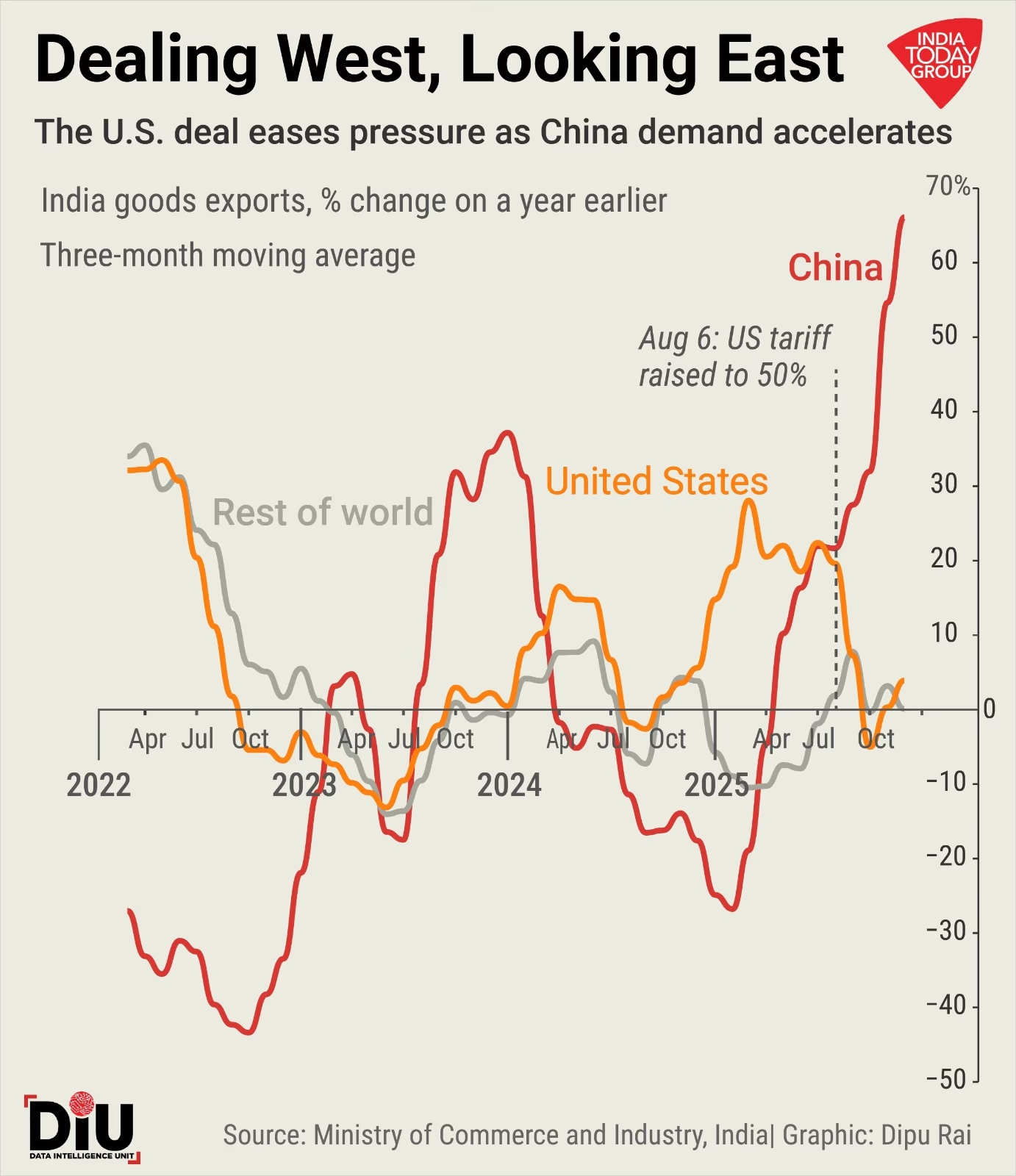
While seeking tariff relief from the U.S., India's exports to China have surged by nearly 70% in recent months, presenting contrasting trade narratives. The burgeoning economic ties with China present a geopolitical challenge for India, as it attempts to foster new alliances with the West without fully severing economic ties with its rival.
Trump's New Tariff Map
President Trump's trade policy is increasingly country-specific. He has applied a baseline tariff of 10% on 193 countries, but countries like India are now joining his 'deal club.' The message is clear: access to the American market is now determined by one-on-one negotiations rather than universal trade rules. For India, this deal brings certainty, yet any agreement affecting Russian oil or agricultural policy could disrupt strategic balances.