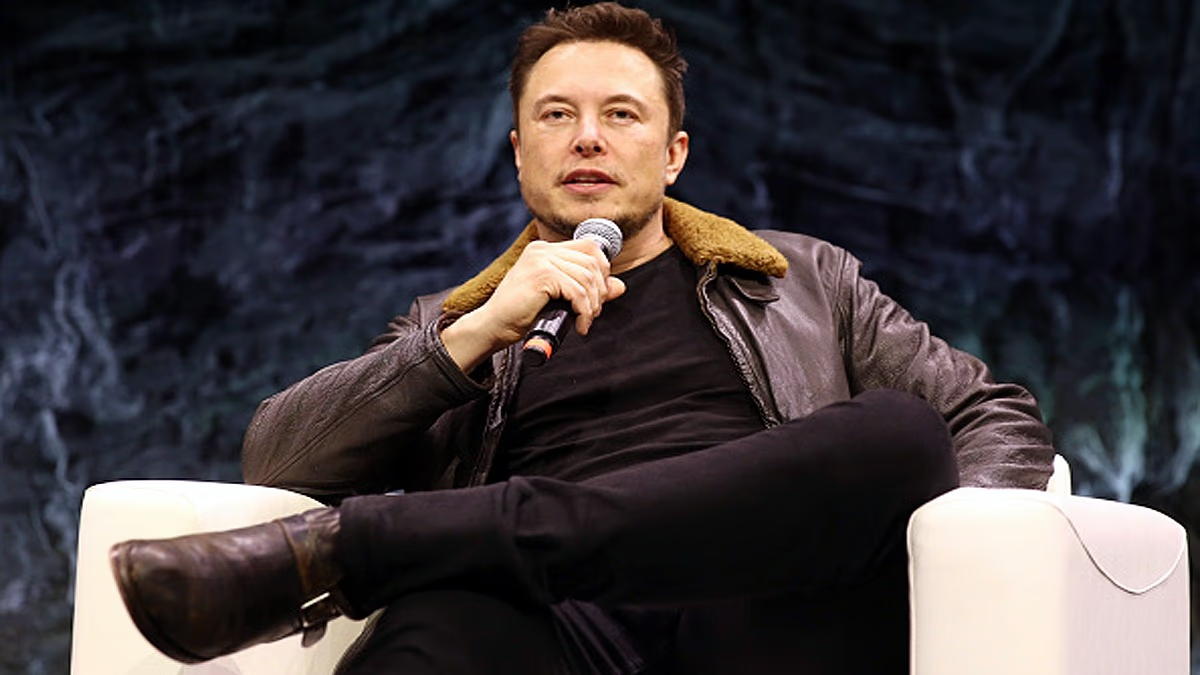
Elon Musk, the visionary behind SpaceX, has emerged as a hero in times of space crisis. When other spacecraft faltered, his company repeatedly came to NASA's rescue. From saving astronauts like Sunita Williams to performing the first-ever medical emergency rescue, SpaceX's Dragon capsule has been a beacon of hope.
Let's explore how Musk became the 'crisis solver' of space and successfully executed missions that saved lives.
The Inception of SpaceX and NASA's Aid
Founded in 2002 with a dream to build affordable, reusable rockets, Elon Musk launched SpaceX. When the US Space Shuttle program concluded in 2011, NASA had to depend on Russian rockets. Musk's Dragon capsule, operational since 2020, started ferrying astronauts to the ISS, reaffirming America's strength in space. When NASA missions faced hurdles, SpaceX was quick to respond.
Also Read: First Medical Evacuation From Space, Four Astronauts Returning to Earth from ISS
Rescue of Sunita Williams and Butch Wilmore (2024-2025)
In 2024, Indian-origin astronaut Sunita Williams and Butch Wilmore traveled to the space station on Boeing's Starliner spacecraft. Scheduled for an 8-day mission, they encountered thruster and helium leak issues, leaving them stranded for 9 months. NASA decided to return the Starliner empty.
SpaceX launched the Crew-9 mission in September 2024, with only two astronauts to accommodate Sunita and Butch. They safely returned in March 2025. Without SpaceX, they would have relied on the costly and delayed Russian Soyuz. Thanks to SpaceX, their lives were safeguarded, as prolonged space exposure poses health risks.
Also Read: The Dragon Capsule That Brought Sunita Williams Safely Home, Now Taking Shubhanshu to the Space Station...
Crew-11 and the First Medical Evacuation (2025-2026)
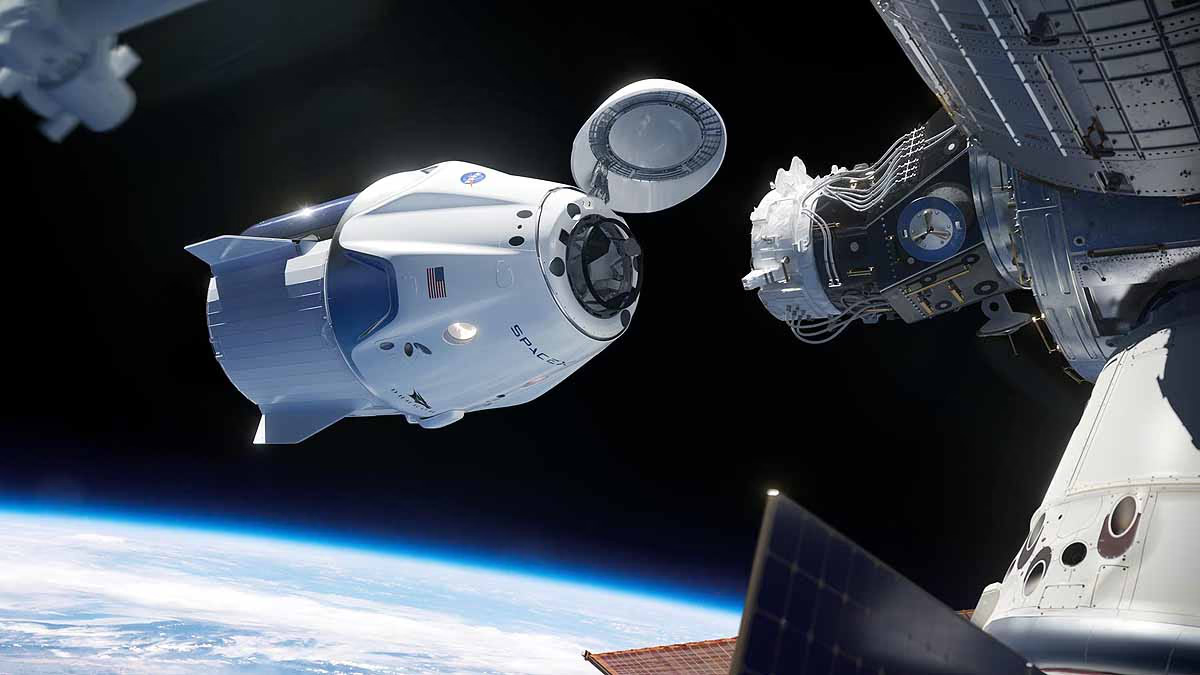
August 2025 marked the launch of SpaceX's Crew-11 mission. NASA's Jenna Cardman, Mike Fincke, Japan's Kimiya Yui, and Russia's Oleg Platonov embarked on a mission expected to last 6 months. However, in January 2026, an astronaut faced a medical issue. For the first time, NASA opted for a medical evacuation from the space station.
Source: aajtak
The Crew-11 mission returned ahead of schedule, with Dragon capsule detaching from the space station on January 14, 2026, and safely splashing down near California on January 15. It was a groundbreaking medical rescue in the 25-year history of the space station, made possible by SpaceX's rapid and secure operation, potentially saving an astronaut's life.
Other Lifesaving Missions by SpaceX
Crew Demo-2 (2020): With the space shuttle retired, America relied on Russia for 9 years. SpaceX's first crew mission safely transported astronauts to the ISS, mitigating future risks.
Crew-1 to Crew-10: Over ten crew missions were efficiently executed by SpaceX, stepping in where Boeing and others failed, including during the COVID pandemic.
Inspiration4 (2021): The first civilian mission, a test for future rescues without governmental astronauts.
SpaceX, inspired by Apollo 13 rescues, prepared the Dragon for emergencies. They weren't direct 'life-saving' missions, but at NASA's impasse, SpaceX provided invaluable assistance.
Why NASA Could Not Accomplish These Missions
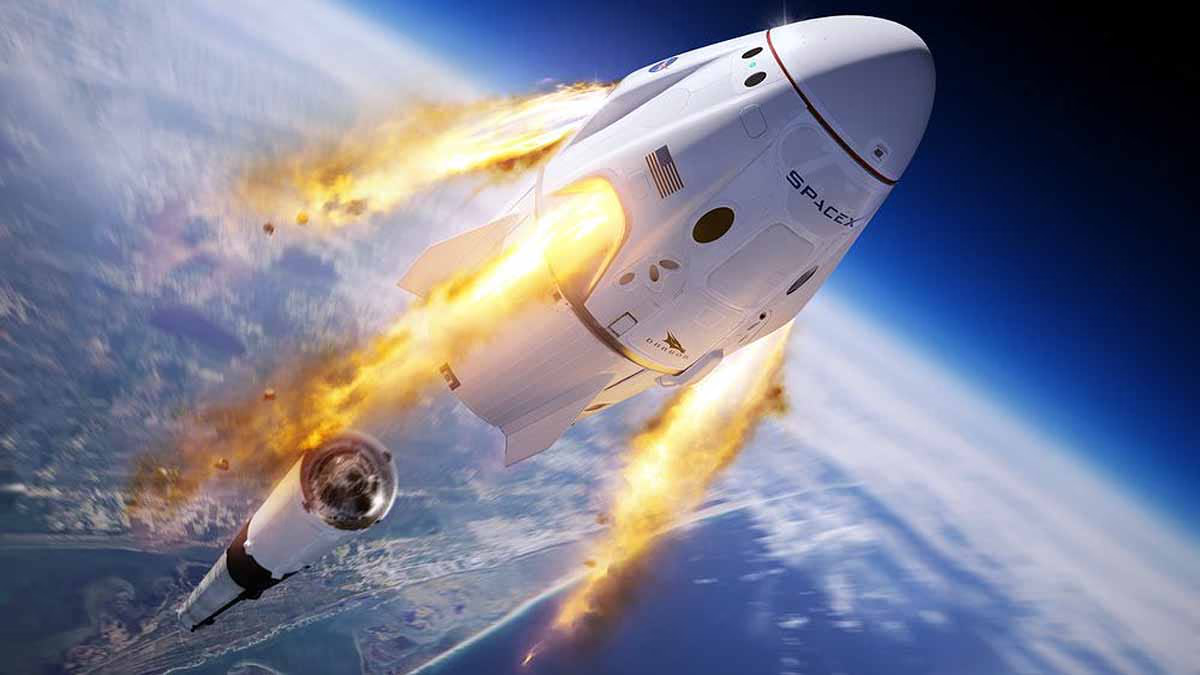
Why did NASA struggle? Boeing's Starliner, commissioned by NASA, repeatedly failed due to technical issues, delays, and cost overruns. NASA faced administrative and government-related challenges.
Source: aajtak
Boeing Starliner's Failure: Technical and Financial
In 2014, post-space shuttle, NASA chose Boeing and SpaceX for new crew spacecraft with Boeing receiving $4.2 billion and SpaceX $2.6 billion. The 2017 target was unmet as Boeing faltered.
Technical Challenges:
A software glitch in the 2019 unmanned test fired thrusters incorrectly, and it failed to reach orbit. The 2022 test succeeded, but the 2024 crew test saw thruster failure, helium leakage, and overheating. Teflon seal deformation in thruster valves halted propellant flow, alongside parachute and flammable tape issues.
Delays:
Boeing prioritized accountants and shareholders over engineering, cutting costs under a fixed-price contract at the expense of quality. Despite $1.6 billion additional spending, delays persisted.
Also Read: NASA to Build a Nuclear Reactor on the Moon by 2030... Planning to Surpass China and Russia
NASA's Role:
Opting for two companies as a backup, NASA turned to SpaceX after Boeing's disappointments. When Starliner faltered, NASA utilized SpaceX's Crew Dragon.
NASA's Chronic Delays: Administrative and Governmental Reasons
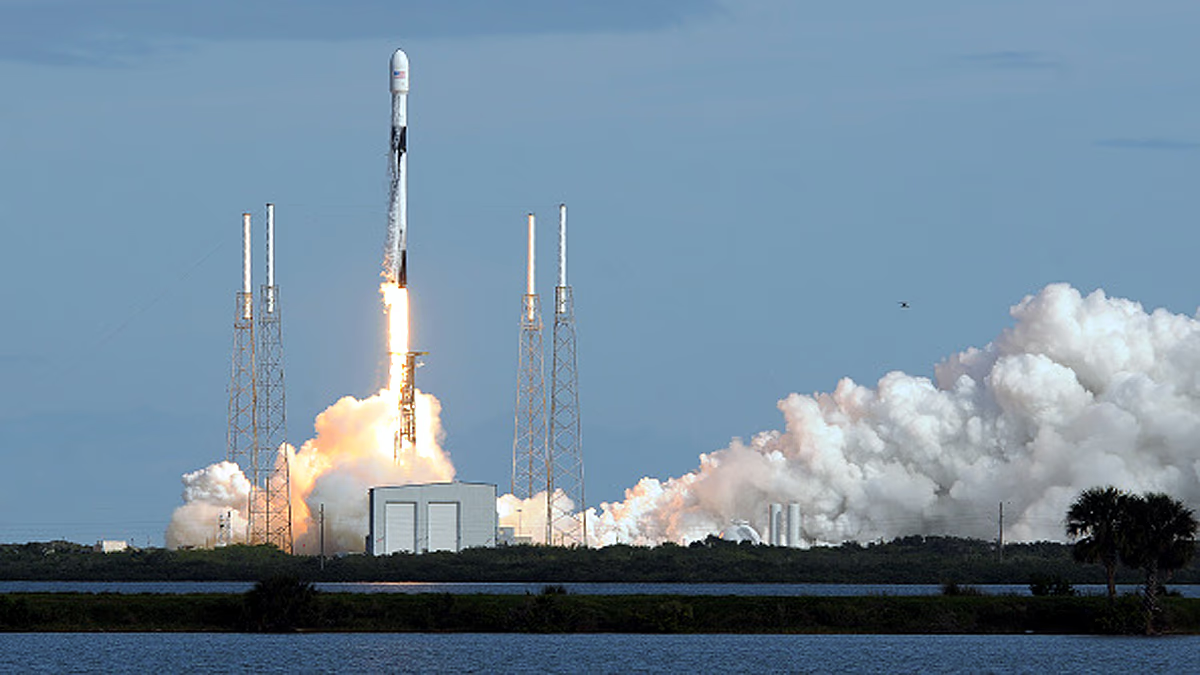
Major NASA projects such as Artemis, SLS, and Orion frequently encounter delays and cost overruns. GAO reports highlight technical challenges, workmanship issues, and risky management decisions.
Source: aajtak
Administrative Causes:
A culture of 'over-optimism' (Hubble Syndrome) prevails in NASA, where managers expect funding despite delays and underestimate risks. There's inadequate cost and schedule baseline formation. Changing requirements inflate costs.
Governmental Factors:
Congressional funding influences projects. Every new administration shifts priorities, like the cancellation of the Constellation program from Bush to Obama. Budget cuts and government shutdowns lead to project halts, e.g., the 2018-2019 shutdown.
Funding Issues:
NASA's budget, dictated by Congress, is politically driven, causing funding interruptions and project suspensions. On the other hand, private companies like SpaceX operate swiftly due to flexible funding.
Musk's Success: Why SpaceX is Leading?
SpaceX's engineering focus and reusable technology reduce costs. Since 2020, Crew Dragon successfully executed more than ten missions. NASA's bureaucracy and Boeing's corporate culture presented hurdles, while Musk embraced risks.
Also Read: Moscow Witnesses Record-Breaking Snow After 146 Years
NASA now relies on SpaceX, but future backups are vital. Boeing is striving to rectify Starliner, but delays impact the US space program.
Preparing for the Future
Musk is developing Starship for moon and Mars missions, poised for significant rescues. SpaceX provides disaster areas with internet via Starlink, like during Hurricane Helen. Neuralink addresses neurological diseases. Musk's ventures are geared towards tackling future crises.