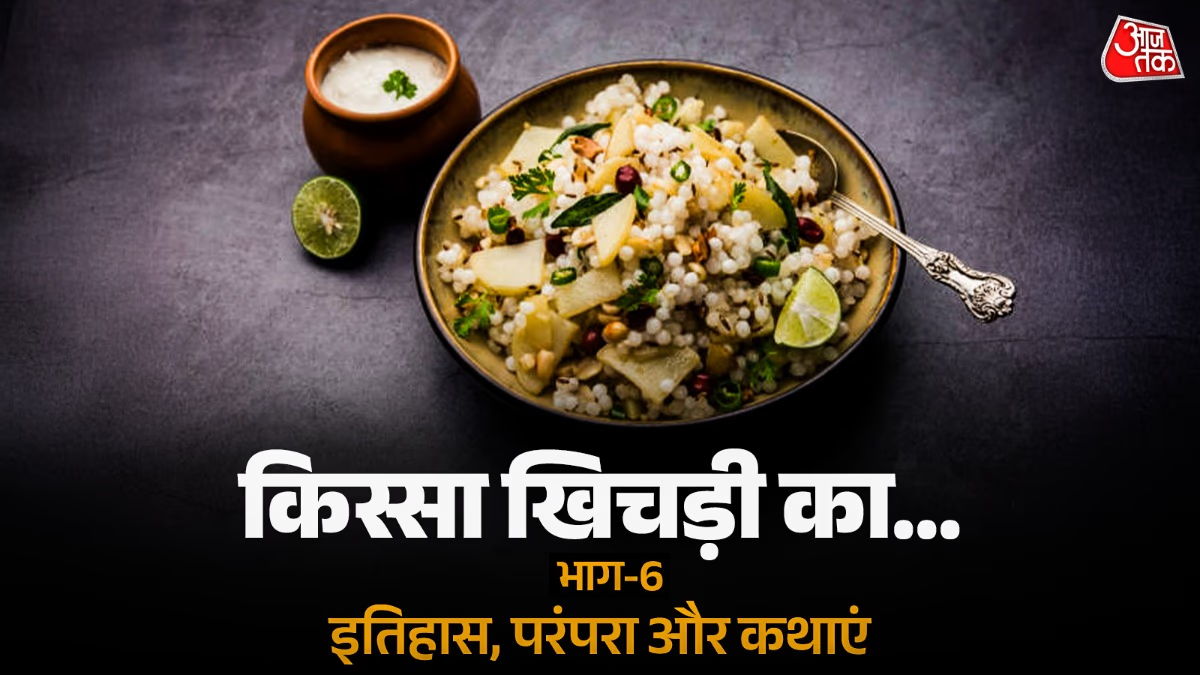
Mix lentils with rice, add basic spices like turmeric, salt, and chilies, and just boil it... This is the simplest way to make Khichdi. Add anything you like and make it any way you desire, it's still Khichdi. Every Indian raised with the nation's tradition has encountered Khichdi on their plate. From north to south, mention any dish, and while people might not have tasted them, everyone has tasted Khichdi in some form at some point.
Whether you like Khichdi or reject it, you cannot separate it from any kitchen. No matter how long life is, a morsel of Khichdi will always be involved. It is so ingrained in society that from home to the market, from street to politics, Khichdi holds its place.
Was there Khichdi during the Vedic Era?
As many people as there are, there are as many stories and variations of Khichdi. From festivals to rituals, Khichdi is everywhere. It's like the eternal discourse of Lord Hari, challenging to fully comprehend its origin, middle, or end. Yet, delving into history and the Vedic age reveals a dish called 'Krishra' in the Rigveda, made by mixing and boiling different grains together.
The use of barley was significant in the Rigveda. Its flour and porridge are among the oldest food traditions, and porridge is a type of Khichdi in a way. Thus, one could say that people from the Vedic era had started making and consuming Khichdi, understanding its significance.
Source: aajtak
When Seleucus came to India (305-303 BC), he too tasted the dish made from lentils and rice. Khichdi had become a staple household meal and was almost daily prepared in Indian kitchens. The Moroccan traveler Ibn Battuta, around 1350, mentions having Khichdi during his travels in India several times, noting how Indians effortlessly prepare food by boiling rice and mung beans with salt and eating it with great relish.
When the Russian trader Afanasy Nikitin visited India in the 15th century, he too savored this light dish. India was a hub of spicy foods and simple, wholesome meals. Nikitin's documents note that while the Mughals modified Indian cuisine to their tastes, Khichdi won their hearts. Thus, despite numerous changes, Khichdi remained constant, simply evolving and adapting without losing its inherent simplicity.
Khichdi featured in the royal menu of medieval India, and in Akbar's time, approximately 30 maunds of Khichdi were cooked daily in his kitchen. Speaking of Akbar, you've probably heard the famous tale of 'Birbal's Khichdi.' This story suggests that the history of Khichdi is at least 500 years old.
Khichdi in the Mughal Court
Abul Fazl wrote in the Ain-i-Akbari that royal kitchen Khichdi was made with saffron, some warming spices, and dried fruits. However, culinary experts and some historians do not believe this described Khichdi; it seemed more like a rice pulao. In Indian homes, rice with assorted vegetables and aromatic spices is a popular dish called Tehri. Should this be called Khichdi? Why label it so when it has its unique name, Tehri.
In Indian Sanatan traditions, food is revered and honored with high regard. In the Bhagavad Gita, food is identified as Brahman, playing a vital role in infusing consciousness within creatures. Therefore, food is not just a means to fill the stomach but a divine offering and a form of blessing from the deities. Speaking of divine offerings, Khichdi is prominent, as after laddoo, it is the food adopted as Prasad in Indian temples.
Why Lord Jagannath Prefers Khichdi over Other Offerings
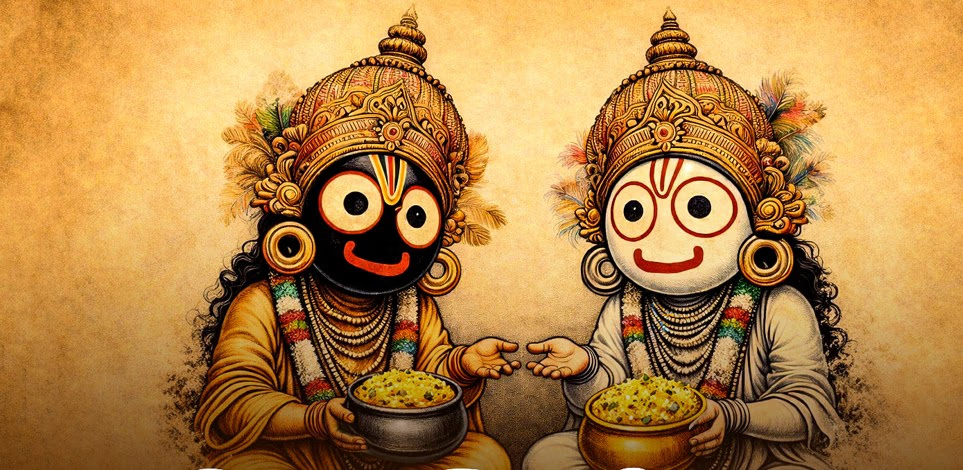
When discussing Khichdi as an offering, it's important to mention that at the Jagannath Temple, Khichdi is the key offering. It is said that an elderly woman dedicatedly offered Khichdi to the deity daily. She would wake up, cook Khichdi, serve it, and invite Lord Gopal to eat. Initially, the deity would leave the temple to accept her offering. One day, someone suggested that the lady should at least bathe and clean her courtyard before offering the food. The idea resonated with her.
The next day, after cleaning the courtyard and bathing, she prepared Khichdi and offered it, but it was delayed. As soon as Lord Gopal had tasted a few morsels, the priest at the temple rang the bell for the offering. The deity hurried back but had traces of the earlier meal left on His mouth. The priest was astonished. The following day, he hid to observe what was happening, and realized the deity was eating Khichdi from the elderly lady's hands. Since then, Khichdi has become a popular offering at the Jagannath Temple.
Source: aajtak
The Hunger that Led Lord Jagannath to Eat Khichdi in the Forest
Another legend from Puri narrates that Goddess Lakshmi delighted an untouchable woman with her presence. In retaliation for removing Lakshmi from the temple, Lord Balabhadra and Krishna were cursed to wander without food until a meal blessed by a lower caste was offered. Tired from endless wandering, they were fed Khichdi prepared from whatever was available by the tribal herdsmen in the forest.
The Ready-to-Eat Delight: Khichdi
Khichdi is always a quick and easy solution to satiate hunger. It can serve as a reliable option even in emergencies. Ancient scriptures narrate that during a famine, Sage Gautam sustained people for seven years by providing Khichdi. Historical texts attest that whenever severe hunger has struck, Khichdi has emerged as the ready-to-eat meal. Considered a divine food, it's said to be inaccessible to the gods. Known as Rishi Bhoj, its simplicity and absence of tamasic elements made it ideal for the sages' penance.
It's said that at the hermitage of Sage Durvasa in Bihar's Kahalgaon, he once prepared a cookable meal by boiling grains and vegetables in water for the weary gods, thus creating Khichdi.
Bheem's Anger-Fueled Creation of Khichdi in Mahabharat
Exploring more ancient tales, Mahabharata mentions the making of Khichdi. It is said one day Draupadi recalled the humiliation at Hastinapur, leading to a dispute with Yudhishthira. Subsequently, no one ate. When Bheem saw his brothers starving, he furiously tossed all available grains and vegetables into a cooking pot, thus creating Khichdi. It's also said that when Sage Durvasa arrived unexpectedly at the Pandavas' campsite seeking food, Draupadi had only a single grain of rice left. She invoked Krishna, who consumed the single grain, thus satiating the world.
Khichdi: The Emblem of Social Unity
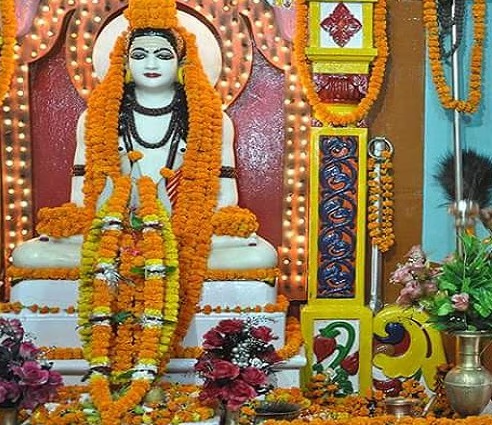
Khichdi represents social unity and equal respect. When discussing harmony, Mahatma Saint Kabir comes to mind. On Makar Sankranti at his shrine in Maghar, Khichdi is sacrificially offered and communal dining occurs, originating from the traditions of Jagannath Puri. A story recounts pandits and others refusing to eat with Kabir Das and Rahim due to caste differences. However, miraculously, everyone began seeing either Kabir or Rahim beside them. This led to the Kabir sect embracing Khichdi offerings and consumption.
The Gorakhnath Temple Khichdi Tradition
Speaking of Khichdi, forgetting the Khichdi fair is unthinkable! It is said that Baba Gorakhnath visited Maa Jwalamukhi's shrine in Himachal, where she prepared Khichdi for her son. Baba quipped, "I'll fetch Khichdi," and upon asking, he reached Gorakhpur and set his vessel, which still fills today. In fact, water continues to boil at Jwala Ji Dhibbi in Himachal. Traditionally, the first Khichdi offering at Gorakhnath comes from Nepal's royal family.
Source: aajtak
The story of Khichdi closely links with the Nath sect as well. When Khilji invaded, Nath yogis stood up against him, and to provide swift meals for their warrior yogis, Baba Gorakhnath recommended cooking lentils, rice, and vegetables together, minimizing time and maximizing nourishment. Khichdi naturally emerged as the perfect solution.
Khichdi as an Idiom
The famous story of Akbar and Birbal prominently features Khichdi, and today, 'Birbal's Khichdi' is a popular idiom. Khichdi certainly enjoys idiomatic presence. Somewhere someone 'cooks up a Khichdi', another 'makes their own style of Khichdi', while others might engage in 'stirring a multi-stove Khichdi' (representing instability). If someone's 'hair turns Khichdi', or they remain untouched by a 'spoonful of Khichdi', the idiom extends further. Hindi abounds with such Khichdi-derived expressions.
Folk Poet Ghagh's Khichdi Wisdom
Talking of prosperity, health-related wisdom can't be neglected. The secret to health is that Khichdi is a nutritious meal, easy to digest and considered suitable during seasonal changes. A folk saying, 'Eat Khichdi in Magh month,' denotes the custom of consuming Khichdi in the month of Magh. Folk poet Ghagh expresses this: "In Magh, one should eat Khichdi with ghee, and bathe before sunrise in Phalgun for health benefits." Furthermore, he adds:
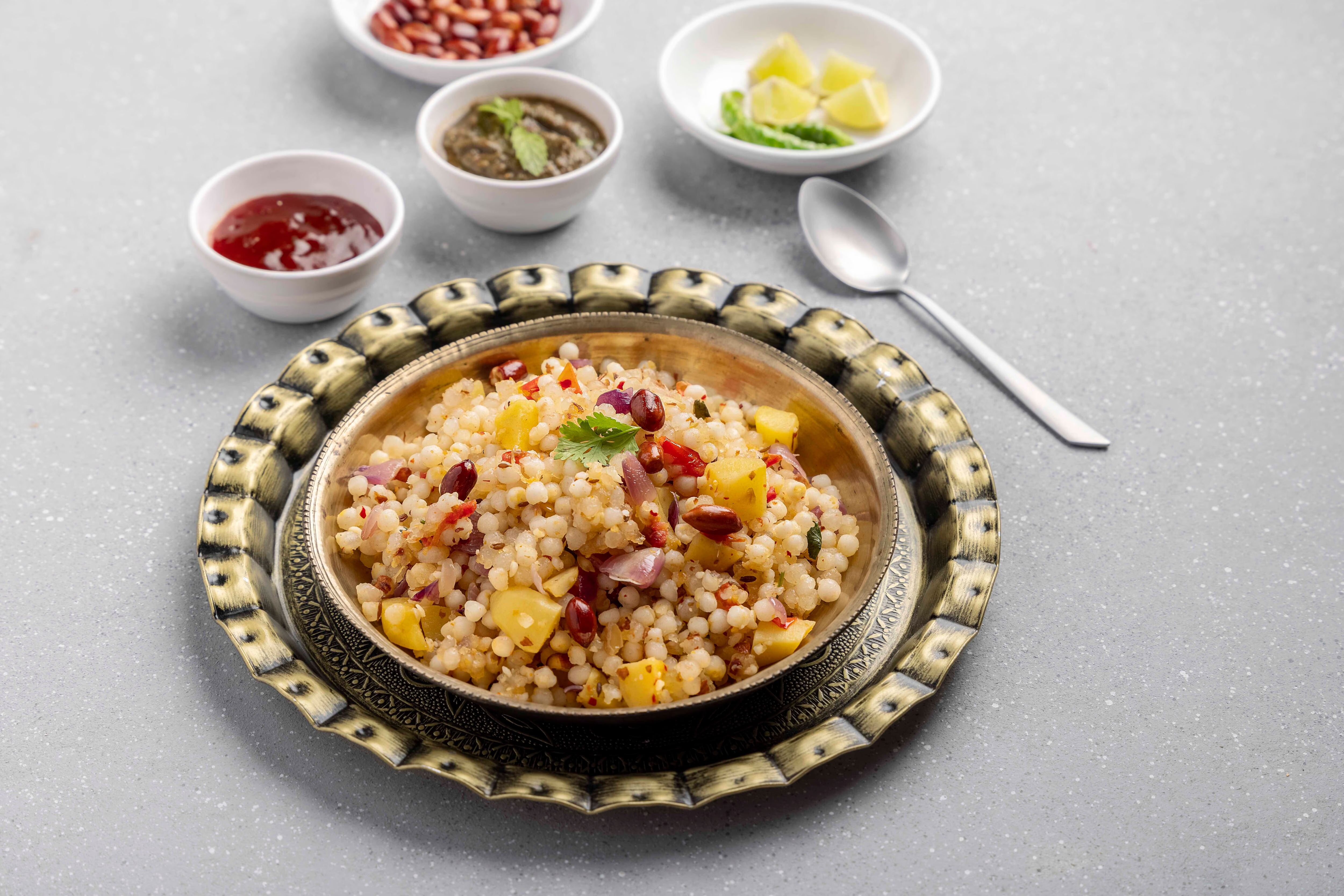
In conclusion, life is Khichdi-filled. You can't avoid it. The only choice is to embrace it. Boil lentils and rice together, add asafoetida and cumin seeds for seasoning. Serve on a plate, sprinkle with ghee, and enjoy with yogurt, pickles, and crunchy treats. Gather family, friends, and siblings to share, for Khichdi's pleasure multiplies when everyone partakes.