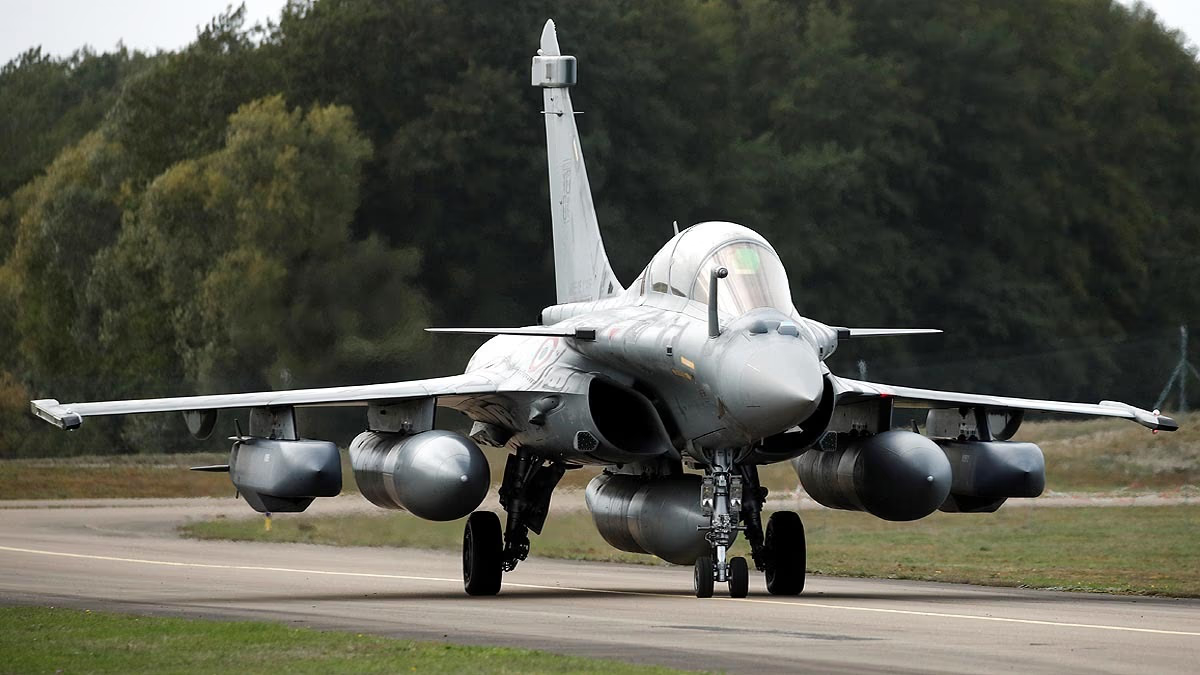
Advancing Indian Air Force Strength:
A major stride is being taken to fortify India's air power. The Defense Ministry will engage in high-profile discussions this week over procuring 114 Rafale fighter jets from France. Estimated to cost around ₹3.25 trillion (approximately $36 billion), most jets will be manufactured locally, initially comprising 30% local components, expected to rise to 60% over time.
Key Deal Elements:
Aircraft Numbers and Procurement Strategy:
The arrangement includes 114 Rafale jets, with 12-18 to be directly flown in from France, while the rest will be indigenously produced.
Local Content Integration:
Initially featuring 30% Indian-made components, with an expected increase, though 'Make in India' standards usually demand 50-60% indigenization.
Incorporating Indian Armaments:
India is advocating for native weapons and systems to be integrated into the Rafales, though source codes remain with France.

Source: aajtak
Why Is This Deal Crucial?
The Indian Air Force (IAF) urgently requires new fighter jets, needing 42 squadrons but currently at 29. Given regional threats from Pakistan and China, expanding these is imperative.
Historical Performance:
Rafales excelled in 'Operation Sindoor' against Pakistan, surpassing China's PL-15 missiles with its advanced SPECTRA electronic warfare system.
Main Fighter Jets:
The IAF's primary jets include the Su-30MKI, Rafales, and indigenous jets. Over 180 LCA Mark 1As have been ordered, with fifth-generation domestic fighters expected post-2035.
MRFA Program Integration:
This acquisition is part of the Multi-Role Fighter Aircraft (MRFA) initiative, launched in 2018, with Rafale deemed optimal.
IAF Chief Air Chief Marshal A.P. Singh, in October 2025, highlighted Rafale’s advantages, emphasizing seamless adoption due to established infrastructure, training, and maintenance investments.
International Offers: USA and Russia
The USA proposed the F-35, a fifth-generation stealth aircraft.
Russia's offer includes the Su-57, with full technology transfer promises for local production.
However, India prioritizes Rafale, owing to:
IAF's past preference for Rafale over competitors in MMRCA trials.
Existing Rafale infrastructure, avoiding fresh setup requirements for new aircraft.
Stealth fighters (F-35 or Su-57) serve different roles, with 2-3 squadrons requested, but cannot replace MRFA’s role. Indigenous AMCA is anticipated to fill stealth gaps.
Final assembly conducted by Dassault Reliance Aerospace Limited in Nagpur, supported by Indian industry giants like Tata and Mahindra, with Tata already producing fuselages.
Indigenous Components and TOT Limitations
With only 30% native content, below 'Make in India' thresholds, and limited technology transfer (TOT) from France, more domestic production is feasible. However, practical timing is crucial, as expanding indigenous creation may extend timelines.

Source: aajtak
The Impact:
Domestic industries contributing prompt, quality work should undertake more local manufacturing, supplementing imports. DRDO and HAL, experienced in creating HF-24 Marut and Tejas, don’t need full TOT—advanced technologies like engines suffice.
Source Code Challenges:
With France retaining source codes, India might face upgrade limitations, though negotiations for integrating native armaments continue.
LCA MK-2 Alternative:
Indigenously developed LCA MK-2 faces delays, relying on the GE F414 engine, vulnerable to US political pressures. The IAF can’t afford delays in this decreasing squadron context.
Rafale F4 Variant Features
The deal includes Rafale F4 variant, surpassing prior F3 with significant upgrades...
Advanced radio systems (CONTACT) ensuring secure satellite communication.
Enhanced RBE2 radar for ground target detection.
Advanced infrared systems.
Updated SPECTRA suite against new threats.
New weaponry, including SCALP cruise and MICA-NG air-to-air missiles.
Superior maintenance systems.
Historical Reference and Conclusion
In 2015, India emergency-purchased 36 Rafales. With completed infrastructure, scaling to 114 is feasible, ensuring no political pressure unlike potentially from the USA. This acquisition clearly strengthens IAF, yet long-term success hinges on boosting domestic self-reliance through increased indigenous components and full TOT commitments, pivotal for future regional security and self-sustaining defense capabilities.