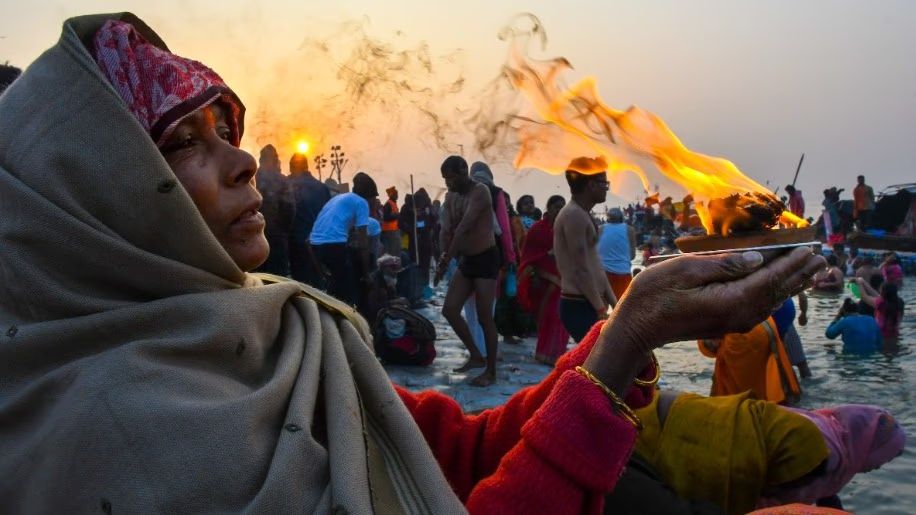
India's festivals are deeply entwined with nature, the essence of our existence. Elements like fire, rivers, trees, the sun, and the moon are integral to our celebrations. Be it Chhath, Diwali, Lohri, Baisakhi, or Annakut, they all convey the message of worship and respect for nature.
Makar Sankranti is an astronomical event based on the Sun's zodiac transition, celebrated differently in the 28 states of India but with a shared tradition. These variations, while minimal, are unified under the core beliefs of Sun worship, river bathing, and charity, weaving a thread from North to South.
Makar Sankranti Across Cultures
Makar Sankranti is celebrated across cultures, from Kashmir to Kanyakumari and Bengal to Gujarat. It's Lohri in Punjab, Khichdi in Uttar Pradesh, Sankrant in Bihar, Magh Bihu in Assam, and Pongal in Tamil Nadu.
Lohri is observed on January 13th, the day before Makar Sankranti, and is intrinsically linked to fire. The flames symbolize the burning away of negative memories, thoughts, and forces. During Lohri, harvested crops are roasted in the fire, symbolizing acceptance of newness. Lohri's name derives from 'Loh' (wood), 'Oh' (cattle dung cakes), and 'Di' (reverie), each bringing positive energy, signaling the past, and fostering joy. As harvests arrive, folklore joins in the celebration.

Source: aajtak
The Legend of Dulla Bhatti
Lohri reverberates with the ballad of Dulla Bhatti, a valiant young man who stood against oppressive regimes. During Emperor Akbar’s reign, girls were being sold in Punjab. Dulla rescued them, arranging marriages on Lohri. His legendary act is woven into Lohri’s tradition, making him inseparable from the festival. Without mentioning Dulla, Lohri seems incomplete.
Makar Sankranti in Haryana, Uttar Pradesh, and Central India
Astrology states that when the Sun moves from the southern path to the northern path and enters Capricorn during its orbital change, it is celebrated as Makar Sankranti. This event symbolizes the Earth's proximity to the Sun. Central India celebrates Makar Sankranti based on these celestial movements, influencing daily life.
Ganga Bath, Sesame Donations, and Khichdi on Makar Sankranti
On Makar Sankranti, bathing in the Ganges and offering donations symbolize breaking free from lethargy. Reintegrating into society involves offering sesame-jaggery sweets, teaching the importance of social connection. Festivals aim to preserve social harmony.
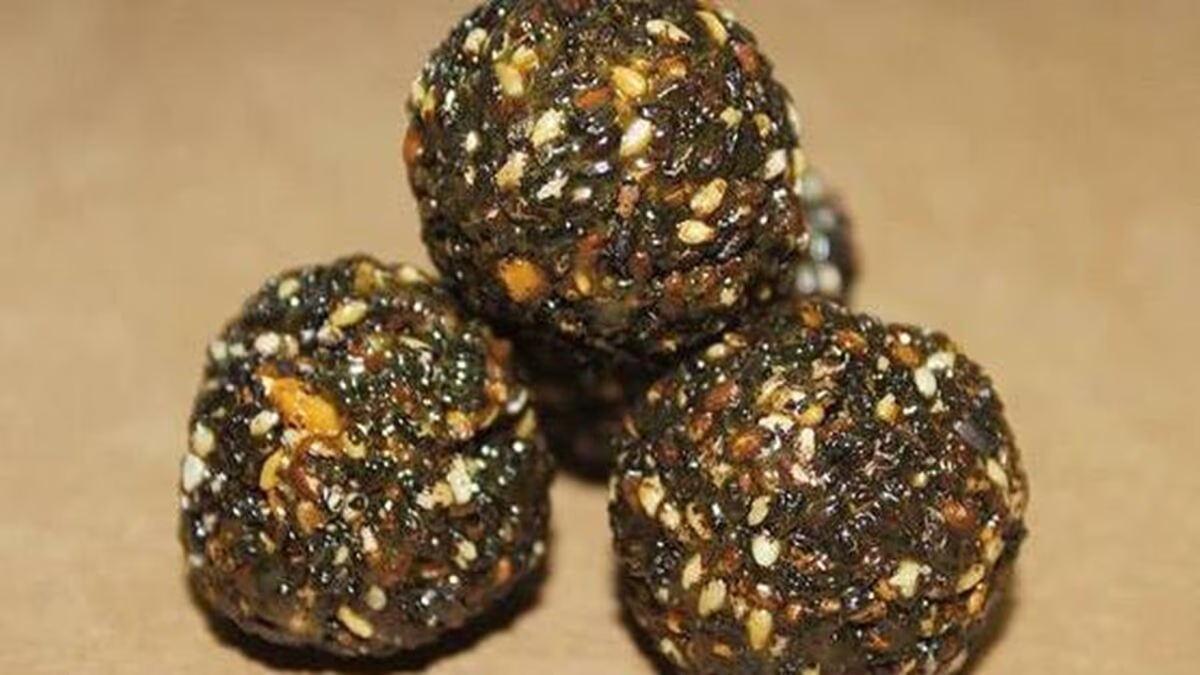
Source: aajtak
In Rajasthan, Makar Sankranti is synonymous with a sky filled with kites. Cities like Jaipur and Jodhpur host colorful, competitive celebrations. In Haryana, called Sankrant, daughters-in-law traditionally gift elders.
Why Khichdi? Its Significance
Khichdi is central to Makar Sankranti, especially in Uttar Pradesh, where offering, donating, preparing, and sharing Khichdi carries religious, cultural, and nutritional importance. Made from rice, lentils, vegetables, and spices, it symbolizes simplicity and balanced nutrition. Known as Sadhu Bhoj, Dev Ann, and Rishibhuktam, it’s a mark of humble and spiritual sustenance.
Pongal in Tamil Nadu
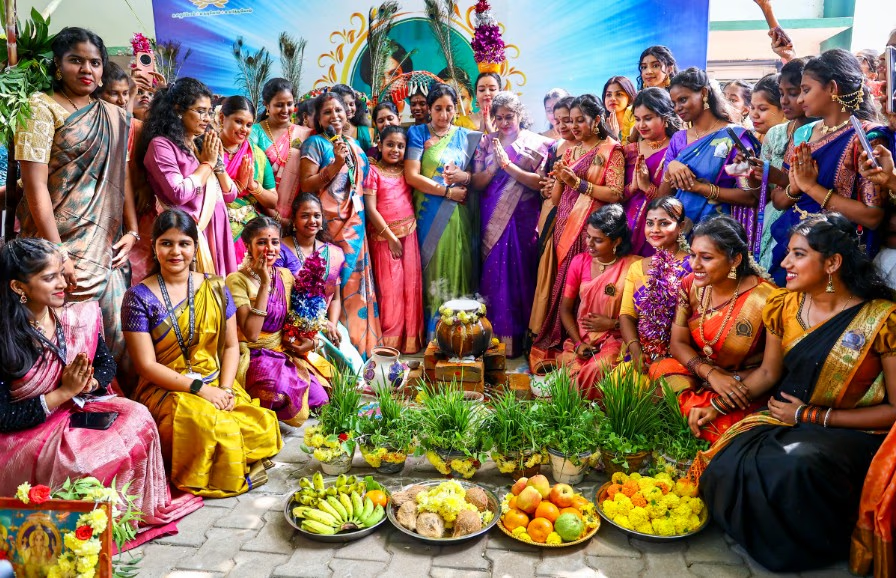
With the harvest home and excitement in the air, the Tamil community welcomes the new year with Pongal. Dressed doorsteps and vibrant Rangolis mark the occasion. Cattle are washed and adorned, while women prepare rice in milk with sugar.
The mixture is boiled until it overflows, signifying prosperity. Songs echo in local dialects, symbolizing the overflowing joy for their children’s future. Pongal, a four-day festival in January during Makar Sankranti, includes Bhogi Pongal (house cleaning and discarding old goods), Thai Pongal (the main festival day),
Source: aajtak
when offerings are made to the Sun God. On Mattu Pongal, cattle are celebrated with bright decorations. Kanni Pongal sees gifts to maidens. This day is reserved for family and community gatherings.
Andhra Pradesh, Kerala, and Telangana
Makar Sankranti spans three days in Andhra Pradesh and Telangana: Bhogi, Sankranti, and Kanuma. Known for cow worship, Haridasu troupes, and Muggu (rangoli). In Karnataka, it’s Suggi, marked by ṣugar, to symbolize community. Kerala’s Sabarimala Temple becomes a pilgrimage center during Makar Sankranti, with devotees flocking for Makaravilakku and Makar Jyoti glimpses.
Uttarayani in Uttarakhand
In Uttarakhand, Makar Sankranti brings the Uttarayani festival, celebrated primarily by Garhwali and Kumaoni regions. Beyond sesame-jaggery sweets, the famous delicacy ghughutiya draws significance. An offering traditionally woven into folk tales, ghughutiya pays homage to a cultural story of survival and succession.
Local legend recounts ghughutiya saving a prince’s life and resolving a succession crisis. On Uttarayani, strings of baked dough, sugar, and milk are gifted to crows, tying into this cultural myth.
Western India: Kites, Sesame-Jaggery, and Social Unity
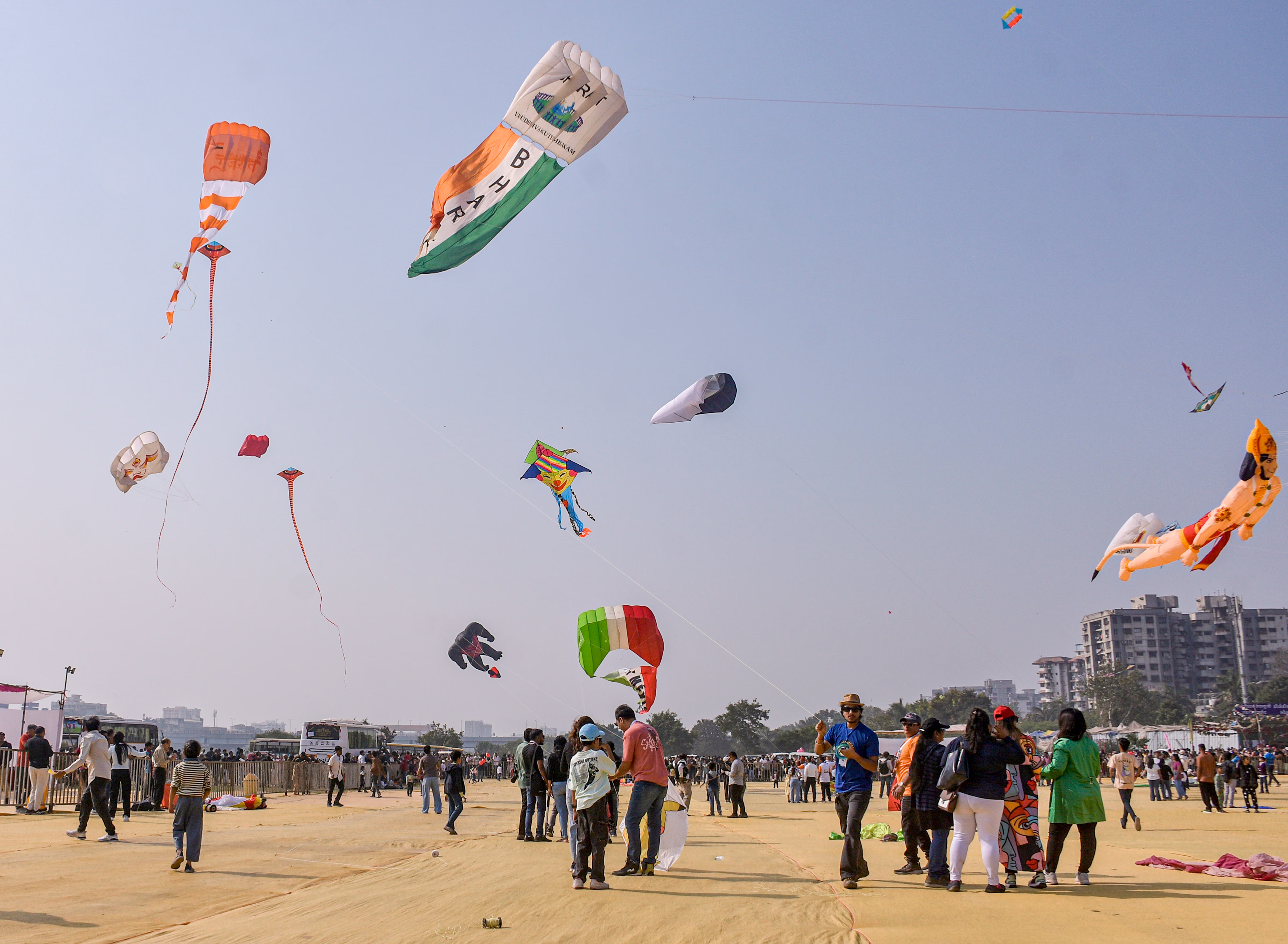
In Gujarat, Makar Sankranti is Uttarayan, marked by the international kite festival from Ahmedabad to Surat—a tapestry of social unity. Maharashtra echoes with ‘Tilgul Ghya, God God Bola,’ meaning ‘Eat sesame-jaggery, speak sweetly,’ reflecting not just sweetness but social cohesion. Women organize Haldi-Kumkum gatherings. In Goa, the festival combines river-bathing and traditional food.
Source: aajtak
Dahi-Chura in Bihar
When the sun enters Capricorn, Bihar and Jharkhand celebrate with Dahi-Chura feasts. Made from new paddy, Chura or chivda is Bihar's ancient fast food, faster than instant noodles, rooted in myth. Legend credits it with saving deities’ hunger during the ocean's churning.
In scriptures, yogurt is auspicious and paddy symbolizes prosperity. Combined, they bestow good fortune—yogurt dispels negativities, while chura offers energy.
'Tusu Parab' in Jharkhand
In Jharkhand, Makar Sankranti is celebrated as ‘Tusu Parab,’ where maidens keep folk traditions alive with Tusu songs. River-bathing and fairs are key events. In Madhya Pradesh and Chhattisgarh, this festival ties closely with agriculture, locally known as Pus Parab.
Makar Sankranti from Ganga to Brahmaputra
In West Bengal, Makar Sankranti, or Poush Sankranti, centers around the Ganga Sagar Mela, attracting devotees nationwide. Traditional sweets like pithe-puli are made.
In Odisha, it's Makar Chhoula, featuring agricultural offerings to the Sun God. In Assam, Makar Sankranti is Bhogali Bihu or Magh Bihu, a post-harvest festival characterized by community feasts and Meji bonfires. States like Sikkim, Arunachal Pradesh, Tripura, and Meghalaya blend this festival with local tribal customs, worshiping the sun and nature.

Source: aajtak
Magh Bihu in Assam
In Assam, Magh Bihu, also known as Bhogali Bihu and Maghar Domahi, involves a day preceding Magh Bihu called Uruka, dedicated to fire deities. Traditional dishes like aloo pitika, jak, and masor tenga are shared in communal feasts. The first harvest is offered to deities, praying for future prosperity.
Regional Names for Makar Sankranti
1. Uttar Pradesh – Khichdi Festival
2. Bihar – Til Sankranti / Khichdi / Dahi Chura
3. Jharkhand – Tusu Parab
4. Madhya Pradesh – Makar Sankranti
5. Chhattisgarh – Pus Parab
6. Rajasthan – Makar Sankranti
7. Haryana – Sankrant
8. Punjab – Lohri (one day earlier)
9. Himachal Pradesh – Maghi
10. Uttarakhand – Ghugutiya-Uttarayini
11. Gujarat – Uttarayan
12. Maharashtra – Makar Sankrant
13. Goa – Sankrant
14. West Bengal – Poush Sankranti
15. Odisha – Makar Chhoula Sankranti
16. Assam – Bhogali Bihu / Magh Bihu
17. Sikkim – Maghe Sankranti
18. Arunachal Pradesh – Maghe Sankranti
19. Nagaland – Sekrenyi (like Makar Sankranti, but different)
20. Manipur – Around Yaosang (Sun worship at Sankranti)
21. Meghalaya – Maghir
22. Mizoram – Sankranti
23. Tripura – Poush Sankranti
24. Andhra Pradesh – Bhogi Sankranti
25. Telangana – Kanuma Sankranti
26. Tamil Nadu – Pongal
27. Karnataka – Suggi / Makar Sankranti
28. Kerala – Makaravilakku / Makar Jyoti
The Unifying Threads of Festivals
These cultural traditions demonstrate our collective diversity. Though separated by boundaries, our festivals exhibit a collective human spirit and a desire for unity. Like vibrant colors in a rangoli, they hold beauty in cohesion. Festivals echo our aspirations for togetherness, warmth, and eternal unity.