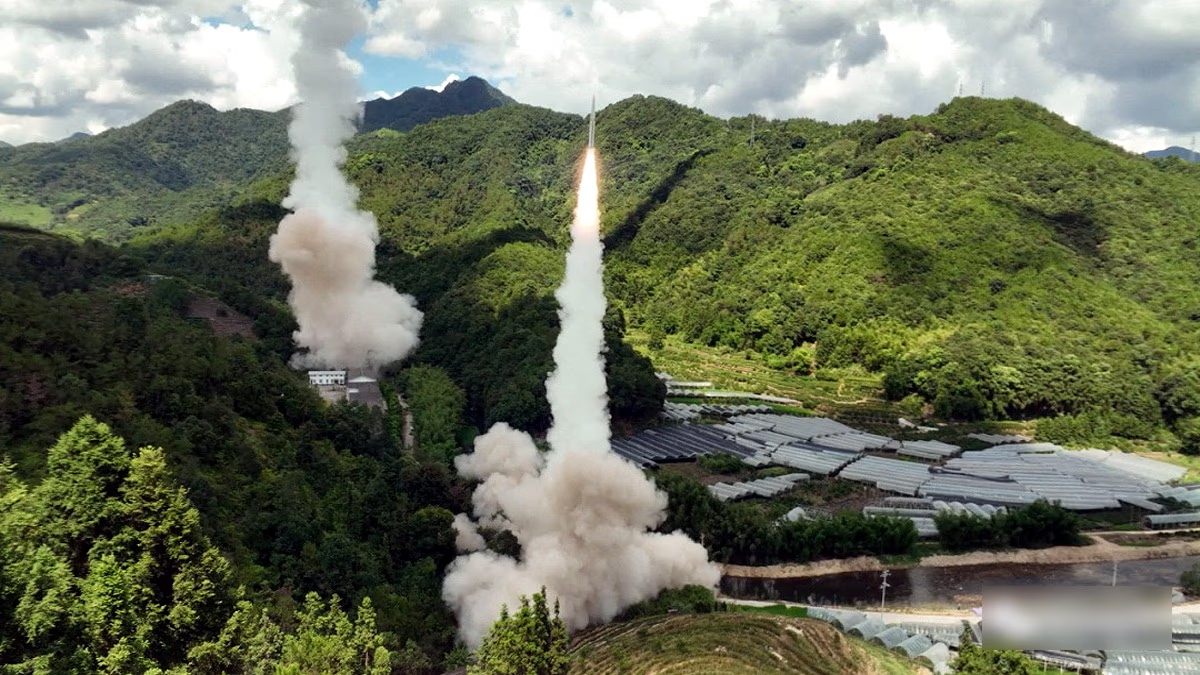
As geopolitical tensions rise in South Asia, Pakistan and China are swiftly enhancing their missile prowess. According to SIPRI 2025, the US Pentagon’s 2025 report, CSIS, and other sources, these nations' rocket and missile forces pose grave threats to India. With the capability to carry nuclear or conventional warheads, these missiles can challenge India's security in a two-front war scenario.
Pakistan's Rocket-Missile Force: The Dawn of ARFC
In August 2025, Pakistan formed the Army Rocket Force Command (ARFC), focusing chiefly on conventional (non-nuclear) missiles and rockets. This decision followed the May 2025 India-Pakistan conflict, where Pakistan felt a lack of precise long-range attacks. Modeled after China's PLARF, ARFC prominently features the Fateh series of missiles.
Explore further:
Although small, Pakistan's force is rapidly expanding. An estimated 100-200 launchers include SRBM and MRBM. SIPRI 2025 reports approximately 170 nuclear warheads.
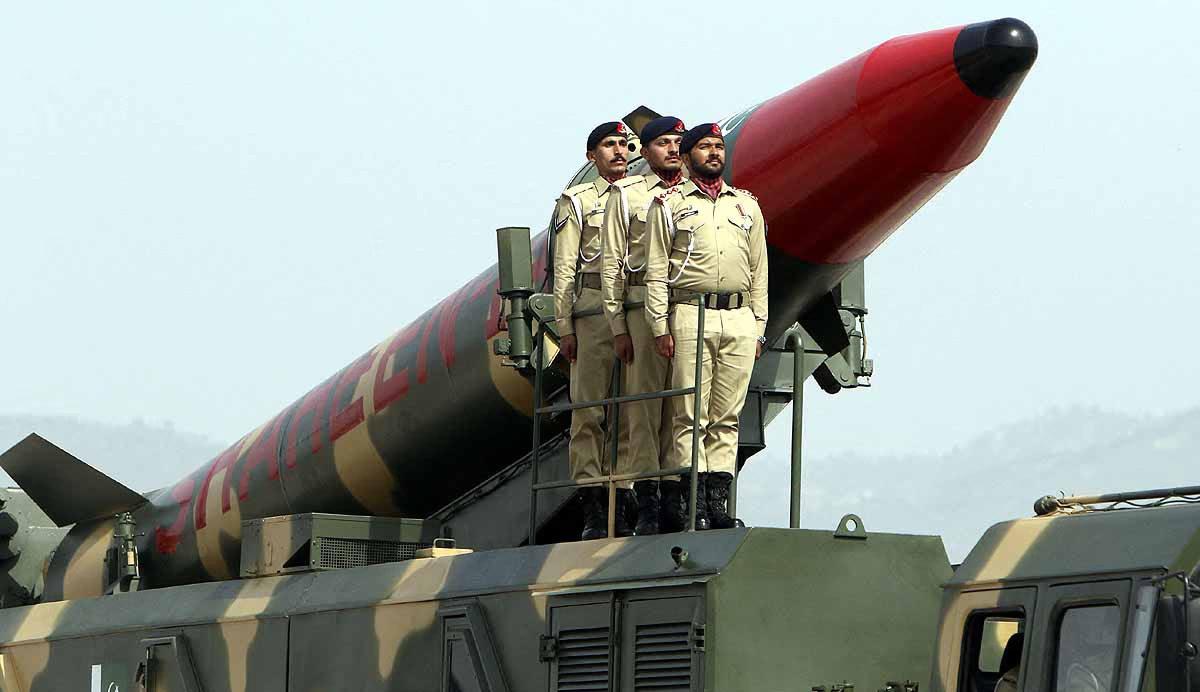
Source: aajtak
Key Missiles...
Fateh-1 (140 km range), Fateh-2 (250-400 km), Fateh-4 (750 km cruise missile, tested in 2025) and Fateh-5 (projected test in 2026, 1000 km range).
Others: Ghaznavi (290 km), Shaheen-3 (2750 km, covering all of India).
These missiles are tailored for precision, mobility, and saturation attacks (multiple simultaneous launches). Pakistan acquires technology from China, such as PL-15 missiles.
China’s Rocket-Missile Force: The World's Largest and Fastest Growing
China's People's Liberation Army Rocket Force (PLARF) stands as the world's most powerful missile force. According to the Pentagon’s 2025 report, it includes over 1250 ground-based ballistic and cruise missiles. The nuclear warhead count is more than 600, potentially reaching over 1000 by 2030.
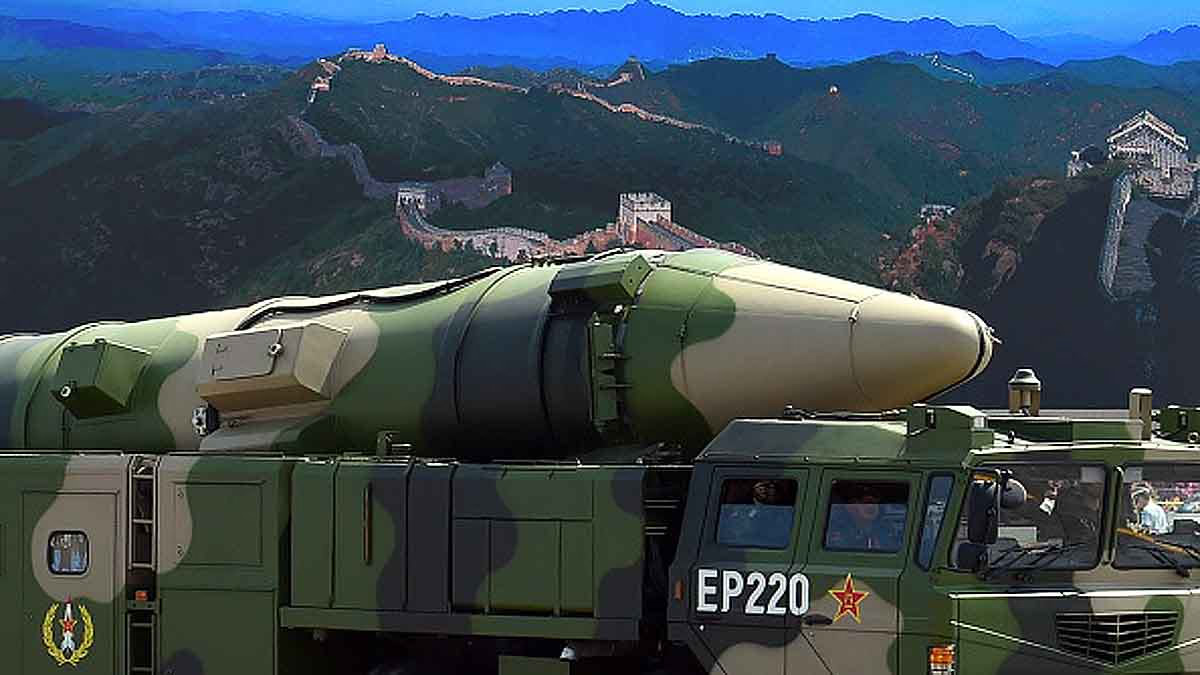
Source: aajtak
Main Features
With more than 900 short-range (SRBM), 1300 medium-range (MRBM), 500 intermediate (IRBM), and over 400 ICBMs (such as DF-41, with ranges over 12,000 km), China's hypersonic missiles (DF-17, speeds over Mach 5), anti-ship capabilities, and precision guidance systems speak volumes. The country is also advancing with over 320 new silos, submarine-launched JL-3, and space-based early warning systems.
China’s forces excel in quantity, technology, and range, making them capable of targeting India's northern regions with ease.
India’s Missile Force: Current Status and Comparison
India's missile force is robust but lags in numbers and certain technologies. According to SIPRI 2025, India possesses approximately 180 nuclear warheads.
Explore further:
Key Missiles...
Agni Series: Agni-1 (700 km), Agni-5 (over 5000 km with MIRV capability).
BrahMos (supersonic cruise, 290-800 km), Pralay (500 km).
Total launchers between 200-300+.
Comparison
Against Pakistan: India holds an edge in quality and range, but Pakistan’s new ARFC can present challenges with saturation attacks.
Against China: With thousands of missiles and advanced hypersonic technology, China surpasses India significantly. Although India's Agni-5 can cover the whole of China, the quantity gap remains.
The Dual-Front Challenge for India
Pakistan poses a direct threat from the west—ARFC and the Fateh series can launch swift border attacks. In the 2025 conflict, Pakistan utilized missiles. Meanwhile, China can target the entire nation from the north (Tibet). Their hypersonic missiles can bypass defenses like the S-400.
In a simultaneous attack, India would face a two-front battle—potentially overloading defense with a barrage of missiles. Even the Indian army's chief emphasizes the need for a rocket-missile force.
Explore further:
India's Response and Future Strategy
India is advancing its indigenous missiles (Agni variants, hypersonic tests), enhancing defenses like the S-400/S-500, and expanding BrahMos. Plans to establish a rocket-missile force are underway. However, the growing might of Pakistan and China raises miscalculation risks, potentially escalating small conflicts into large-scale wars.
In summary, Pakistan presents a focused and direct challenge, whereas China is vast and advanced. India must continuously bolster its defenses to maintain strategic balance.