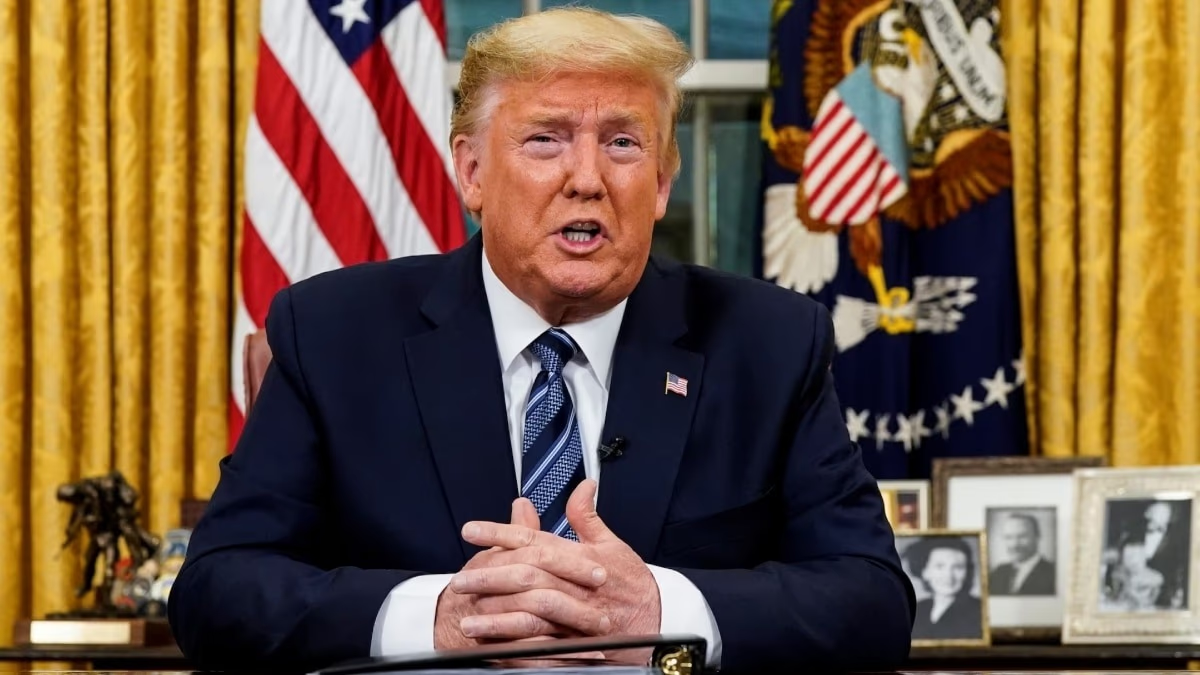
The political and legal clash over tariffs in the United States has intensified. President Donald Trump faced a major setback when the Supreme Court declared his emergency tariffs illegal. In a decisive 6-3 ruling, the Court asserted that the tariffs imposed under economic emergency were beyond his jurisdiction. Trump remarked that he needed to 'do something about these courts.'
This issue is rooted in the 1977 International Emergency Economic Powers Act (IEEPA), which allows the president to 'regulate' trade during emergencies, but it does not explicitly permit imposing tariffs. Trump used this law to impose duties on Mexico, Canada, and China, and later levied heavy tariffs on dozens of countries under the guise of 'Liberation Day' celebrations.
See Also: Which of Trump's Tariffs Did the US Supreme Court Overturn? Understand the Full Story
Immediately following the court's decision, Trump played a new card by announcing a global 10 percent tariff to replace the previous ones. He criticized the judges and mentioned considering other legal avenues, arguing that tariffs boost investment and manufacturing in the United States.
After the Supreme Court decision, Trump reacted sharply. Reports indicate that during a private meeting with governors, upon learning of the court's ruling, he termed it 'shameful.' According to sources, he stated, 'Something has to be done about these courts,' sparking speculation of a stern stance against the judiciary.
Irked by the court order, Trump stated, 'I can terminate trade. I can destroy a country. I am allowed to place a ban to ruin another nation. I can impose bans. I can do whatever I want, but I cannot charge a dollar because it is not written.' He questioned, 'How strange is that?'
Impact on Business and Rising Prices
The court's decision is considered a significant victory for those states and companies that challenged these tariffs in the courts. They argued that the sudden increase in import duties placed a heavy burden on business and drove up consumer prices. This ruling opens the door for potential refunding of billions of dollars, although Trump hinted that the issue could languish in the courts for an extended period.
Read More: Will Court's Tariff Decision Affect India-US Deal? Trump says PM Modi is Great, but...
Trump had positioned tariffs as a cornerstone of his economic policy, claiming in rallies they would bring factories back to America and create jobs. However, the Supreme Court's decision introduces new uncertainties about trade policy in the election year.
The coming months will be crucial to observe how Trump navigates alternative legal provisions and whether this battle escalates into a major constitutional conflict between the judiciary and executive branches. For now, it is clear that the tariff fight is far from over.