A report from the New York Post claims that a Venezuelan soldier alleged the use of an unidentified sonic or directed-energy weapon by the US military during a raid aiming to capture Nicolas Maduro. This weapon supposedly disabled radar systems and incapacitated soldiers.
The guard mentioned, at one point, they launched something; it's hard to describe, but it felt like a very intense sound wave. Suddenly, it felt as if my head was about to explode from the inside. He claimed that the effects were immediate and severe. All of us started bleeding from our noses, some were vomiting blood, and we fell to the ground, unable to move.
This claim has sparked a new debate in the world of sonic weapons, which are considered non-lethal yet extremely effective. But do such weapons truly exist? How do they operate, what impacts do they have, and which countries possess them? Let's explore.
Also Read: Successful Test of MPATGM Missile... Works on Fire and Forget Technology
Source: aajtak
What are Sonic Weapons?
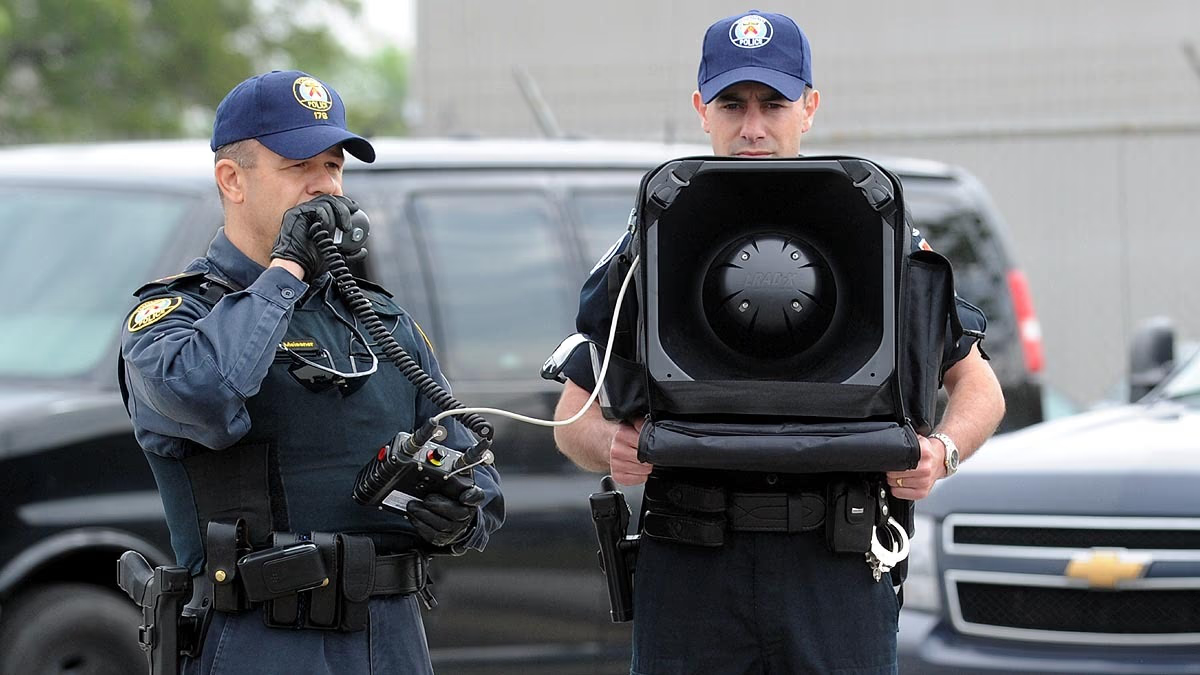
Sonic weapons, sometimes referred to as acoustic or ultrasonic weapons, inflict harm or incapacitate opponents using sound. These belong to a category of directed-energy weapons (DEW), where energy (sound waves) is directed at a target to attack.
There are mainly three types of these weapons...
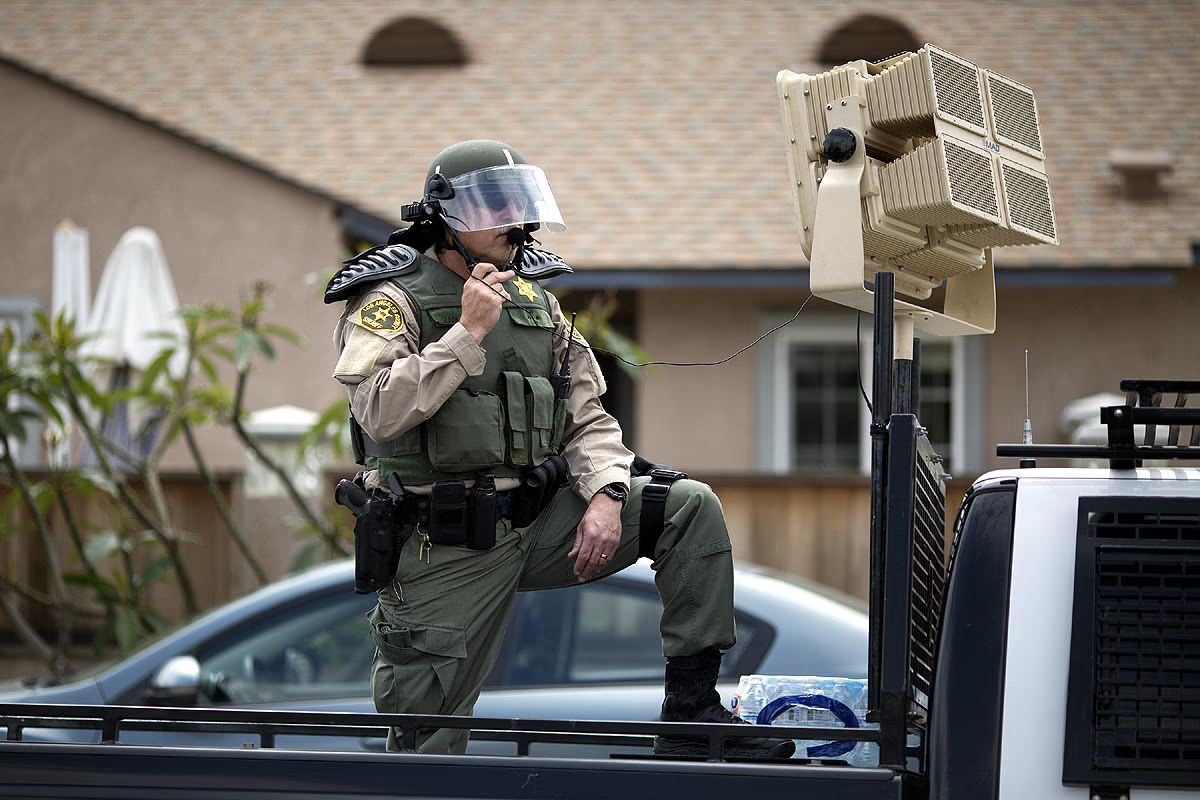
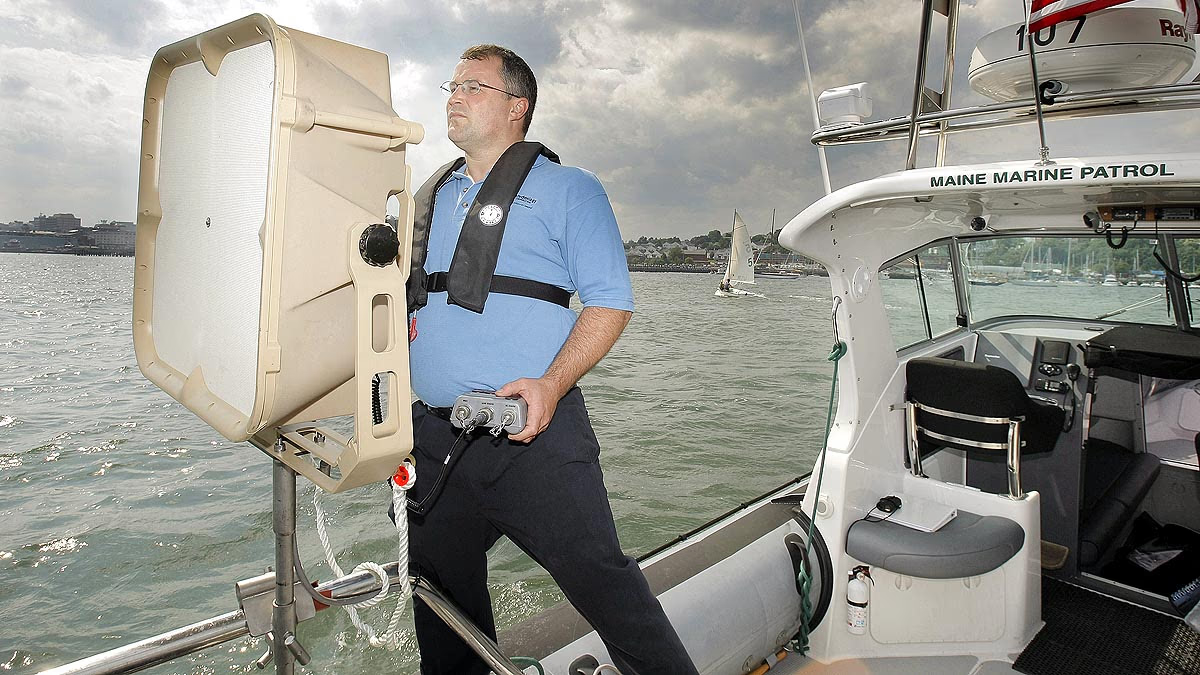
High-Intensity Audible Sound (Audible Sound Weapons): Devices like the Long Range Acoustic Device (LRAD), which can emit sounds up to 150 decibels—about 100 times louder than normal conversation.
Infrasound Weapons: Sound frequencies below 20 Hz, undetectable by the human ear but impactful on the body.
Ultrasonic Weapons: Frequencies above 20 kHz that affect targets without being audible.
These weapons differ from conventional ones as they use sound instead of bullets or explosives. Considered non-lethal, they can be deadly at high intensities.
What Can Sonic Weapons Do?
The primary goal of sonic weapons is to disable targets without physical contact. They can achieve the following...
Disorient or Disable Enemies:
High-intensity sound can disorient people, causing loss of balance and inability to attack. For instance, LRAD is used on ships to deter pirates.
Impact Radar or Electronic Systems:
Some advanced sonic devices can interfere with electronic equipment using sound waves, as mentioned in the Venezuelan guard's claim about disabling radar.
Crowd Control:
Used in demonstrations to disperse people. In Serbia's 2025 protests, police used such weapons, which were later deemed illegal.
Psychological Effects:
Certain weapons can induce hallucinations or evoke emotions like fear, sadness, and anxiety.
Long-Range Attacks:
Effective from hundreds of meters away, keeping attackers safe.
Source: aajtak
What are the Effects of Sonic Weapons?
The effects of sonic weapons depend on intensity, frequency, and exposure time. Common effects include...
Physical Effects:
Severe ear pain, disorientation, burst eardrums, hearing loss. At high intensities, nosebleeds, bloody vomiting, headaches, nausea, chest pressure, and internal damage can occur.
Psychological Effects:
Fear, sadness, depression, anxiety, hallucinations. In the 2016-2017 'Havana Syndrome' cases, American diplomats reported headaches, dizziness, and brain fog possibly linked to sonic attacks.
Long-term Effects:
Cancer risk (as claimed in some studies), negative environmental impacts, including effects on wildlife.
Lethality:
Typically non-lethal, but can be deadly at extreme intensities. Legal disputes arose in Serbia due to their potential for permanent harm.
These effects extend beyond humans to the environment and wildlife, such as birds or marine life.
Also Read: India's 16 Satellites Lost in Space - Learn Where Damaged Satellites Are Discarded
Which Countries Possess Sonic Weapons?
The development and use of sonic weapons are underway globally, although many nations keep them secret. Key countries include...
United States: Developed LRAD and other DEWs. Used by military and police. Accusations made in the Havana Syndrome implicating Russia or China, but they themselves might possess advanced versions. The Venezuela raid claim is linked to this.
China: Possesses LRAD-like devices used in the South China Sea. Active research on sonic weapons.
Russia: Suspected in the Havana Syndrome. Developed infrasound weapons with psychological effects.
Israel: Uses acoustic weapons in demonstrations. In addition to devices like Skunk, it employs sonic technology.
Greece and Serbia: Used to deter migrants. Declared illegal in Serbia in 2025.
Other Countries: UK, India, Germany, and France are researching. Many police forces worldwide employ LRAD.
Is This the Future of Warfare?
The Venezuelan guard’s claim has thrust sonic weapons into the spotlight, but the US has denied such use. If true, it marks a new chapter in DEW warfare, where invisible energy replaces traditional weapons. Experts caution that such weapons pose ethical and legal challenges due to their indiscriminate nature and potential for lasting damage.