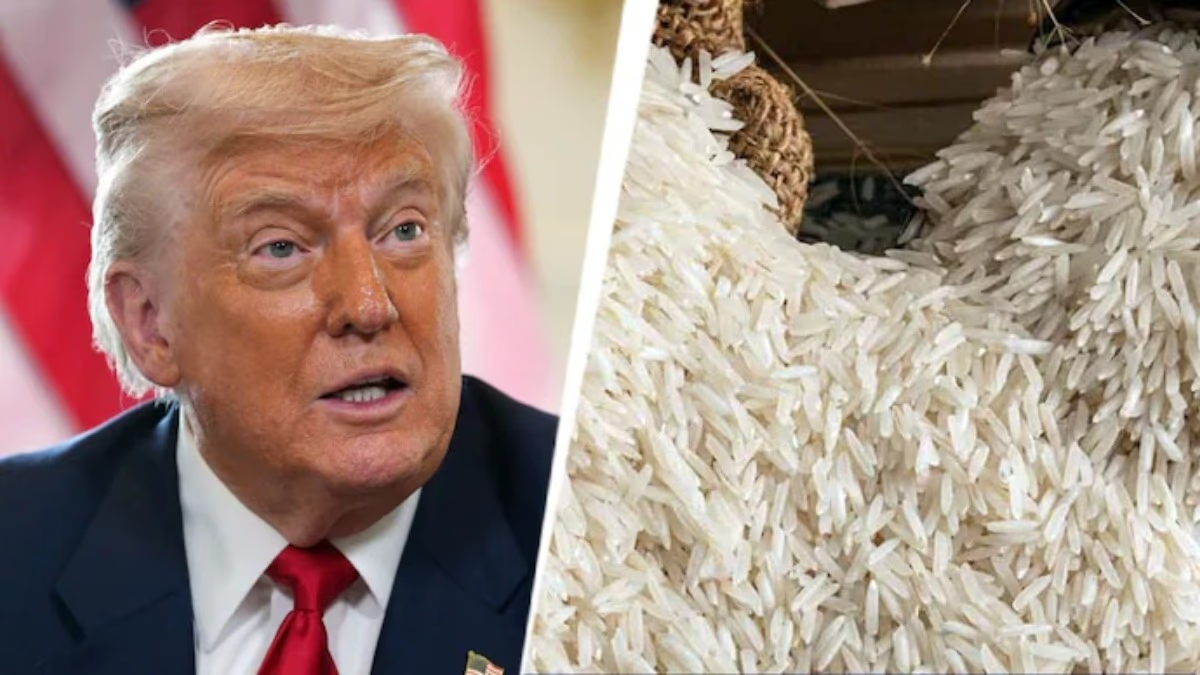
Donald Trump recently issued a warning about imposing tariffs on rice imports from other countries. As one of the largest suppliers of rice to America, India could feel the impact most. Previously reliant on US wheat aid, India has grown into the largest rice supplier to the US. However, attempts by America to reduce rice imports by introducing varieties like Texmati and Jasmati have not matched the quality of India’s Basmati, and trade continues.
The Story Behind 'Texmati'
Texas-based company Ricetec developed a hybrid by blending American long-grain rice with Basmati, aiming to combine Basmati's aroma and length with US growing conditions, dubbing it ‘Texmati.’ Similar to replicating luxury bags like Hermes, US Texmati struggled to compete with authentic Indian Basmati despite its efforts. Following this, the US introduced Jasmati rice, mixing Basmati’s size with Thai Jasmine’s aroma, yet this too proved to be unsuccessful.
Texmati and Jasmati were introduced in the 1980s to compete with Indian Basmati. However, four decades later, Basmati retains its lead. Though the US continues selling these varieties, Basmati constitutes over 85% of India’s rice exports to the US. Consumers, especially Indian expatriates and health-conscious buyers, continue favoring authenticity, seeking grains with a low glycemic index.
Basmati's Key Share in the US Market
Indian Basmati rice prices at a premium level of 880-900 dollars per ton, dominates with an 88% share of the US's imported Basmati rice by the fiscal year 2023-24. In 2023, India's Basmati rice imports to the US increased by 9% to 270,000 metric tons. By 2024-25, of the 22.5 million metric tons of rice exported, 86% was Basmati. Although Thai Jasmine rice leads this category with 97% share, Pakistan, another Basmati producer, only holds a 9% share in the US market.
Trump Under Pressure from US Farmers
The failure to replace Indian Basmati increased pressure on US rice farmers, prompting President Donald Trump to warn of extra tariffs on Indian rice imports, citing alleged dumping. In addition, he announced a 12 billion-dollar aid package for US rice farmers. Accusing India of dumping rice, Trump stated during a White House meeting that new tariffs could address this.
Potential Impact of Rice Tariff on India?
Let us explore how a potential tariff on Indian rice imports might affect trade. Any US tariff would have limited impact on India, as America accounts for only 3% of India's rice exports. Major markets for India include the Gulf countries, with Africa emerging as a major importer. Tariffs may increase US consumer prices but are unlikely to harm Indian exporters.