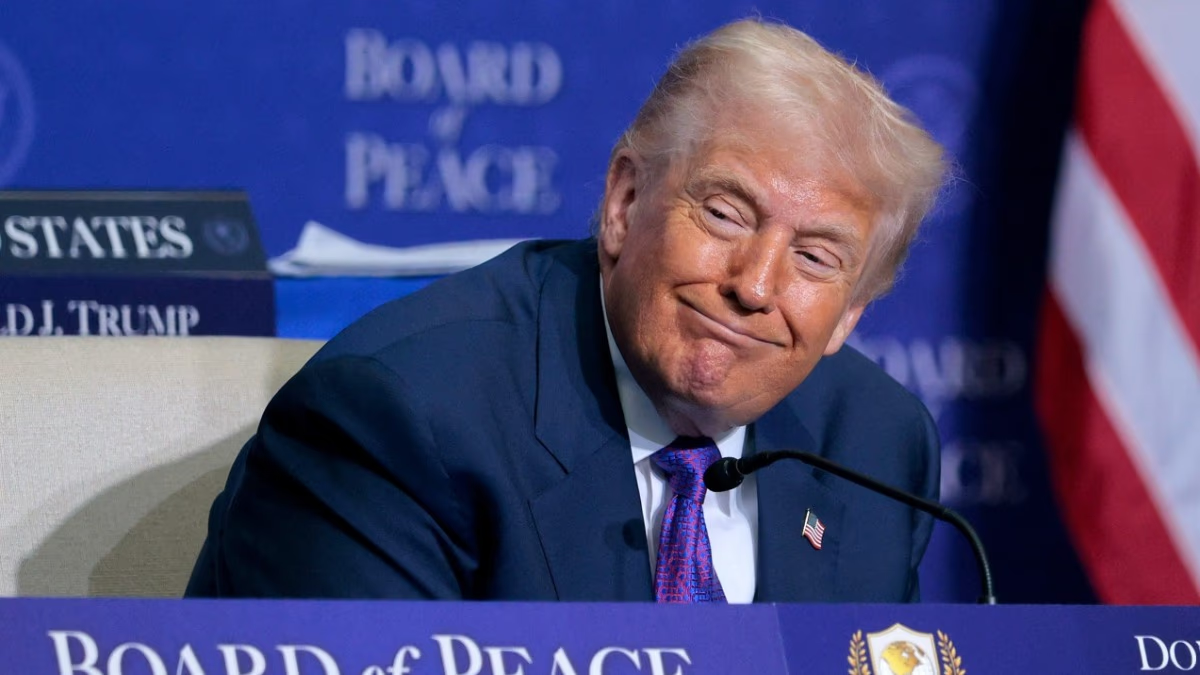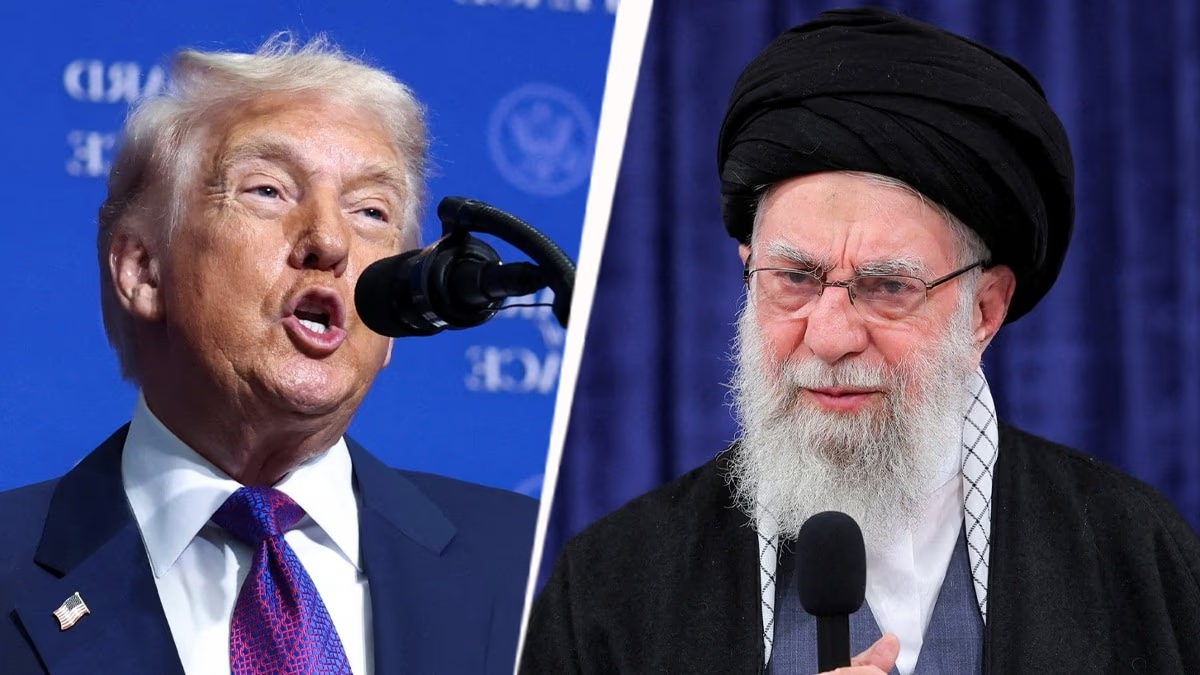
Amid escalating military tensions in the Middle East, U.S. President Donald Trump has issued a firm ultimatum to Iran. During the first meeting of the Gaza Peace Board in Washington, Trump made it clear that Tehran must agree to a meaningful nuclear agreement, or face serious consequences. Implicitly, Trump has given Iran a 10-day ultimatum.
Trump stated, 'We need to reach a meaningful agreement with Iran. Negotiations are ongoing, but if there’s no deal, the consequences will be severe. Now is the time for Iran to step onto the path of peace with us. If they join, that's good, but if not, there will be another path. They cannot risk the stability of the entire region.'
He hinted that something significant might happen in the next ten days. He expressed, 'We may have to take a further step, perhaps not. Maybe we’ll make a deal. You will find out in the next 10 days. One way or another, there will be a deal with Iran. If no deal is made with Iran, very bad things will occur.'
His remarks come as indirect talks between the US and Iran continue in Geneva, Switzerland. US Envoy Steve Whitcoff and Jared Kushner are engaging in dialogues with Iran's Foreign Minister Abbas Araghchi through intermediaries, to prevent the nuclear dispute from escalating into open conflict. The situation remains tense, with experts warning that war-like conditions could arise at any moment.
The US demands that Iran terminate its nuclear program or make significant reductions. Washington argues that uranium enrichment and increasing stocks pose a risk of nuclear proliferation. Meanwhile, Iran insists its nuclear program is solely for civilian energy and research, not weaponry. Tehran describes the demand to cease enrichment as an infringement on its sovereign rights.
US officials suggest that Iran might soon present a written proposal outlining how it will address American concerns. This document will determine whether talks proceed towards a framework agreement or reach an impasse.
Alongside diplomatic efforts, there is a surge in military activity in the region. Recently, the US deployed more than 50 advanced fighter jets to the Middle East, including F-22s, F-35s, and F-16s. Additional naval and air defense resources have been sent as well. US officials claim this deployment is part of a deterrence strategy to ensure the safety of American forces and maintain confidence among regional allies.
Conversely, Iran has conducted military exercises and warned of a strong retaliatory response in case of an attack on its nuclear sites. Iranian leadership emphasizes that any assault could severely destabilize the Gulf region.
Analysts believe the current situation is exceedingly delicate. Both sides wish to avoid outright war, but the escalating military deployments and intense public rhetoric leave little room for error. Miscalculations via sea, airspace, or regional proxy groups could rapidly worsen the situation.
A complex web of diplomacy, military strategy, and regional tension unfolds as the world watches, wondering if a peaceful resolution can be reached in time.