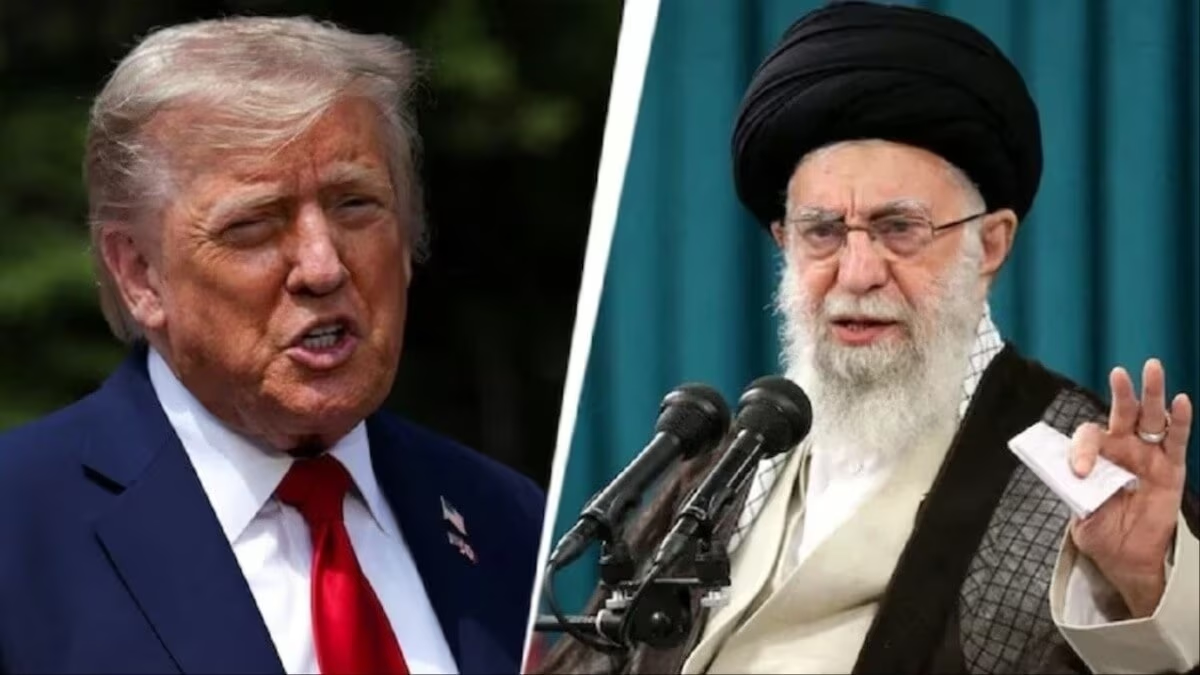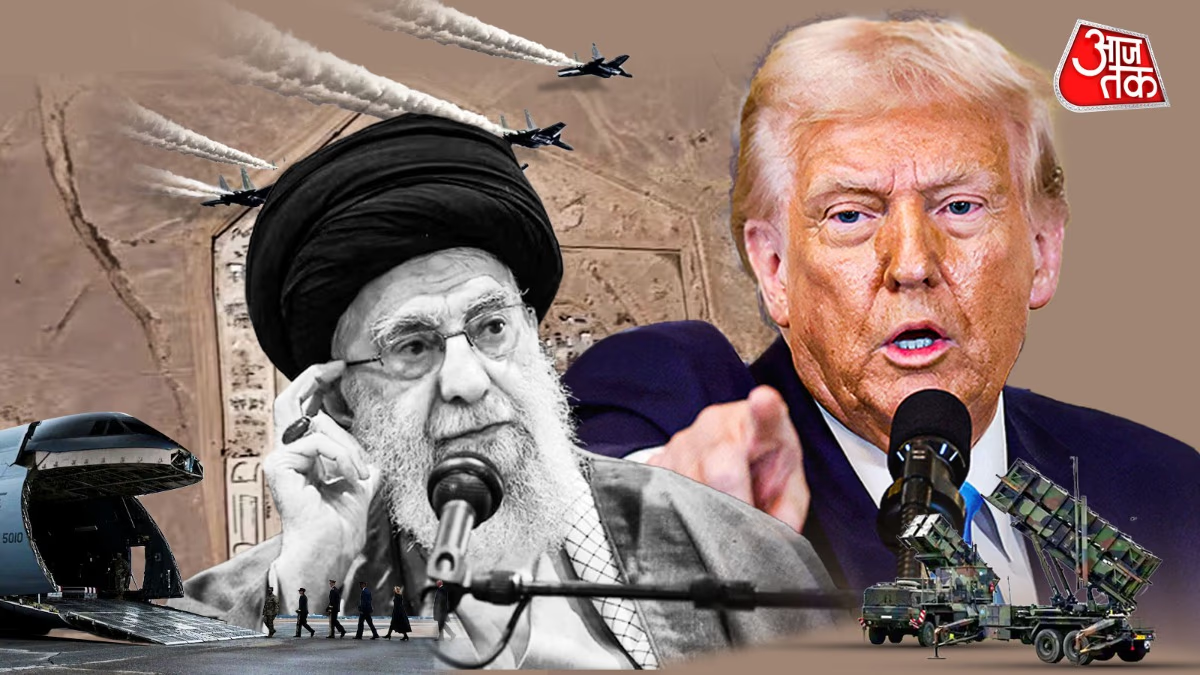
The United States has crafted a strategic plan for a potential strike on Iran, but once again finds itself isolated in the Middle East. The major Gulf Muslim nations have distanced themselves from America. Saudi Arabia, the United Arab Emirates (UAE), and Qatar have clearly stated they will not serve as launchpads for any attack on Iran.
This decision comes at a time when the Trump administration has issued threats to dethrone Iran's Supreme Leader, Ayatollah Ali Khamenei. Amidst these circumstances, there's a Muslim nation in the region that might stand by the US — Jordan. The Middle East hosts eight permanent American bases, including in Bahrain, Egypt, Iraq, Kuwait, Qatar, Saudi Arabia, UAE, and notably, Jordan itself.
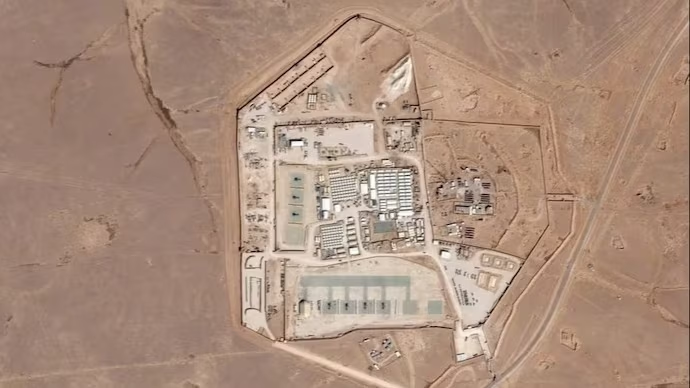
To date, Jordan has not publicly stated that it will deny airspace to the US. Thus, it's anticipated that Jordan could become the most crucial ally in any prospective strike on Iran. Jordan already hosts a robust US military presence. The Muwaffaq Salti Air Base is stationed here, equipped with heavy weapons and military resources.
Source: aajtak
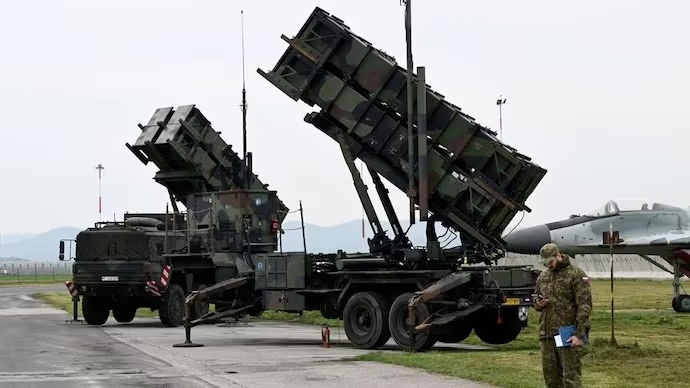
Recently, activities involving American F-15 fighter jets in Jordan have increased notably. Defense systems such as Patriot and THAAD (Terminal High-Altitude Area Defense) are deployed here. Currently, around 4,000 US troops are stationed in the Kingdom, hinting at potential support from Jordan if the Gulf countries remain uncooperative. Especially as Saudi Arabia, UAE, and Qatar have distanced themselves from the Iranian conflict.
Gulf Nations Decline, Yet Trump Remains Impressed
The Gulf countries clearly signaled to the US back in April 2025 that they would not allow their airspace to be used for an attack on Iran. Not just for attacks, but they also denied airspace use for refueling and rescue operations. It would be a mistake to assume that America will involve Gulf countries less in its future needs.
The strength of the Gulf nations is evident from the continued US pursuit despite airspace access denial in April 2025. In May, President Trump visited the Gulf nations, probably attempting to sway his Gulf allies but without success. Additionally, he secured significant agreements on weapons and other issues with Qatar, the UAE, and Saudi Arabia.
Source: aajtak
The Trump administration rapidly approved extensive weapon deals that were pending. Qatar was given permission to purchase MQ-9 Reaper drones, while Saudi Arabia acquired weapon systems capable of converting unguided rockets into precision rockets.
Yet, most Gulf countries distanced themselves from direct military action against Iran, causing the US to rely on its strategic airbase at Diego Garcia, which it used to strike Iran's nuclear sites on June 22, 2025. Since then, Iran and the US have teetered on the brink of war.
Iranian Protests Emerge as Potential Opportunity for the US
Amidst economic and military turmoil, Iran has seen large anti-government protests emerge. The demands for Ali Khamenei's removal have intensified. In efforts to suppress these protests, the Khamenei administration has resorted to heavy force. The US and Israel see these protests as another chance to topple Khamenei from power. This prompted President Trump to openly issue threats.
Source: aajtak
Weeks of escalated rhetoric and warnings brought the Trump administration close to making a strike decision, but it didn't happen at the last minute. The principal reason was the denial from key Gulf allies regarding airspace utilization.
This stance from Gulf nations was a significant setback for the Trump administration. The US sought to use large air strikes on Houthi rebels in Yemen as a demonstration of strength to bring Iran to the negotiation table for the nuclear deal. Now, with Iran aware that the Arab nations are not siding with America, it has strategized to prolong discussions.
However, during strikes against the Houthi rebels, the Gulf countries showed more cooperation with the US. At that time, the US was confident that if any American aircraft were downed during Yemen operations, recovery flights and rescue operations would be possible with Gulf support, but the situation with Iran stands radically altered now.