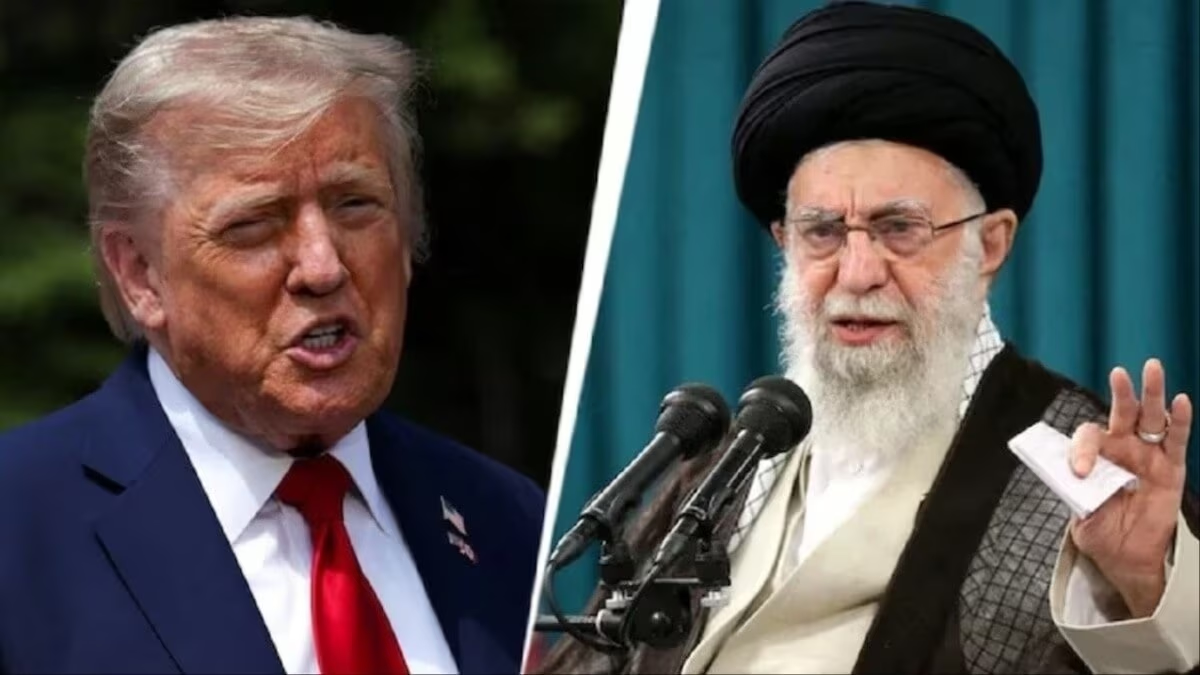
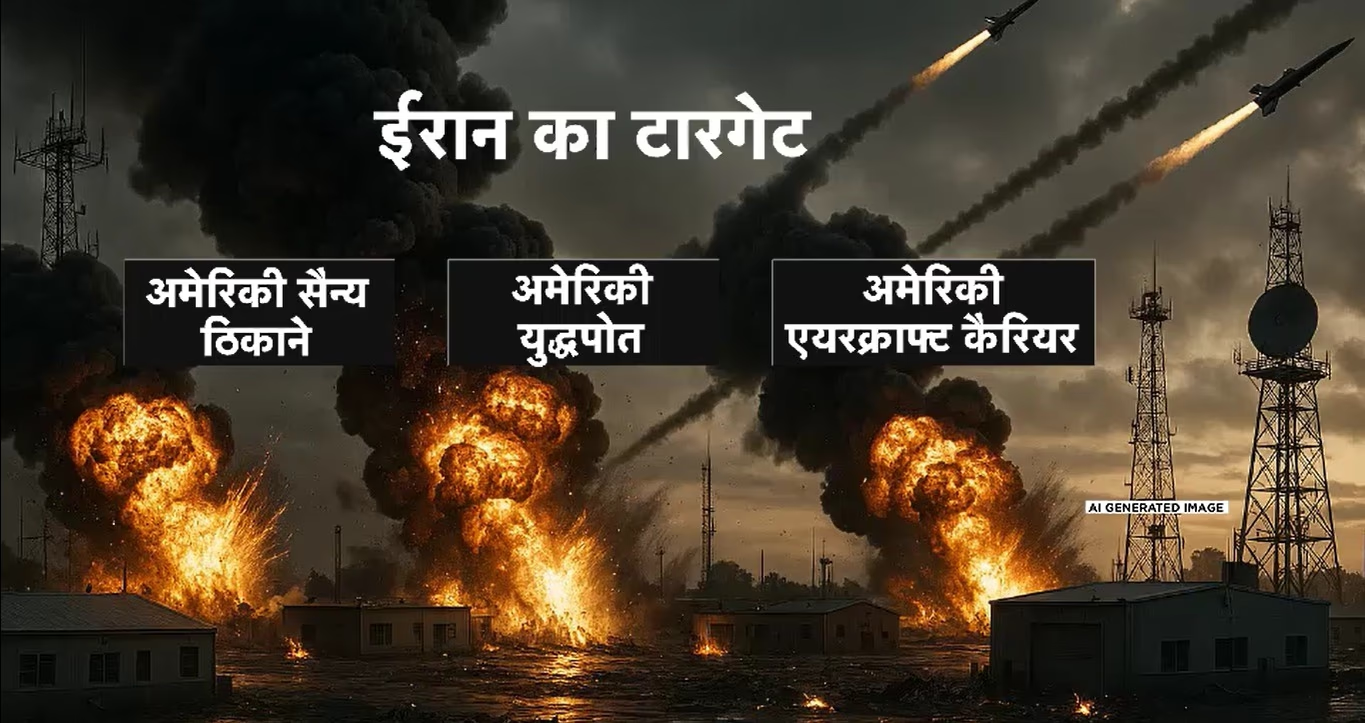
Once more, the ominous clouds of war loom over the Middle East. The tension between the superpower, the United States, and the Islamic Republic of Iran has escalated to a critical point, suggesting that the only path forward might lead to destructive conflict. Amidst stark warnings from President Donald Trump, Iran's Supreme Leader Ayatollah Ali Khamenei has readied his military for an all-out war, locking in missile targets.
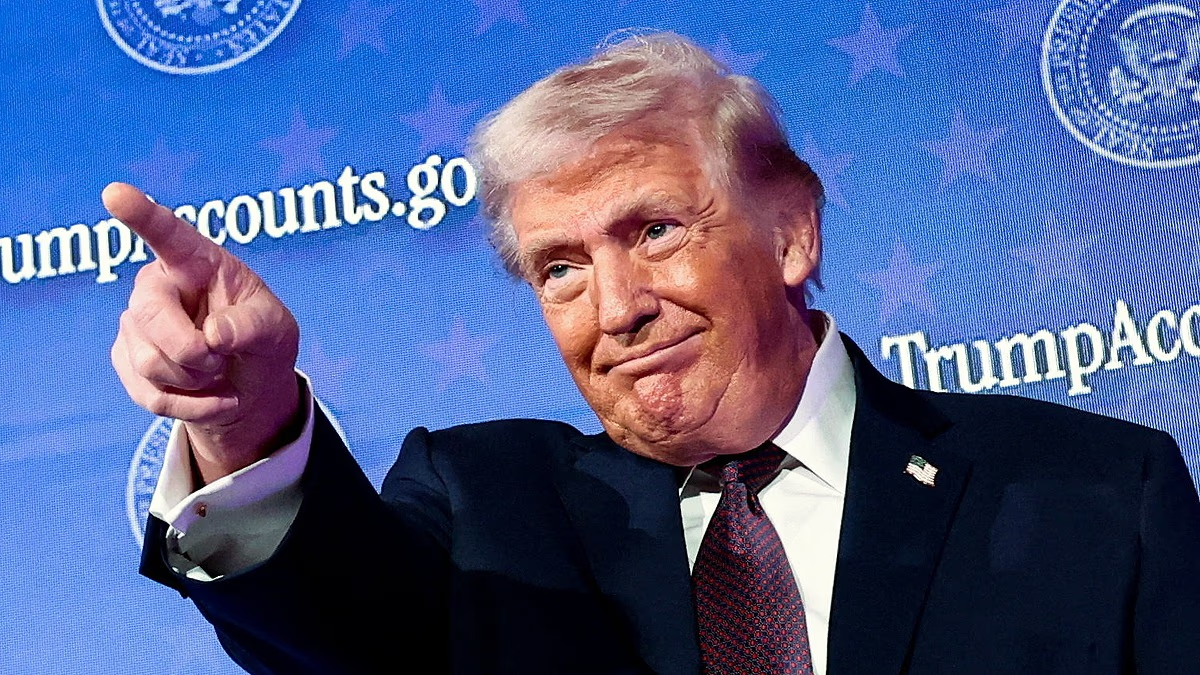
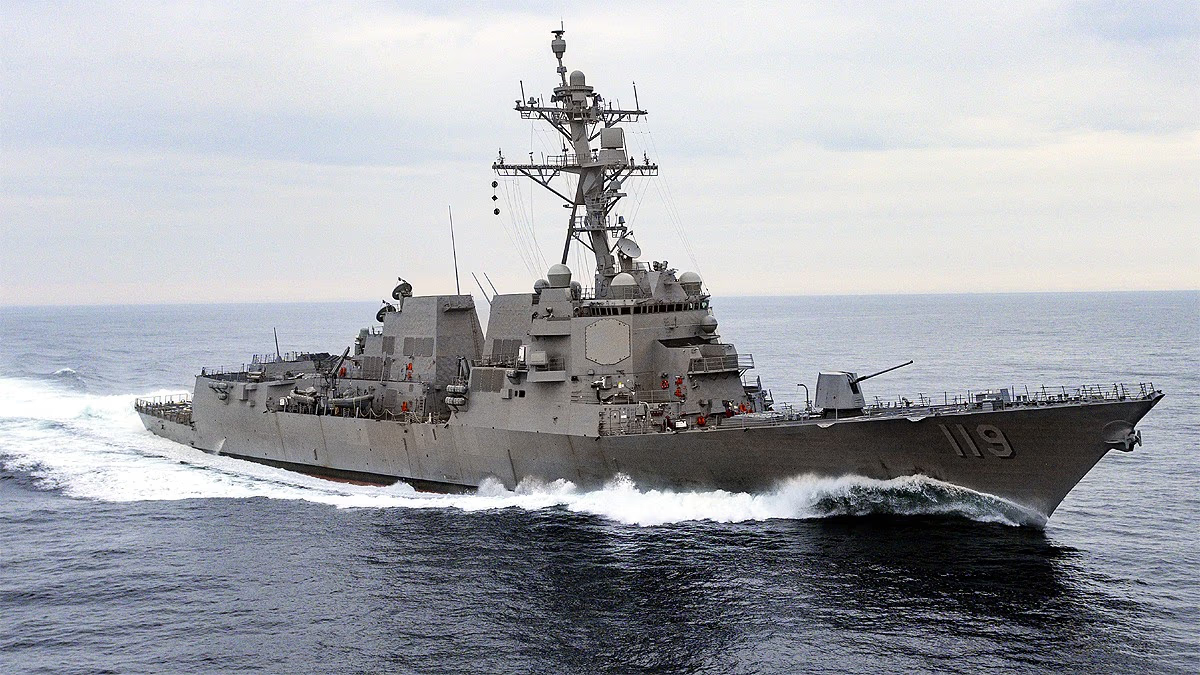
In his latest statement, President Trump has indicated that a large naval fleet set course toward Iran, larger than the one sent to Venezuela. He urged Iran to negotiate, with the implication that if no agreement is reached, further actions will be taken.
With U.S. warships and fighter jets poised near Iran, defense experts are eyeing potential military action. Reports in U.S. media imply that an attack on Iran could happen at any moment. Discussions on military strikes against Iran have been held with allies including the UK, France, Israel, and several Middle Eastern nations, with Washington having shared attack blueprints with them.
According to sources, Iran has readied extensive counter-strike strategies across land, air, and sea. The Iranian military and the Revolutionary Guards (IRGC) have ramped up the deployment of missiles, drones, and naval strength. The Iranian leadership asserts that they are prepared to retaliate swiftly in the event of a U.S. assault.
Amid rising tensions, Iran's diplomatic channels are working overtime. Iran's National Security Council Secretary Ali Larijani has unexpectedly arrived in Moscow, while Foreign Minister Abbas Araghchi is currently in Istanbul. Experts suggest these trips are part of a strategic effort to convey messages to global powers and secure diplomatic support or balance before any military confrontation.
Source: aajtak
Worldwide, eyes are set on Trump’s next move concerning Iran. His decisions could spark conflict between the U.S. and Iran at any instant. Many defense experts believe that the strategic encirclement of Iran by U.S. forces is an unmistakable sign that significant actions are imminent.
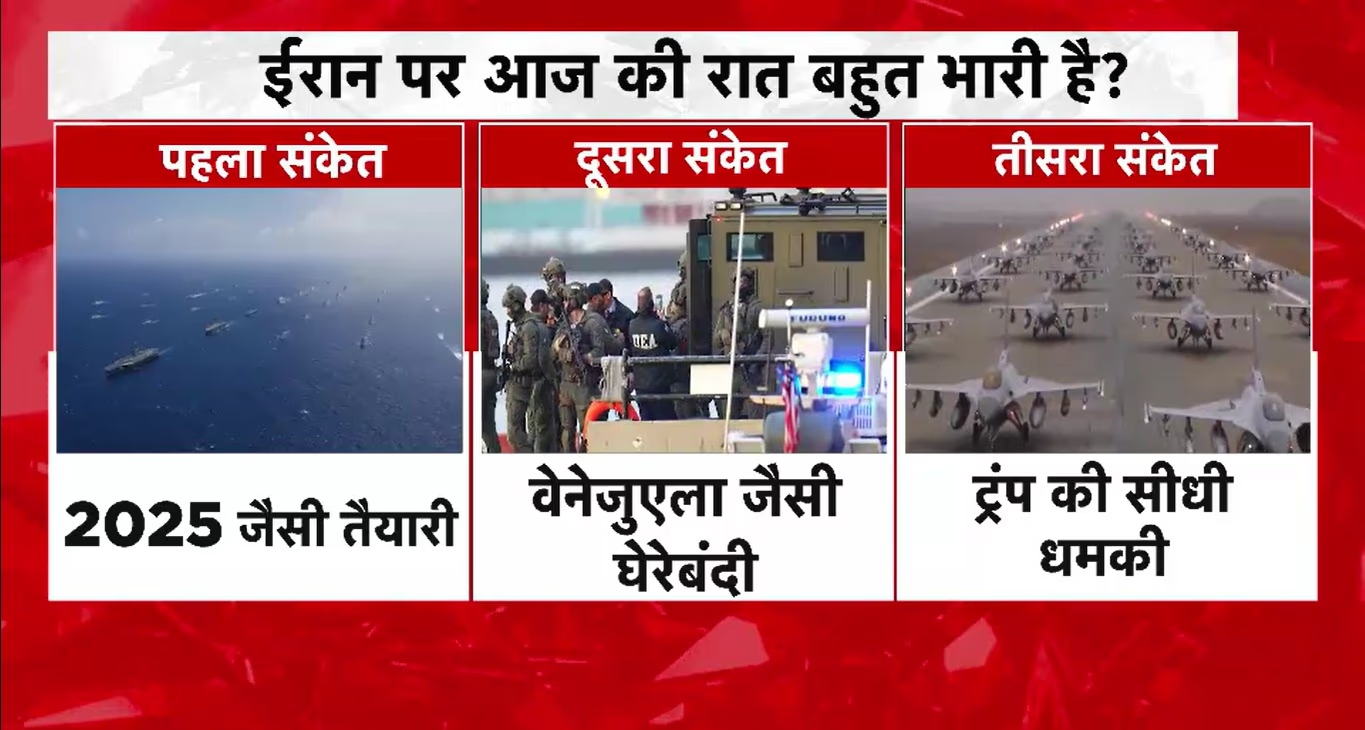
The first indication comes from a deployment resembling the one initiated during the Israel-Iran skirmishes, where U.S. forces moved into the Middle East. This time, American troops are again positioned near Iran, reminiscent of prior pivotal movements when B-2 bombers launched devastating strikes on Iran's nuclear sites.
The second sign involves a replication of Trump's 'Operation Maduro,' where U.S. forces surrounded and intervened in Venezuela, leading to the apprehension of Maduro and bringing him to the U.S. Similarly, a military setup now encircles Iran.
The third indication is Trump's open threat of war to Iran, backed by corroborating statements from the U.S. Secretary of State and the Secretary of Defense. Analyzing the strategic deployment around Iran, the message is clear: Trump’s forces await his command.
The timing of President Trump’s recent declarations about Iran suggests gravity. He made it clear that U.S. military action will proceed only if Iran’s Supreme Leader surrenders, pointing to a decisive battle strategy rather than mere warnings.
The Defense Secretary has laid out a military action plan, openly declaring that an order from Trump will precipitate immediate military engagement with Iran. The U.S. has fully primed its forces, with a former military officer revealing purported dates and targets already set by Trump for military actions against Iran.
Source: aajtak
Speculation is rife about potential targets including IRGC military bases, ballistic missile launch/ storage sites by U.S. air and naval forces. Strategic encirclement points to heightened tensions, now bolstered by the arrival of an additional U.S. destroyer to the Middle East. The area hosts 30,000 to 40,000 U.S. troops across various bases that enhance strategic positioning.
U.S. military bases spread across Syria, Kuwait, Oman, UAE, Bahrain, Saudi Arabia, Egypt, Jordan, Iraq, and Turkey fortify this encirclement, with the largest base located in Qatar. Amid this, President Trump has clearly stated that unless Iran heeds the conditions sent their way, the U.S. stands ready for military action.
The U.S. has tasked twelve fighter jets to Jordan, and positioned various naval assets in strategic areas. President Trump's warning underscores that time is swiftly running out for Iran to negotiate a deal on its nuclear program.
Previously, communication with Iran was facilitated through Oman, during which Trump conveyed three conditions: first, complete cessation of the nuclear program including surrendering all bomb-grade uranium to the U.S. Second, an unconditional stop to support of militias in the Middle East, including Hamas, Houthi rebels, and Hezbollah. Third, halt to the long-range ballistic missile program. These conditions, however, are staunchly opposed by Iran.
If Trump orders an assault on Iran, scenarios suggest targets to be split into three categories: The nuclear sites like Fordow, Natanz, and Isfahan; the military leadership including Iranian top commanders, especially those linked to IRGC, and the internal security forces; and strategic sites like ballistic missile factories and military bases. Also, cyber attacks and covert operations remain as tangible countermeasures.
In 2025, America used B-2 bombers to target Iran's nuclear facilities. Analysts believe a non-invasive strategy through comprehensive strikes, like using Tomahawk cruise missiles launched from naval vessels far from Iranian shores, is probable this time to mitigate risk to U.S. military personnel.
Another option involves Joint Air-to-Surface Standoff Missiles (JASSM), encompassing a 1,000-pound penetrative warhead with 620-mile reach, deployable from multiple fighter and bomber aircrafts, as well as from U.S. Navy jets.
Drones could be employed for direct combat, reducing risk to pilots and providing enhanced surveillance capabilities for the U.S.