A long-standing point of contention between the United States and Iran is finally making its way to the negotiation table. Despite the tensions resembling wartime conditions, both nations have agreed to a round table meeting scheduled for Friday, February 6. This has been confirmed by representatives from both the US and Iran. The meeting will take place in Istanbul, Turkey, with delegates from Saudi Arabia, Egypt, and other nations present. Before this, the US has presented Iran with three conditions.
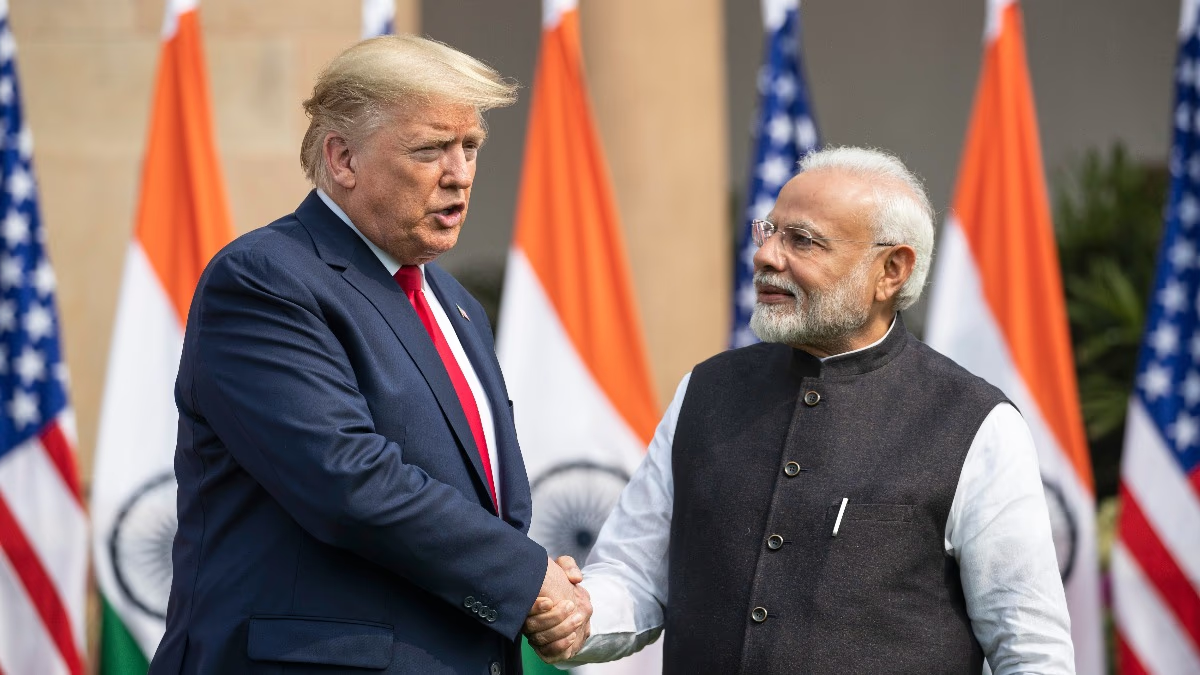
This meeting is expected to shape the direction of future discussions on the nuclear agreement. Representing the United States will be President Donald Trump's delegate, Steve Witkoff, while Iran will be represented by Foreign Minister Abbas Araghchi. The initial discussions will focus on establishing a framework for future dialogues and identifying priority topics.
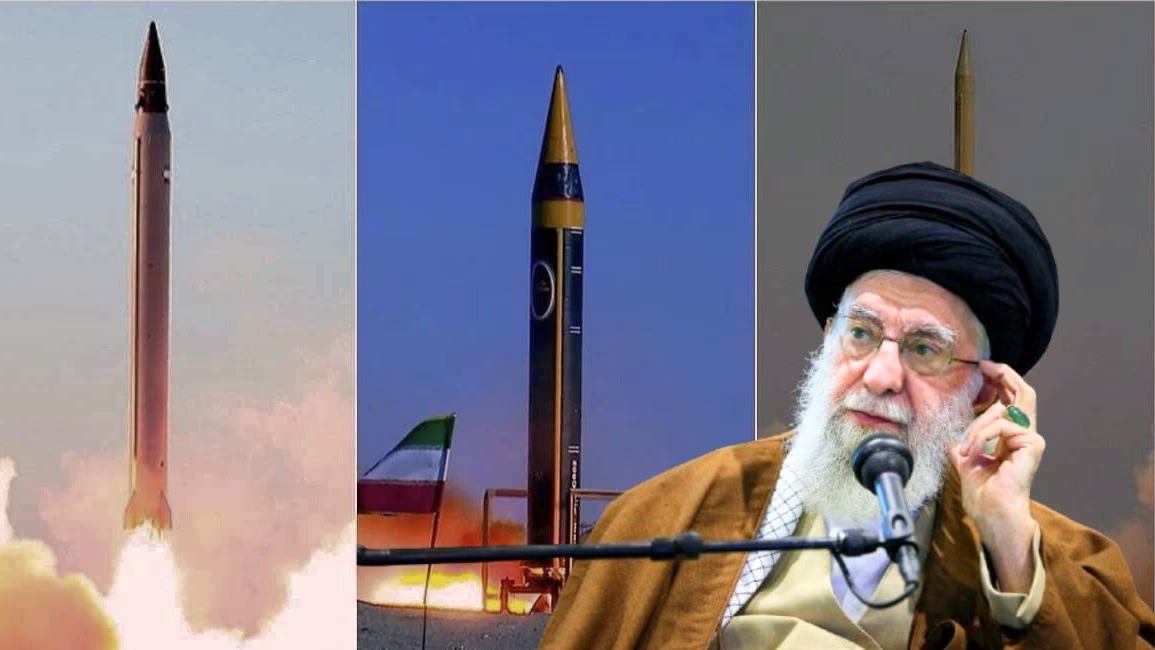
Amid ongoing tensions, Iran has repeatedly insisted that talks are only feasible if the US assures no military action. Foreign Minister Abbas Araghchi has emphasized that negotiation is impossible under threats. Meanwhile, US President Donald Trump and Iran's Supreme Leader Ayatollah Ali Khamenei have been involved in ongoing rhetoric. Trump warns that the US naval fleet approaches Iran, while Khamenei cautions that any US military action could ignite a significant regional conflict.
What Does America Want from the Nuclear Deal?
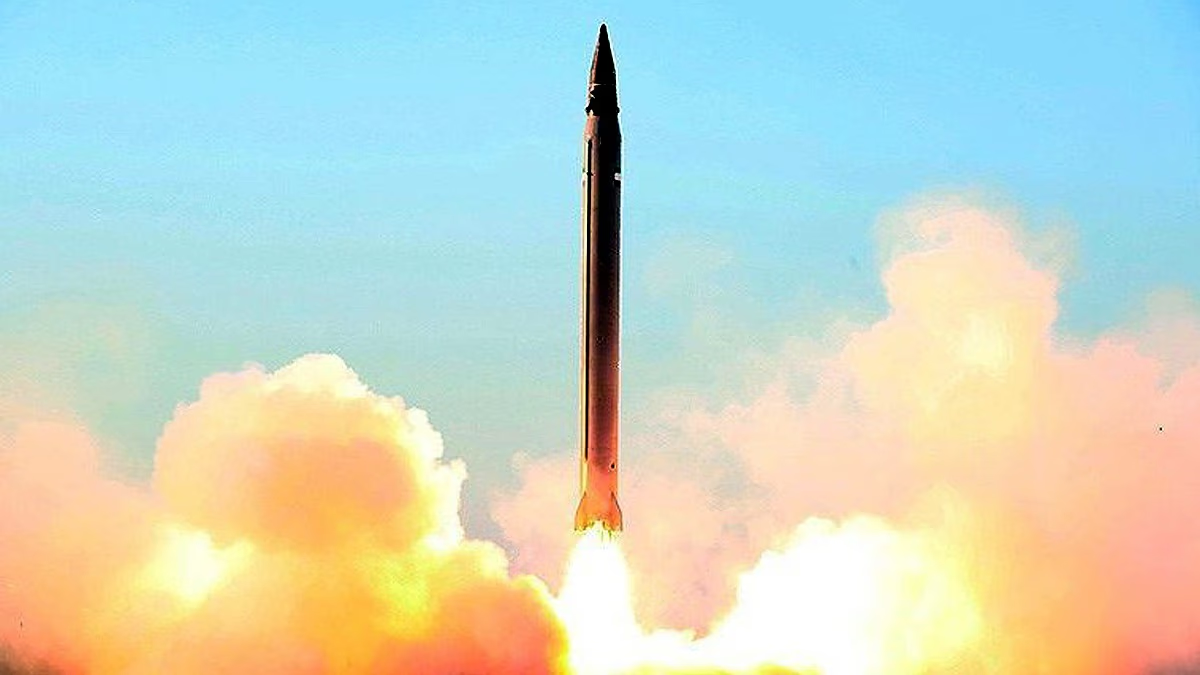
Iran claims that the US has set stringent conditions for the nuclear agreement. These include a ban on Iran's nuclear enrichment, control over its ballistic missile program, and the cessation of support for regional proxy groups. Iran has consistently rejected these demands. Recently, Foreign Minister Araghchi categorically stated that there would be no negotiations over Iran's ballistic missile program under the guise of a nuclear agreement, as no country compromises its security.
Protests and Rising Tensions
Tensions soared when Iran witnessed its largest protests since the 1979 Islamic revolution. Reports claim over 35,000 deaths due to the severe crackdown by Khamenei's regime, although Iran has not officially acknowledged these figures.
Iran’s Expectations from America
For decades, the US and European nations have enforced stringent sanctions on Iran over nuclear enrichment. These sanctions have crippled Iran's ability to openly trade oil and arms, severely impacting its economy and devaluing its currency.
Should the nuclear deal be successful, Iran's primary hope would be the lifting of all sanctions imposed by America. The Iranian Foreign Ministry spokesperson affirmed that the country is pondering over