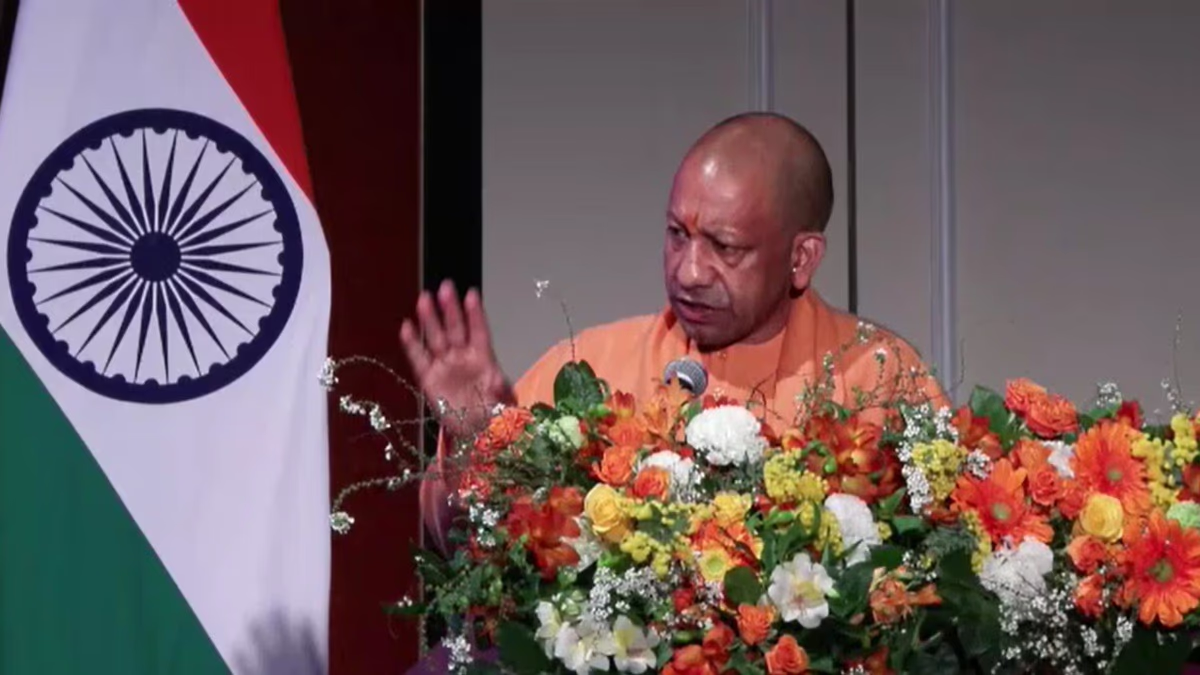
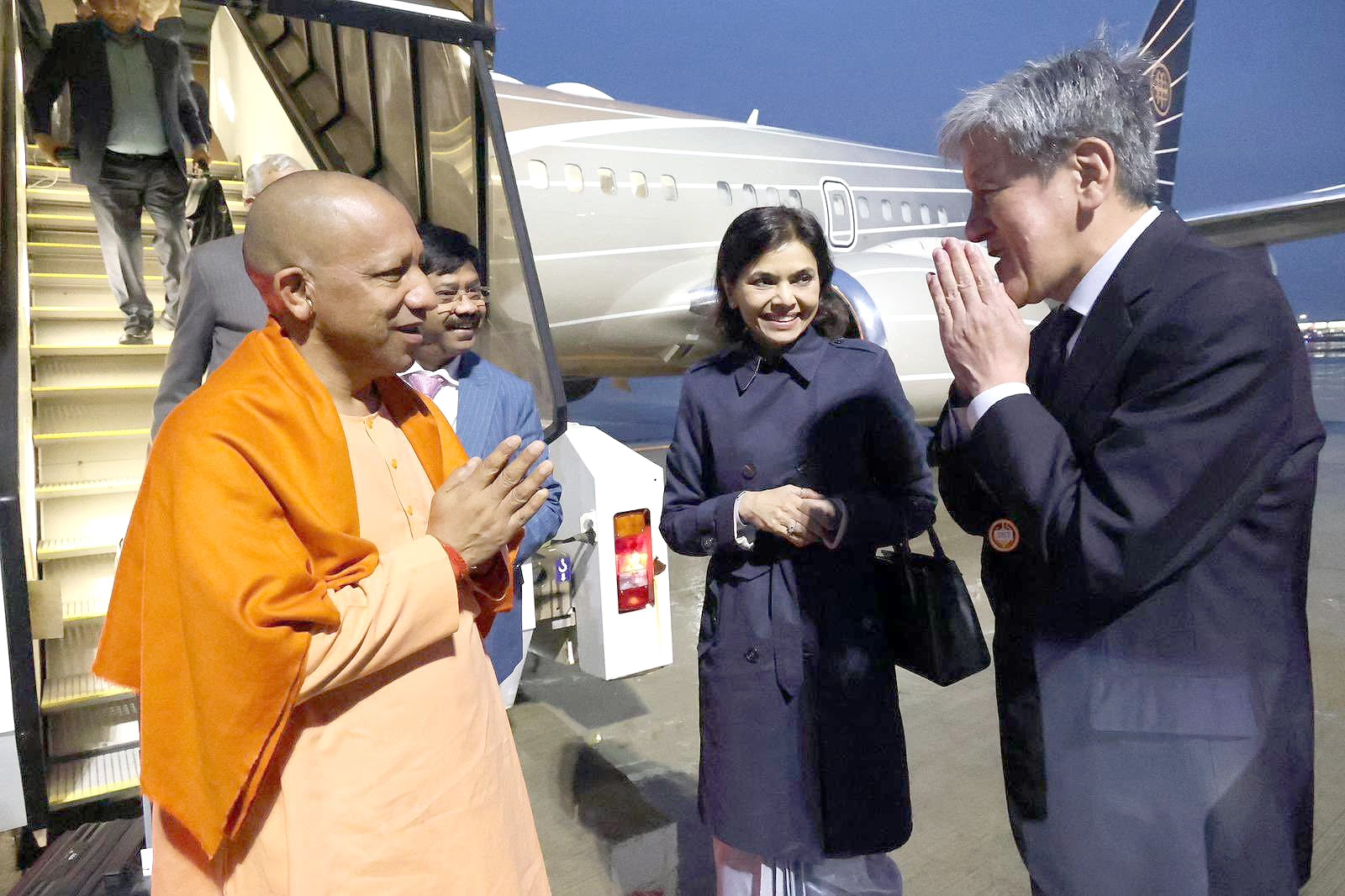
Currently visiting Japan, Uttar Pradesh's Chief Minister, Yogi Adityanath, received a resounding reception in Tokyo. Accompanied by a grand roadshow, CM Yogi in his address, highlighted the ancient cultural bond, linking India and Japan through shared symbolism of heritage and spirituality.
He stated, 'First and foremost, I express respect to the sacred land of Japan — the land of the rising sun. The relationship between India and Japan starts with the sun's first ray, bridging through Uttar Pradesh, the heart of the Suryavanshi lineage. I am here to share how Uttar Pradesh, India's largest state, can fortify these relations.'
CM Yogi's Address in Tokyo
Yogi Adityanath emphasized, 'Uttar Pradesh is the birthplace of Lord Ram of the Suryavanshi dynasty. It's also profoundly connected with Buddha; many important sites from his life are here. Kapilavastu, where Buddha belonged, Sarnath, where he delivered his first sermon, and Shravasti, where he spent numerous monastic retreats, are all treasured within Uttar Pradesh. Kushinagar, the place of his Mahaparinirvana, holds deep significance, alongside vital locations like Kaushambi.'
He offered special attention to these sacred sites linked to Buddha, noting that Japan is renowned as a land that treasures the sun and Buddha’s teachings. However, Japan is uniquely enriched by its Shinto traditions too.
Diving into Japan's religious and cultural depth, Hindu traditions intriguingly weave into the fabric. Their historic connection showcases a profound cultural partnership, mutual exchanges in business, and significant vehicular growth over the centuries. Specifically, as Buddhism traversed from India through China and Korea to Japan, it carried Hindu symbolism along with it.
The Journey of Indian Symbols and Deities
As Buddhism flourished beyond India's boundaries into Central Asia and China after the 1st century AD, it carried Indian philosophical thoughts, symbols, and divine representations. Japan, embracing Buddhism around the 6th century, saw its court culture interspersed with Indian spiritual traditions.
Hindu deities found entry to Japan through Buddhist channels. For instance, Saraswati, known locally as Benzaiten, is revered as a deity of music, wisdom, and water in both cultures, frequently adorned in numerous Buddhist and Shinto temples. Lakshmi, or Kichijoten, embraces the folks as the goddess of fortune and beauty, while Ganesha emerges as Kangiten in a unique dual form representing Shinto's mystical aspects. Indra appears as Taishakuten and Brahma as Bonten, celebrated protectors in Buddhist contexts.
A notable portal to Hindu ethos is found in Tantric Buddhism, particularly within the Shingon tradition established in the 9th century by the monk Kukai. Shingon incorporates mantras, mandalas, and fiery rituals drawing from Vajrayana and Tantric roots originating in India.
Cultural Bonds Beyond Strategy
Even today, Shingon rituals resonate with Sanskrit-derived chants. In Japan, Siddham script, originated in India, commonly inscribes Buddhist texts and mantras. Ancient stone inscription in Sanskrit can be seen inside various temples. In modern times, spiritual dialogues between India and Japan remain active, extending from the 19th and 20th centuries when Indian and Japanese scholars increased their interactions. Swami Vivekananda, during his Japanese visits, appreciated Japan’s cultural consciousness, branding it as spiritually awakened. Modern interests in yoga, meditation, and Vedanta continue, linking back to this historical narrative.
Source: aajtak