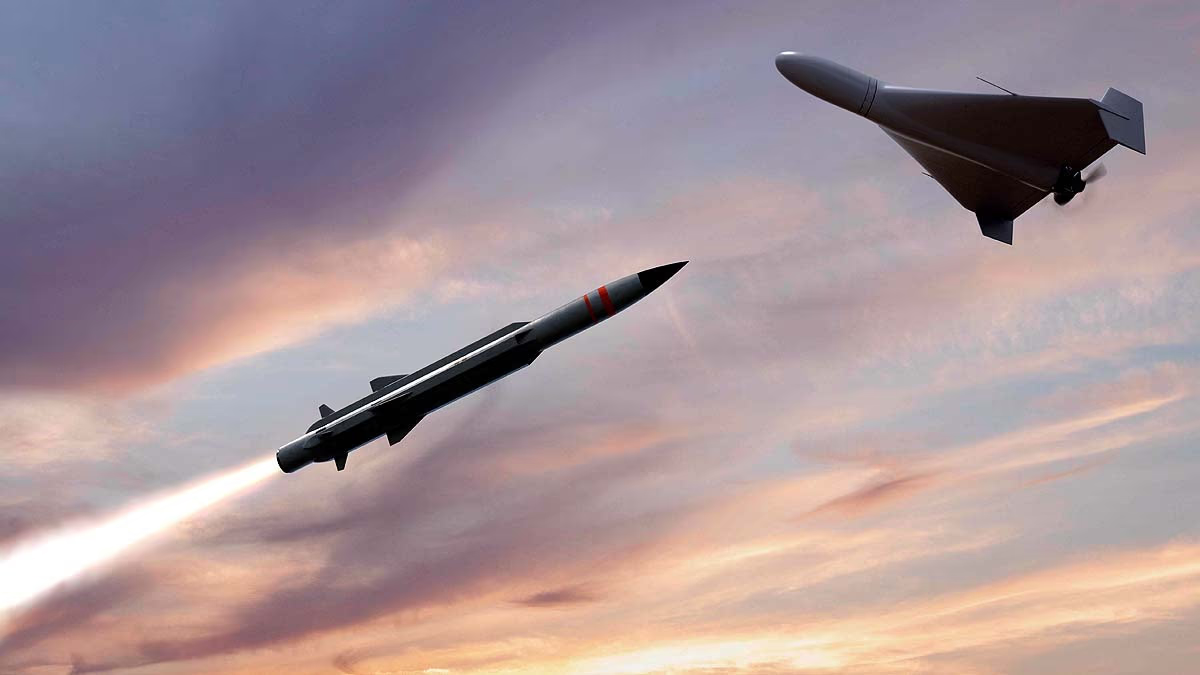
Prime Minister Narendra Modi has arrived in Israel. A substantial $10 billion defense deal could materialize between the two nations, encompassing missiles, drones, smart bombs, laser weapons, and cutting-edge technology. This would significantly enhance India's military prowess on land, air, and sea, much to Pakistan's alarm, particularly concerning Israeli drones.
Why is India-Israel Defense Partnership So Special?
Israel is renowned as one of the leading nations in sophisticated weapon manufacturing. India has been procuring these weapons for years, but now the focus is also on joint manufacturing, technology sharing, and promoting the 'Make in India' initiative.
Also Read:
This partnership with Israel will aid India in combating terrorism, conserving water, advancing green energy, and initiating new road-rail projects (IMEC Corridor). Israel has proposed the 'Hexagon Alliance,' potentially including India. Pakistan brands it as a conspiracy against the Muslim Ummah, with its parliament passing a resolution against it.
Which Israeli Drones Frighten Pakistan?
Pakistan harbors the most fear for these three Israeli drones...
Source: aajtak
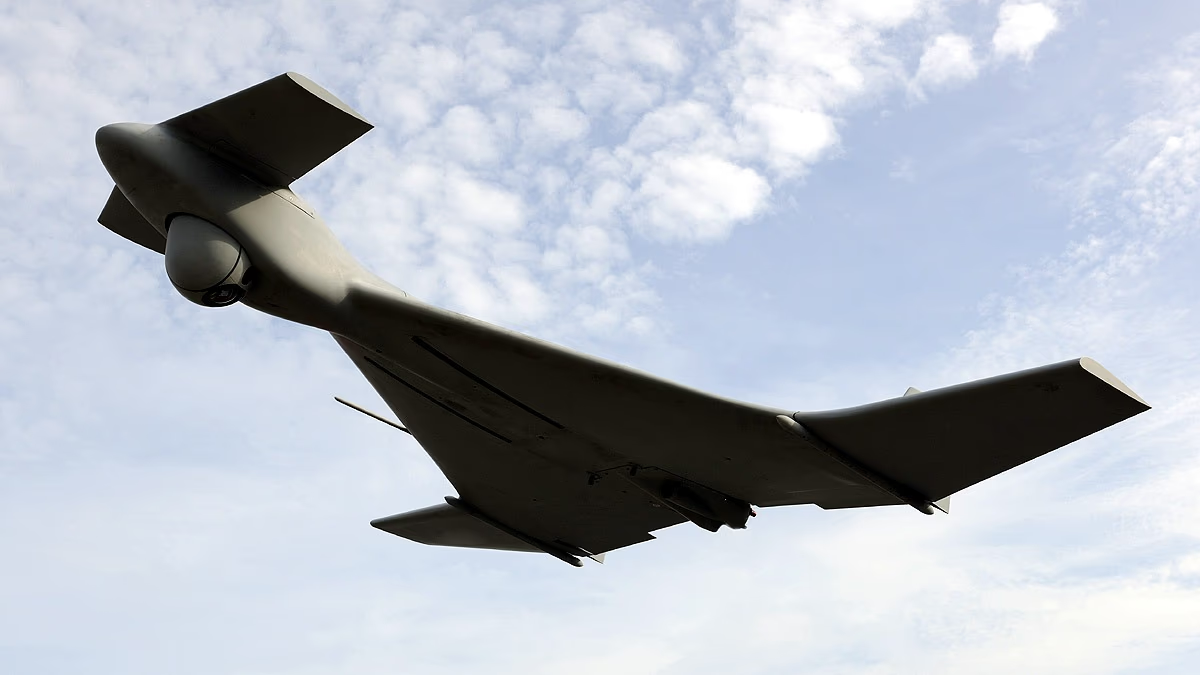
1. Harop – The Kamikaze or 'Suicide' Drone
Harop, a loitering munition, patrols the skies for hours, hunting for enemy radars, bunkers, or ships before making a direct attack. During the 2025 Sindur Operation, India deployed them. Pakistan claims to have shot down over 25 Harop drones, but they caused significant damage to Pakistan's air defenses.
Also Read:
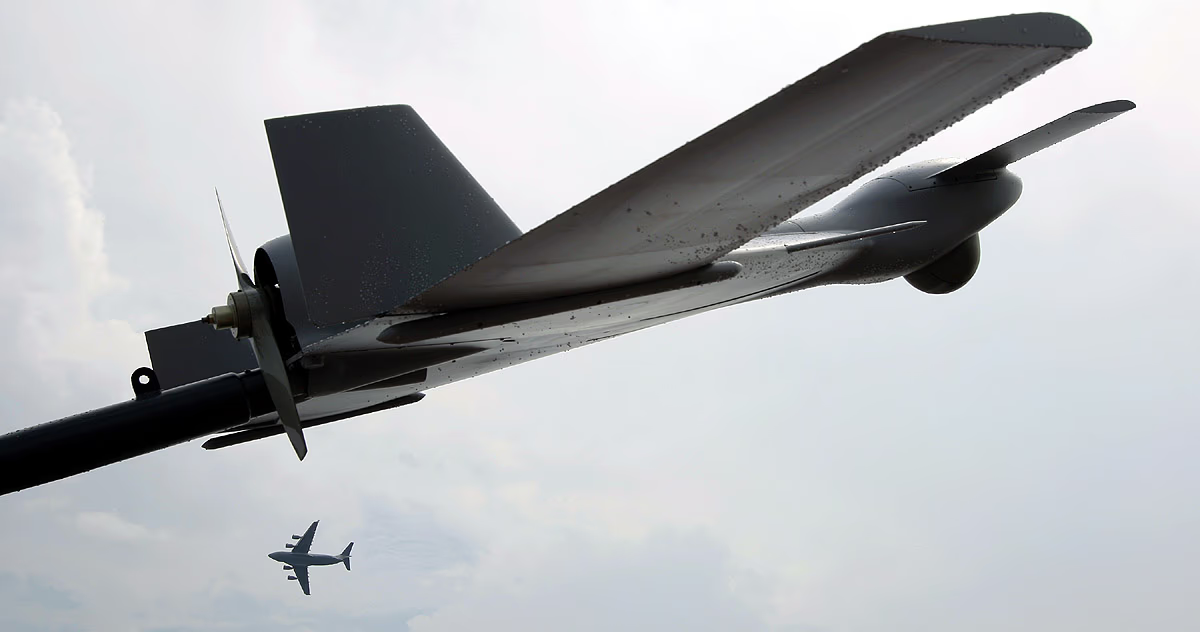
2. Heron TP – The 'Eagle of the Skies'
This drone can fly non-stop for 24-48 hours, monitoring from above. India deploys it along the Pakistan and China borders. Pakistan accuses it of trespassing into their airspace.
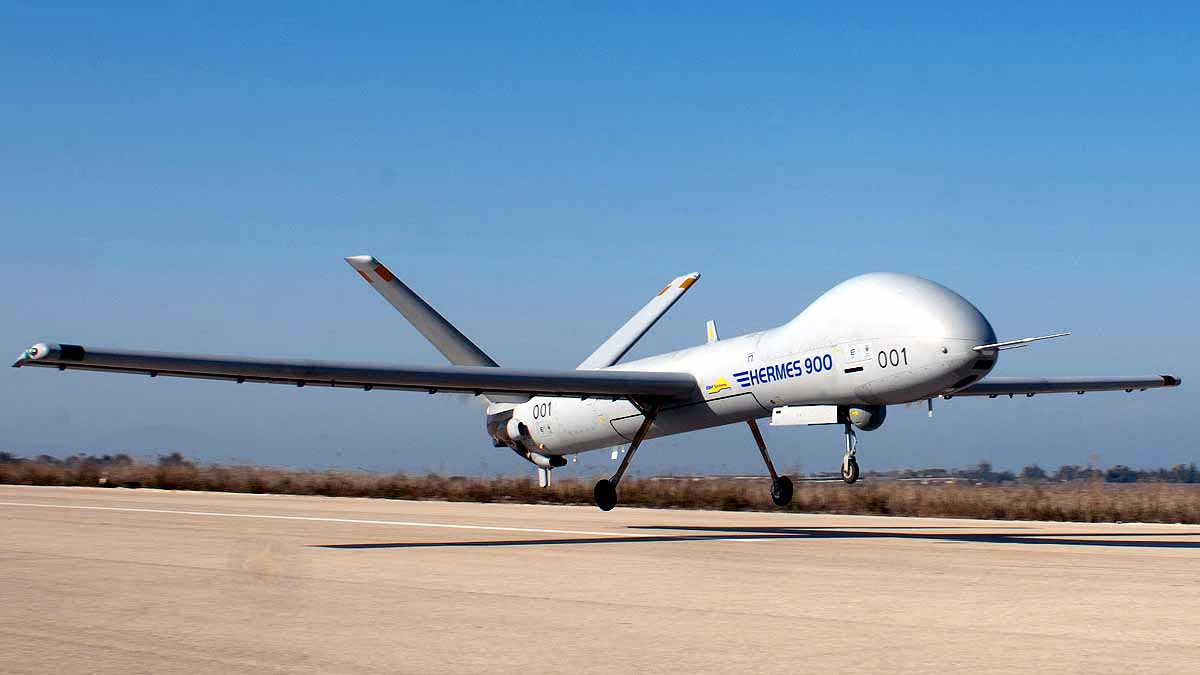
3. Hermes 900 / Drishti-10
Source: aajtak
This drone can operate for 36 continuous hours for reconnaissance, surveillance, and attack missions. In collaboration with India's Adani Group, it's produced locally and already deployed in the Army and Navy. It maintains a constant watch along Pakistan's western border. These drones provide India with eyes in the sky, and Pakistan lacks equally advanced drones, hence the fear.
Also Read: What is Iran's Underground Missile City... Where Missiles and Suicide Drones are Stored
What's in the $10 Billion Deal?
Barak-8 Missile: Takes down enemy planes or missiles over 100 km away. Used by India's Navy and Army and co-developed with Israel.
SPICE-1000: Transforms regular bombs into smart weapons, hitting targets from 100 km away with laser-guided precision.
Rampage: A supersonic missile that penetrates enemy bunkers at high speeds from 250 km away.
Air LORA: Missile launched from fighter jets, striking up to 400 km away with powerful impact.
Ice Breaker: A 'Ninja' torpedo in the skies, capable of traveling 300 km and identifying enemies with AI. Sinks ships at sea.
Spike ATGM: A small arrow that targets tanks from 1-30 km away, working on the fire-and-forget system.
IWI Tavor and Negev: Lightweight, robust rifles and machine guns, perfect for soldiers.
What Else Could Be on the Table?
Israel may offer India the full technology for the Iron Beam laser weapon. This 100-kilowatt laser destroys drones and rockets for as little as $2. Meanwhile, Iron Dome missiles cost between $50,000 to $100,000 each. Discussions might also cover six air refueler tankers and the Golden Horizon missiles.
What Does This Deal Mean?
India's military is poised to become better equipped compared to China and Pakistan.
Manufacturing these weapons in India will boost employment and strengthen self-reliance.
New alliances: IMEC Corridor, Hexagon Alliance open new avenues in trade and security.
Pressure on Pakistan: India now possesses modern weapons, as proven in the 2025 conflict.
PM Modi's visit to Israel is not just about acquiring weapons; it's about transforming India into a global powerhouse. This collaboration with Israel elevates India's stature in fighting terrorism, security, and technology. For Pakistan, it's a clear message—India is now more ready and powerful.