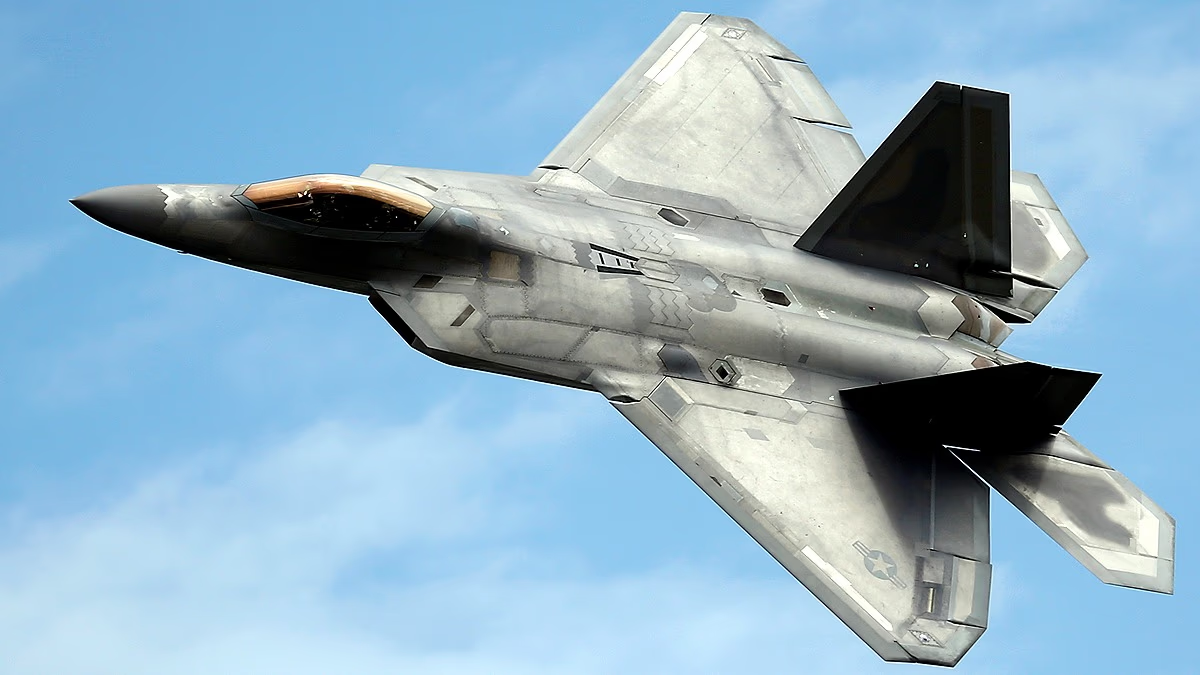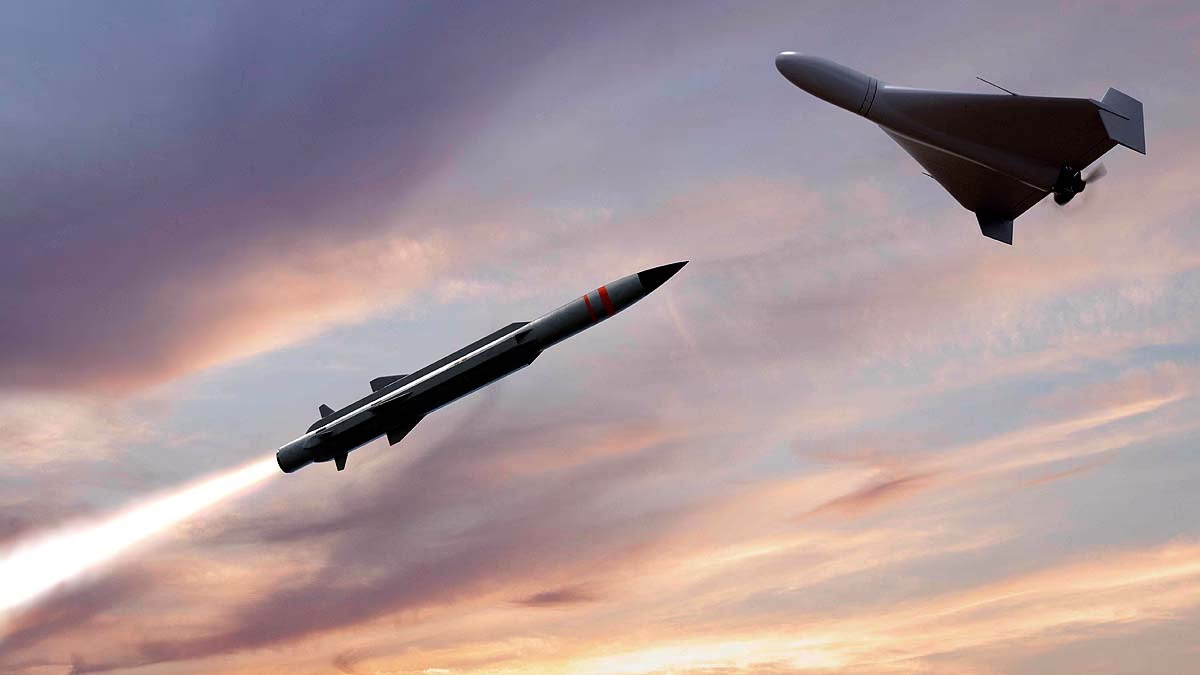
During Indian Prime Minister Narendra Modi's visit to Israel, Israel has offered India its most secretive weapon – the Golden Horizon air-launched ballistic missile (ALBM). This missile is exclusively available to India, unavailable to any other nation. Should the deal proceed, it will be integrated with the Indian Air Force’s (IAF) Su-30MKI fighter jets.
Also read:
Main Features of the Golden Horizon Missile
Type: Air-launched ballistic missile (ALBM) – launched from fighter jets mid-air.
Range: Achieves 800 kilometers when launched from Su-30MKI.
Speed: Reaches 6500 kilometers per hour – surpassing the speed of BrahMos cruise missile.
Dimensions: Approximately 8.3 meters long, weighing about 3100 kilograms.
Targets: Deep subterranean bunkers, command centers, nuclear facilities, and fortified military positions.
Special Feature: Can engage targets beyond the range of enemy BVR (Beyond Visual Range) fighters and SAM (Surface-to-Air) missiles – minimizing the need for pilots to enter enemy territories.
This missile is built upon Israel's Silver Sparrow/Blue Sparrow target missile, initially developed for missile defense testing, and now transformed into an offensive weapon.

Source: aajtak
How Will It Work?
The Su-30MKI jet carries the missile under its wing. The pilot can launch it from India’s airspace or near the border. It ascends to a high altitude, then swiftly descends to hit its target. Enemy air defenses will find it challenging to intercept due to its ballistic path and hypersonic speed.
Also read:
Countering Pakistan and China
Against Pakistan...
None of Pakistan's air defenses or fighters can intercept this missile. Indian Su-30MKIs can strike targets up to 800 km away from just near the Pakistani border – like Rawalpindi's GHQ, nuclear sites, or underground command bunkers. This means India can strike deep within Pakistan without risking its pilots. Pakistan would need to reconsider any aggression, knowing its critical assets could be destroyed in retaliation.
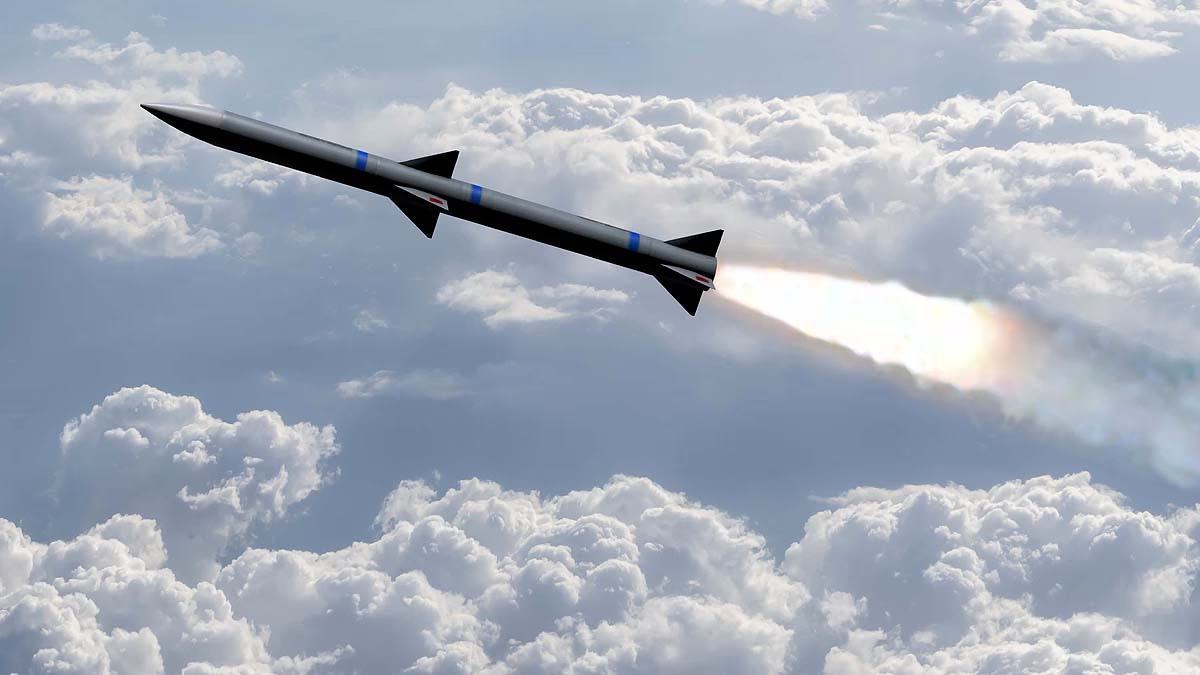
Source: aajtak
Against China...
The Su-30MKI could launch attacks from areas near Ladakh or Arunachal to target military installations deep within Tibet or inner China. Even advanced air defenses like China's S-400 would struggle to counter this swift, high-flying missile. Such capabilities ensure that China would think twice about incursions or attacks at the LAC, as India is acquiring a new lethal stand-off (long-distance) weapon.
Significant Advantage in Two-Front Warfare
This missile provides the Indian Air Force a substantial edge in stand-off warfare. Precise and powerful strikes can be executed without approaching enemy land. Both Pakistan and China receive a clear message – any attack would come at a significant cost. This offer marks a new chapter in India-Israel defense collaboration. While officials from both countries have yet to comment officially, defense experts see it as a game-changer for the IAF.