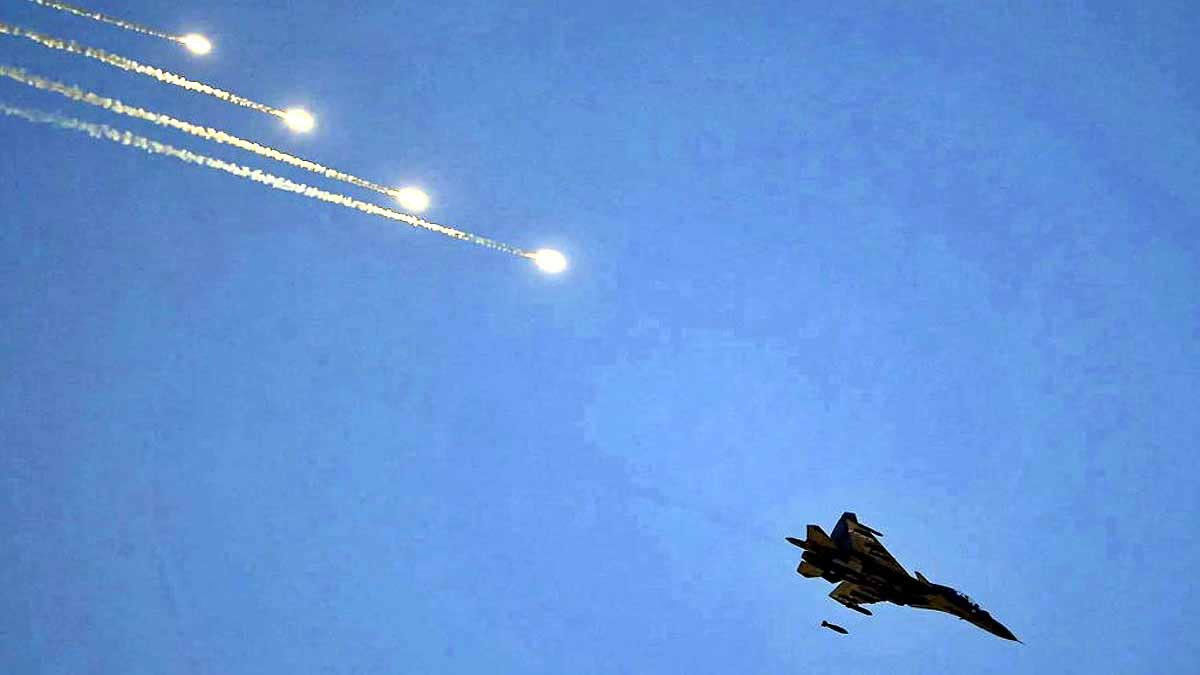
In the early hours of February 25, 2026 (around 12:50 AM Tuesday), a Turkish Air Force F-16 fighter jet crashed in the western province of Balıkesir, Turkey. The jet, which was on a mission flight from the 9th Main Jet Base, lost radio and radar contact minutes after takeoff. It fell near the Istanbul-Izmir Highway, scattering debris over a wide area and creating a massive fireball. Major Ibrahim Bolat, the pilot, was martyred.
What Was Captured in Dashcam Footage?
The initial moments of the crash were captured by dashcams of passing cars. The video shows the jet plummeting rapidly, followed by a massive explosion and flames. This footage quickly went viral on local media and social networks. Rescue teams reached the site swiftly.
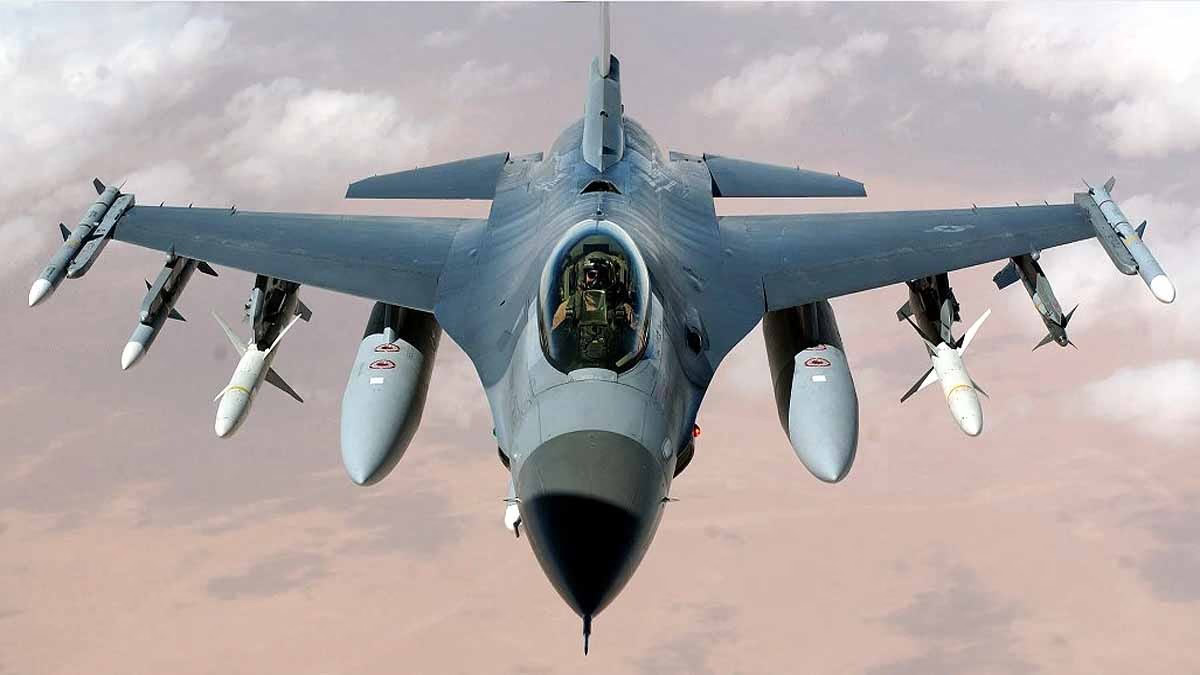
F-16 Fighting Falcon – Full Specifications
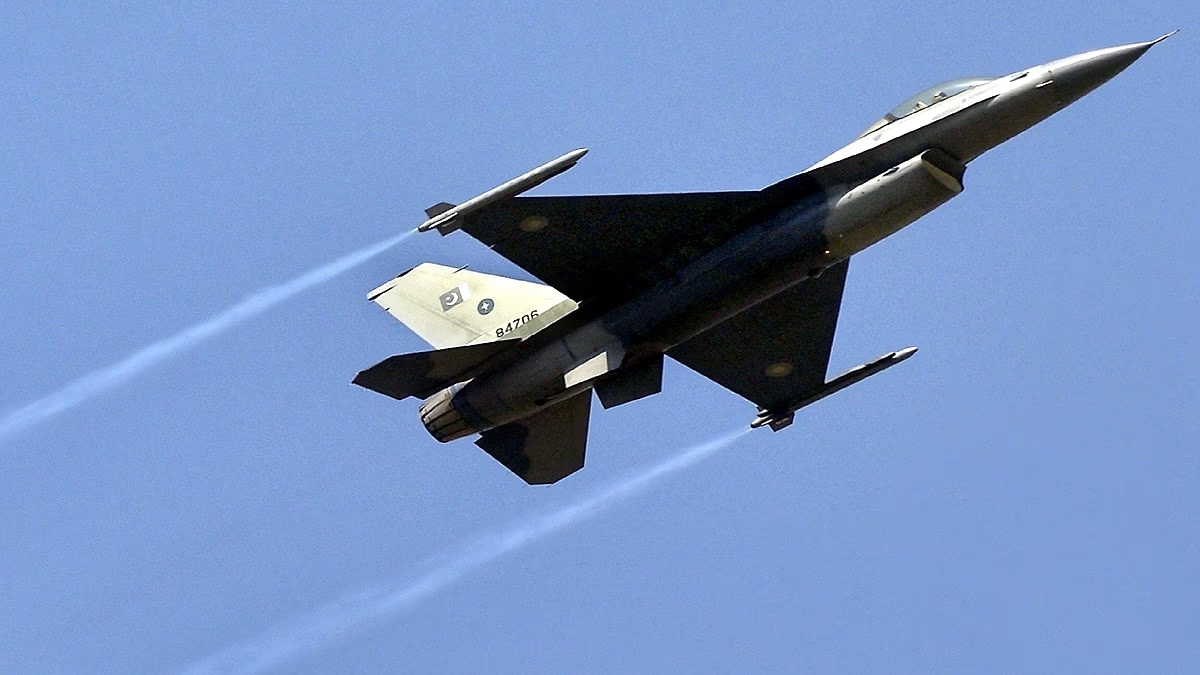
America's renowned single-engine, supersonic multirole fighter jet, the F-16 Fighting Falcon, was initially built by General Dynamics and is now produced by Lockheed Martin. Falling under the fourth generation of combat aircraft, it's adept at both air-to-air and air-to-ground attacks.
Length: 49 feet 5 inches (15.06 meters)
Wingspan: 32 feet 8 inches (9.96 meters)
Height: 16 feet (4.88 meters)
Empty Weight: Approximately 19,700 pounds (8,936 kg)
Maximum Takeoff Weight: Between 37,500 pounds (17,000 kg) and 48,000 pounds
Engine: Equipped with either Pratt & Whitney F100-PW-229 or General Electric F110-GE-129 turbofan engines, delivering 29,000 pounds of thrust with afterburner
Maximum Speed: 2,400 km/h
Ceiling: Over 50,000 feet (15,240 meters)
Range: Over 2,000 miles with internal fuel (extending with external tanks)
Source: aajtak
Armaments
20mm M61 Vulcan gun (500 rounds). 11 hardpoints for AIM-9 Sidewinder, AIM-120 AMRAAM missiles, bombs, rockets, fuel tanks, etc. Features include a fly-by-wire control system, bubble canopy for 360° visibility, side stick control, and a 30° reclined ejection seat to help withstand g-forces.
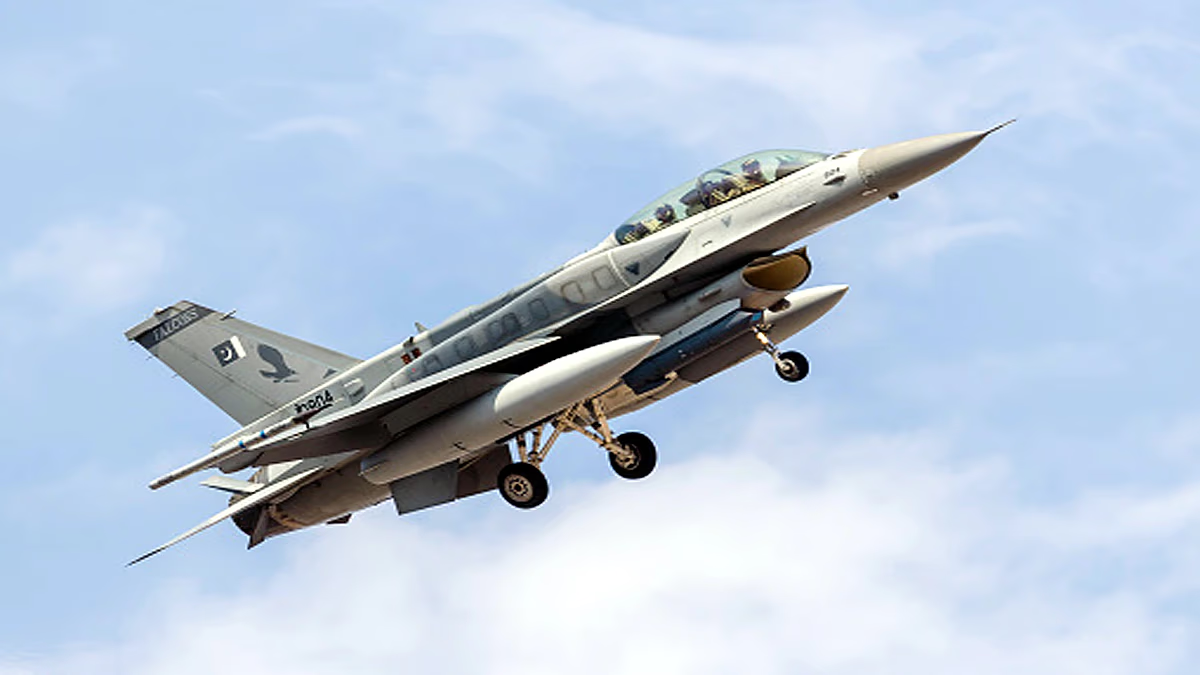
The Turkish Air Force (TuAF) is one of the world's largest operators of F-16s, boasting over 200 jets (Block 30, 40, 50, and new Block 70/72), playing vital roles in NATO missions.
History of F-16 Incidents
Since its inception in the 1970s, countless F-16s have taken to the skies worldwide, yet incidents still occur. According to F-16.net, as of 2020, over 670 hull-loss incidents have been recorded.
Common Causes...
Engine Failure
Pilot Error (Spatial Disorientation)
Weather Conditions
Mid-Air Collision
Technical Malfunctions
Source: aajtak
Past Crashes in Turkey
December 2003: An F-16C crashed in Balıkesir province.
1996: A Greek Mirage 2000 shot down a Turkish F-16D over the Aegean Sea. Multiple incidents have occurred during training missions too.
In recent years, F-16 crashes have also occurred in Poland (2025 airshow rehearsal), the USA, and elsewhere. Though generally harboring a good safety record, the high number of F-16s correlates to increased incidents.
About This Incident...
The cause is still unknown. Turkey's Ministry of Defense and local prosecutors are investigating. Debris has been collected from the site with no civilian injuries reported on the highway. This incident marks a significant setback for the Turkish Air Force. As a vital component of Turkey’s aerial strength, the outcome of the investigation will shed light on the crash factors, be it engine issues, pilot error, or other technical problems.