
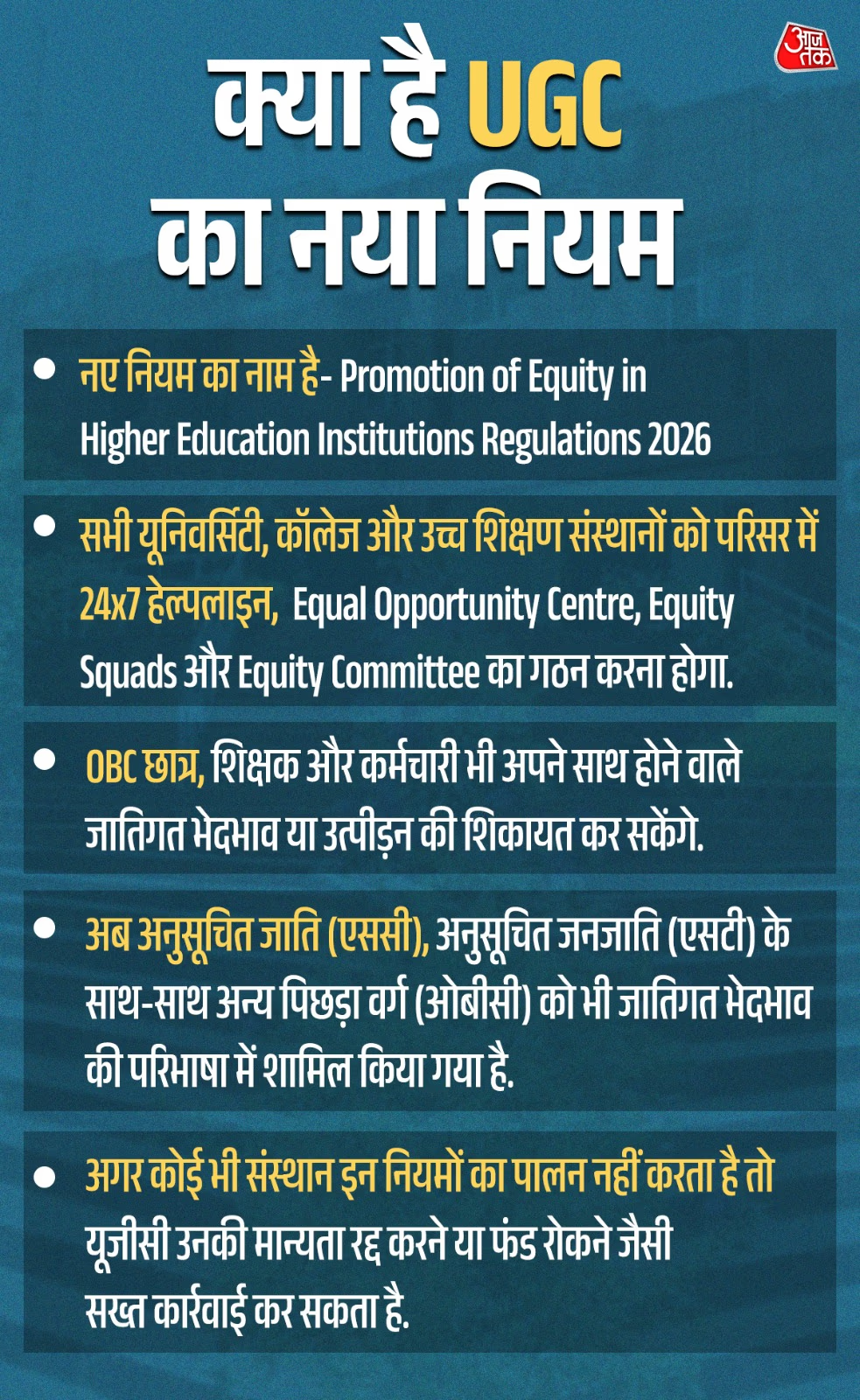
The University Grants Commission (UGC) has introduced a new regulation aimed at eliminating caste discrimination and fostering an environment of equality within higher education institutions, known as the Promotion of Equity in Higher Education Institutions Regulations. This rule is mandated for implementation in all colleges and universities. Ironically, the very law intended to promote equality within college campuses is breeding discrimination and bias among different groups. Consequently, Bareilly Magistrate Alankar Agnihotri has resigned, equating it to the British Rowlatt Act as a draconian law.
Amidst the uproar over the new UGC rule - the Promotion of Equity in Higher Education Institutions Regulations, 2026 - it is being compared to the Rowlatt Act. Let's explore what the Rowlatt Act was and why such comparisons are being made.
Source: aajtak
What was the Rowlatt Act?
In 1919, the British government introduced the Rowlatt Act to suppress nationalist movements in India. It contained provisions allowing the arrest and detention of activists on mere suspicion without charge, warrant, or a trial, including sentencing without a jury.
In April 1918, a committee recommended that the emergency wartime laws under the Defence of India Act (1915) be made permanent six months after the war ended. These laws were used to restrict press freedom and crush nationalist politics. British officials were granted the authority to detain anyone suspected of radical political activity indefinitely.
Provisions of the Rowlatt Act
On March 18, 1919, the British government's Imperial Legislative Council hastily passed a bill based on the committee's recommendations, enacting the Rowlatt Act. Despite all Indian council members voting against it, the Act stripped away citizens' fundamental rights and imposed strict restrictions on freedom of expression and press freedom. It empowered the government to suppress any real or perceived opposition to colonial rule.
Among its key provisions, individuals suspected of sedition could be arrested without warrant or trial, searched, and detained. Special courts could try accused individuals without a jury, away from public eyes, denying them legal representation and the right to appeal against the trial outcome.
Why is the new UGC rule being compared to it?
The new UGC equity rule is being compared to the Rowlatt Act because, under its provisions, any victim can file a written complaint with the Equity Committee. The committee, without disclosing the complainant's identity, will forward the complaint to the police for action, ensuring action against the accused. Criticism arises from the absence of a requirement for evidence by the accuser in these provisions.
Therefore, there is a high possibility of false accusations being made and acted upon. Even if a complaint is proven false, there is no provision for action against those making false accusations in the rules.
Additionally, the new rule includes provisions for creating an Equity Center, Equity Committee, and Equity Squad. There is no representation provision from the general category as members of any committee or center, leading people to view it as a one-sided rule and oppose it.