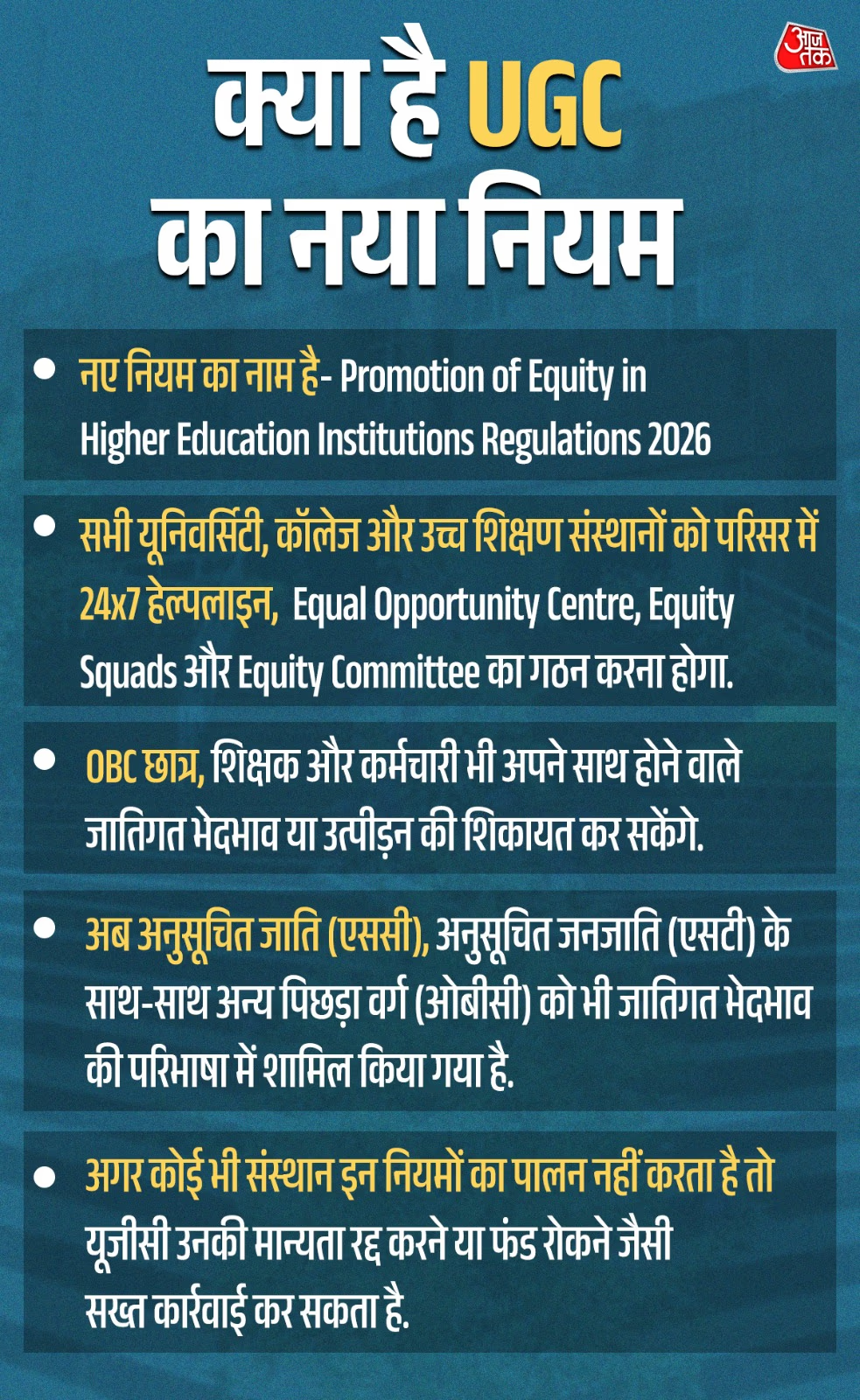
The UGC's new Equity Rule (Promotion of Equity in Higher Education Institutions Regulations 2026) has sparked widespread discussions. There are parts of it that have raised concerns among certain social groups. Let's unpack what this rule includes: the formation of Equity Centers, Committees, Helplines, and Squads in colleges and how they'll operate. Could these measures lead to false complaints targeting innocent individuals? Let's delve into this rule comprehensively.
The core aim of this regulation is to abolish discrimination based on religion, caste, race, gender, birthplace, or disability, particularly against Scheduled Castes, Scheduled Tribes, socially and educationally backward classes, economically weaker sections, and individuals with disabilities. It seeks to nurture complete equality among stakeholders within higher education institutions.
How Committees are Formed
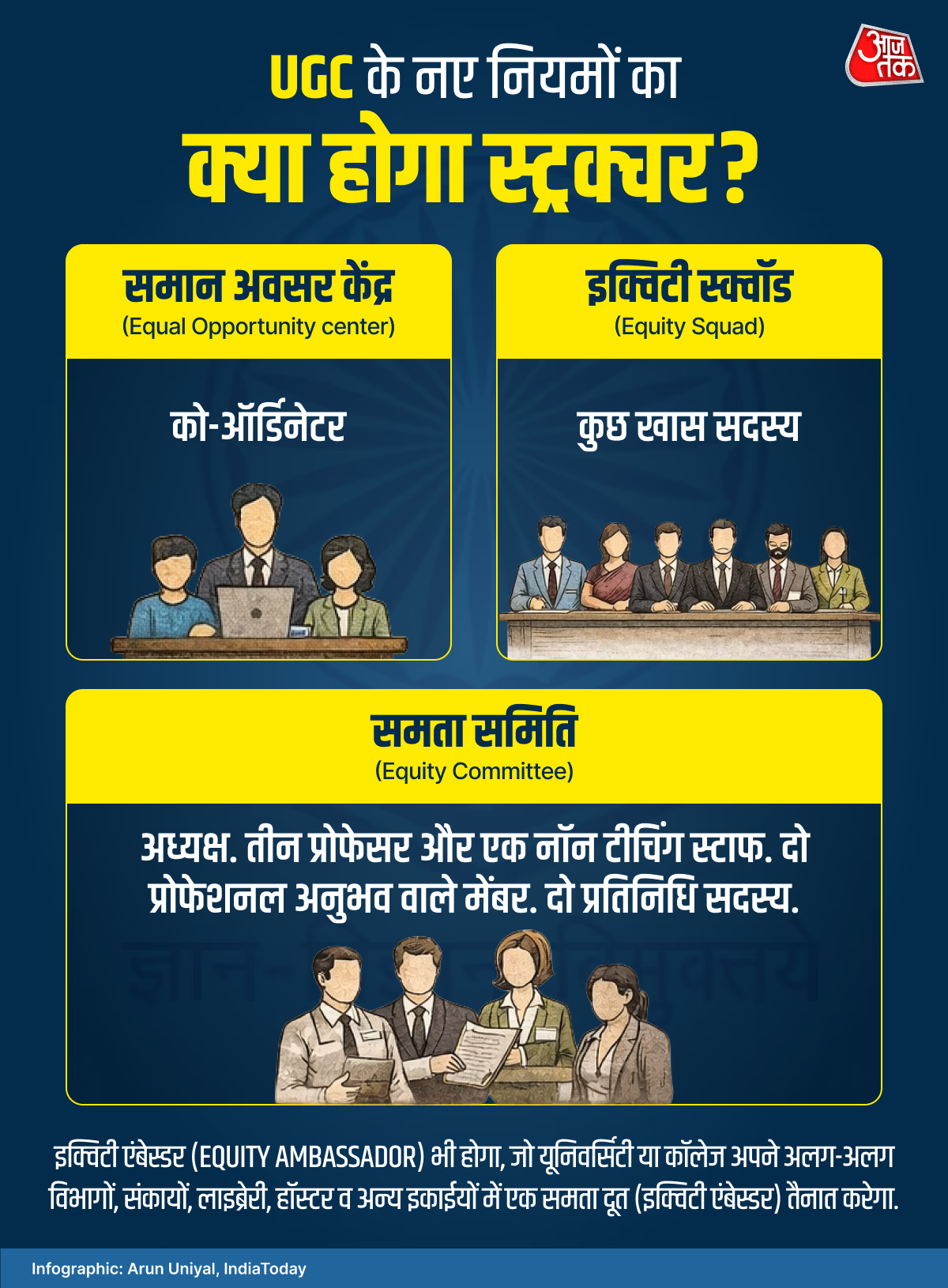
All higher education institutions are required to set up an Equal Opportunity Center. The institution's governing body or committee will appoint a permanent professor as the center's coordinator. An Equity Committee will also be established, with the institution's head overseeing it.
Committee Composition
The head of the institution will serve as the committee's chairperson. It will include three professors, a non-teaching staff member, and two civil society members with professional experience. Two student representatives, enrolled through academic or sports quotas, will also be part of it. The center's coordinator will function as the committee's secretary. This committee mandates representation from OBC, SC, ST, persons with disabilities, and women. Members will serve for two years, while special invitees serve for one year. The committee will meet at least twice annually, working to eradicate discrimination and foster an egalitarian atmosphere in educational settings.
Source: aajtak
Introducing the Equity Squad
Colleges and universities will form smaller units, or 'Equity Squads,' dedicated to eliminating discrimination and promoting equality. These squads will actively monitor campus activities to report any discriminatory incidents to the center's coordinator.
Appointment of Equity Ambassadors
Institutions will assign an Equity Ambassador in each department, faculty, library, hostel, and other units. These ambassadors exemplify equality and contact the center’s coordinator to further equity goals.
Establishing an Equity Helpline
An equity helpline is mandatory at every university and college, operational 24/7. Should a college helpline be temporarily unavailable, the university helpline offers assistance. The identity of complainants wanting anonymity will be protected.
Source: aajtak
Resolving Complaints
Those experiencing discrimination can report it in writing or via email to the equity center's coordinator, use the online portal, or call the helpline. Urgent matters reported via helpline prompt immediate forwarding to the police, if necessary.
Equity Committee's Action Plan
For serious complaints, the committee convenes within 24 hours. If the issue pertains to another authority per UGC norms, it is redirected. Otherwise, the equity committee submits a report to the head of the institution within 15 days, with a copy given to the complainant. The head must act on this within 7 days, addressing matters tied to higher education regulations or actionable under legal statutes.
Appeal Process
Should the complainant be dissatisfied with the committee's report, an appeal to the ombudsman can be lodged within 30 days. The ombudsman may appoint a legal advisor, with associated fees borne by the institution. Resolution is sought within 30 days.
Ensuring Compliance
The UGC will establish a national oversight committee, encompassing representatives from civil society, professional councils, and various commissions, to monitor adherence to these rules. The committee will review implementation and visit college and university campuses, reporting to the commission and higher education department on findings.
Consequences of Non-compliance
Universities and colleges failing to follow these rules face accreditation withdrawal or funding suspension by the UGC.