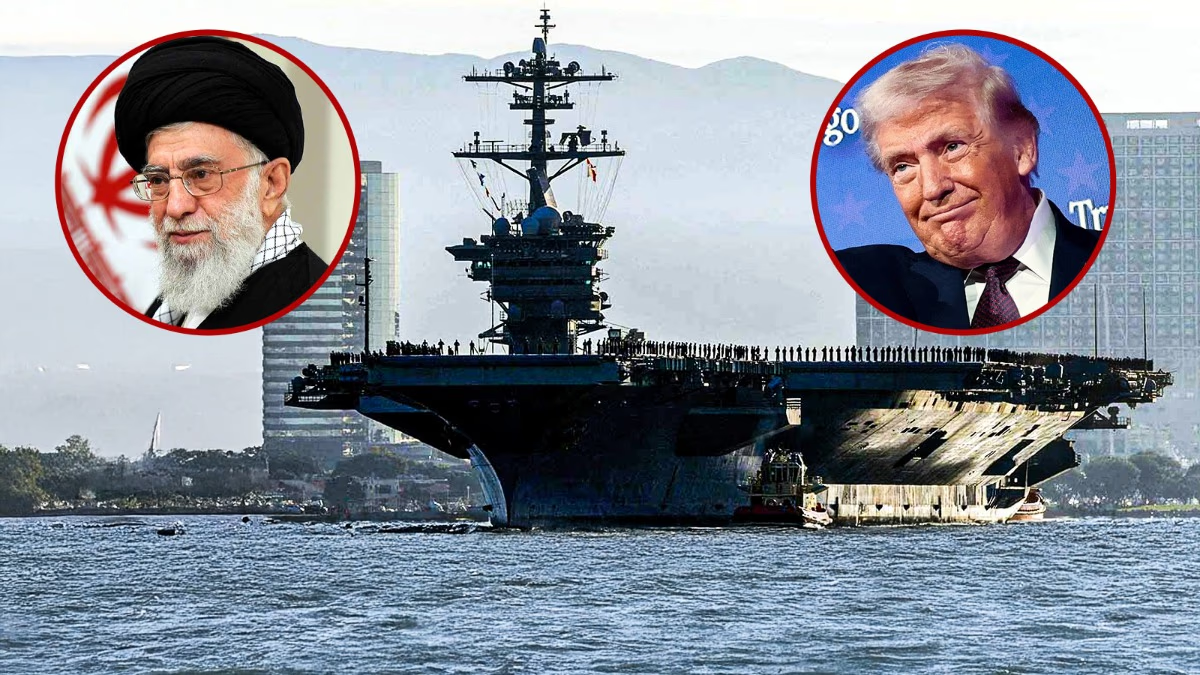
President Donald Trump has issued a stern warning to Iran, announcing the movement of a 'massive armada' towards the region, surpassing past operations like the one in Venezuela. Trump demands dialogue over the nuclear deal, warning of possible military intervention.
Iran stands ready for talks, but under its conditions. It promises to defend itself if attacked, while Arab nations urge restraint to prevent broader conflict.
What Did Trump Say?
On January 28, 2026, Trump posted on Truth Social, declaring that 'a massive armada is heading towards Iran.' He cautioned Iran to finalize the nuclear deal, noting that time is running out, with threats of an attack 'with speed and violence.' Trump characterized it as a scale larger than the Venezuela operation.
He demands Iran halt nuclear enrichment, limit ballistic missiles, and cease support for groups like Hamas, Hezbollah, and the Houthis. He referenced a strike on Iranian nuclear sites in June 2025, and forewarned of even harsher consequences in the next attack.
What is this 'Massive Armada'?
This refers to a formidable grouping of U.S. Navy forces, featuring the aircraft carrier USS Abraham Lincoln, several guided-missile destroyers, bombers, and fighter jets stationed in the Arabian Sea. According to Trump, it is 'ready, willing, and able.' Recently, the USS Delbert D. Black arrived at Israel's Eilat port. Collectively, over 35,000 U.S. troops and numerous ships are deployed in the Middle East.
What was the Venezuela Operation? Why the Comparison?
Dubbed 'Operation Southern Spear,' the 2025 Venezuela operation saw a significant naval buildup in the Caribbean, including the USS Gerald R. Ford Carrier Strike Group, the USS Iwo Jima Amphibious Ready Group, and other vessels. The mission's official purpose was to curb drug trafficking, but its underlying agenda involved removing Venezuelan President Nicolas Maduro. On January 3, 2026, the U.S. apprehended Maduro. The larger armada headed for Iran emphasizes the perceived threat level.
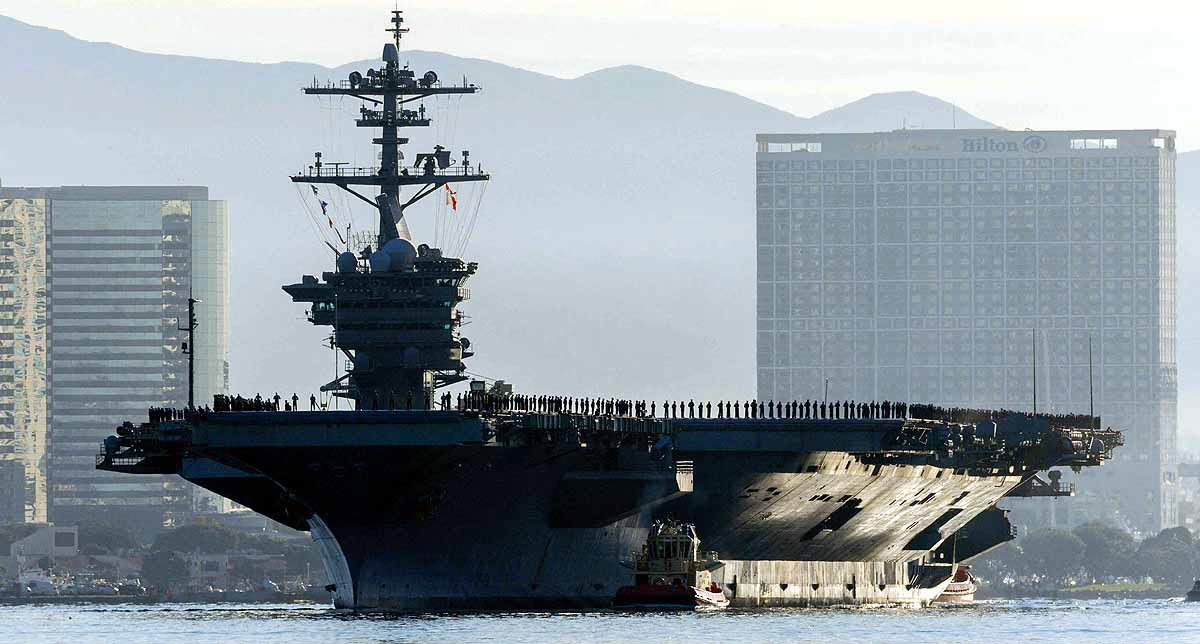
Source: aajtak
How is Iran Responding?
Iranian Foreign Minister Abbas Araghchi stated Iran is open to talks but not under threats. It will defend against any attack. Anti-American demonstrations are occurring in Tehran. Iran has stationed its drone carrier at Shahid Bagheri 6 km off Bandar Abbas. It is undertaking live-fire drills in the Strait of Hormuz and has further concealed its nuclear facilities.
Why Are Tensions Rising?
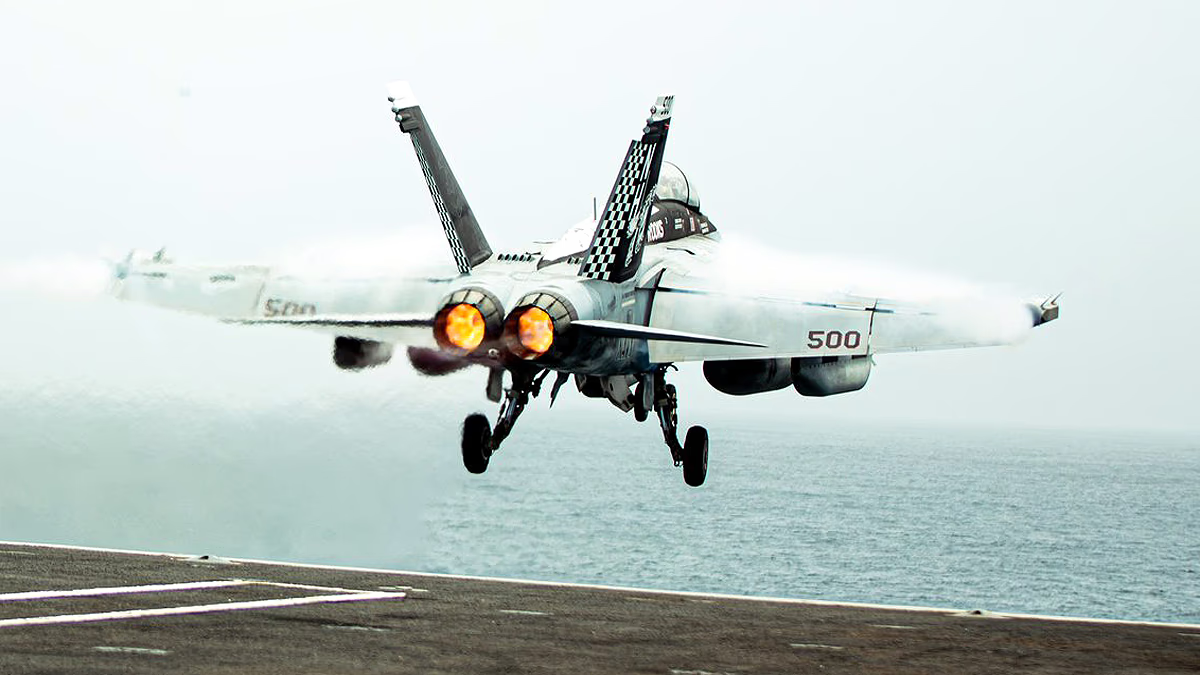
Source: aajtak
Nuclear Program: Trump ended the JCPOA deal in 2018. In June 2025, the U.S. and Israel struck Fordow, Natanz, and Isfahan. The IAEA reports Iran is resuming enrichment.
Protests: Over 100 deaths have occurred in anti-government protests in Iran, January 2026. Trump considers regime change opportunities.
Regional Conflict: Iran backs groups like the Houthis and Hezbollah that strike U.S. allies.
Appeal from Arab and Regional Nations
Saudi Arabia, UAE, Jordan, and others express war apprehensions. Turkey urges U.S. restraint, advocating diplomatic solutions. Closure of the Strait of Hormuz by Iran could impact global oil prices and economy. UK, France, and Israel stand with America, despite appeals from Saudi Arabia, Qatar, Oman, and Egypt against an attack.
A military strike could escalate into a regional conflict. Iran might retaliate against American bases or Israel. Trump's 'Maximum Pressure' policy persists, with a glimmer of hope for diplomacy. The situation is precarious—no strikes yet, but threats are on the rise.