Already celebrated as the 'Wizard of Menlo Park' for his inventions of the phonograph and innovations in the telegraph and telephone, Edison was poised to revolutionize American life. Until then, people relied on candles, kerosene, and even whale oil for light, while millions depended on harmful gaslights that emitted toxic gases. These gaslights blackened walls and furniture, smelled of sulfur and ammonia, and posed explosion risks.
As 1879 dwindled to its final hours, the serene village of Menlo Park, with its few houses, was on the brink of witnessing a new era on New Year's Eve. As the clock struck midnight, ushering in a new year, tiny balls of fire on wooden lampposts bathed Christie Street in artificial glow. It was Thomas Edison who introduced his guests at his 'Invention Factory' to his latest marvel—the first practical electric bulb.
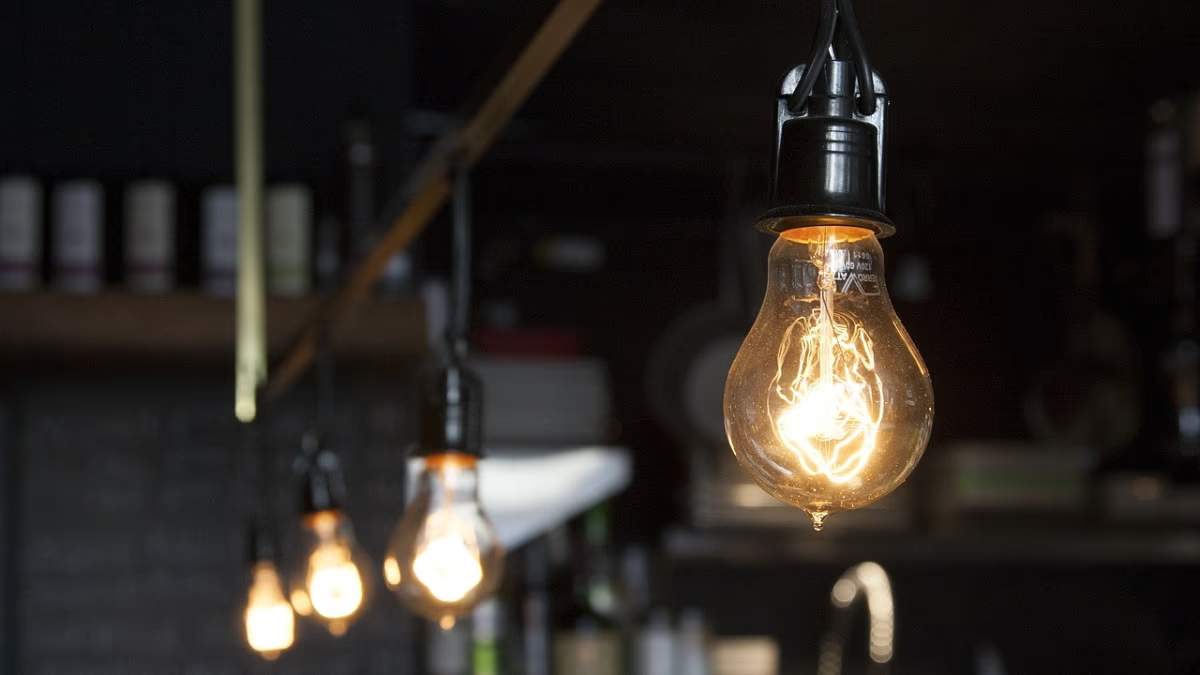
Just a few days into the New Year, on January 27, 1880, Edison received the patent for the world's first electric bulb. Three decades later, when asked about his greatest invention, he cited the Electric Lighting and Power System. Mere rumors of Edison's phenomenal discovery led to a significant 15% drop in gas company stocks. This was only the beginning. Post patent, shares of Edison's Electric Light Company skyrocketed from their original $100 to a staggering $4,500, changing the fortunes of its shareholders as reported by the Boston Globe.
Also on this day: The world tasted canned beer for the first time.
In 1878, Edison took on the challenge of developing a commercially viable bulb for everyday use. Investors of the Edison Electric Light Company provided him with the necessary capital. The 31-year-old inventor not only aimed to develop an electric bulb but also aspired to create a complete lighting system powered by a generator.
Confident in his ability to achieve this in a few months, Edison soon faced the same setbacks as his predecessors. He initially succeeded in creating a platinum filament but abandoned it due to its high cost.
Turning to cheaper carbon filaments, Edison experimented with raw silk, cork, and even his employees' beard hairs, but with limited success. Finally, in October 1879, he achieved a breakthrough when a high-resistance carbon filament burned continuously for over 13 hours. Edison showcased this in his laboratory by lighting an electric bulb for the first time on December 31 and was awarded a patent for it 26 days later, on January 27, 1880.