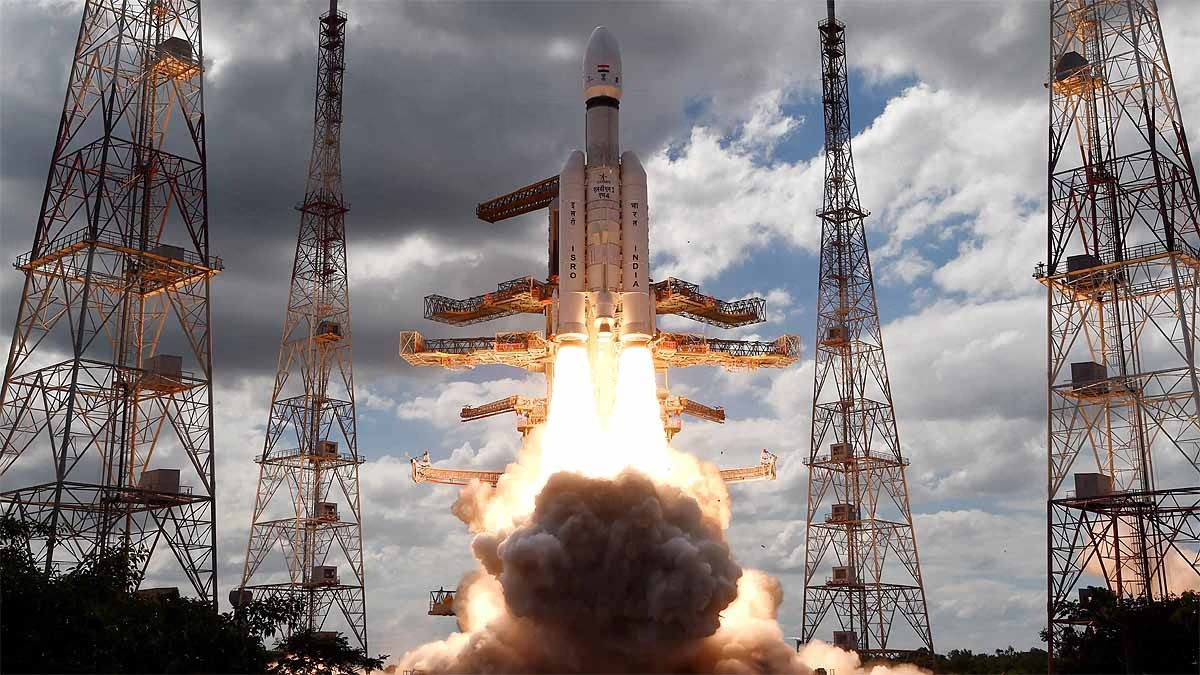
The cooperation between India and Russia in the defense and space sectors is on the verge of reaching new heights. Russia has agreed to transfer 100% technology of its most powerful semi-cryogenic rocket engine, RD-191M, to the Indian Space Research Organisation (ISRO). This agreement could represent a major milestone in India's space program.
The RD-191M is Russia's highly advanced semi-cryogenic engine, utilizing liquid oxygen and kerosene (RP-1) as fuel. Its standout feature is the ability to generate high thrust, with a single engine capable of producing around 192 tons of force. Currently, Russia employs engines from this family in its Angara rockets.
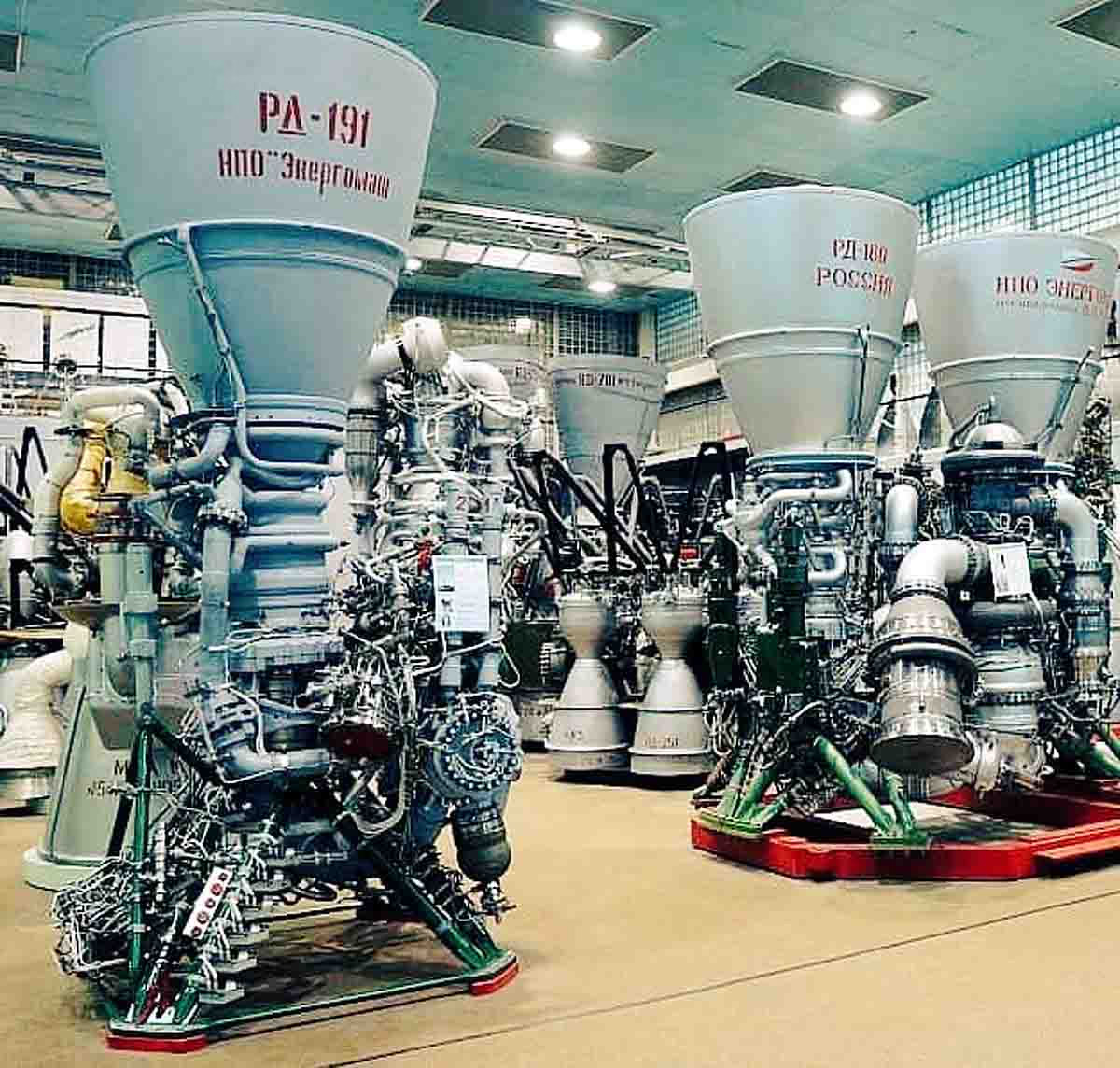
Source: aajtak
ISRO plans to utilize this breakthrough technology in its most powerful rocket, GSLV Mk3 (now known as LVM3). Currently, LVM3 uses a cryogenic engine (CE-20) in its upper stage. Equipping the lower stage with powerful semi-cryogenic engines like RD-191M will significantly enhance the rocket's capabilities. Consequently, ISRO won't need to outsource the launch of its heavy satellites to other nations, enabling it to launch other heavy satellites independently, bringing economic benefits to the country.
Currently, the GTO (Geosynchronous Transfer Orbit) payload of LVM3: approximately 4.2 tons.
With RD-191M engines... GTO payload capacity will increase to 6.5 to 7 tons.
This means an additional 2.5 to 3 tons can be transported to space in a single launch. This capability will facilitate the easy launch of heavy communication satellites, Chandrayaan, and human spaceflight missions like Gaganyaan.
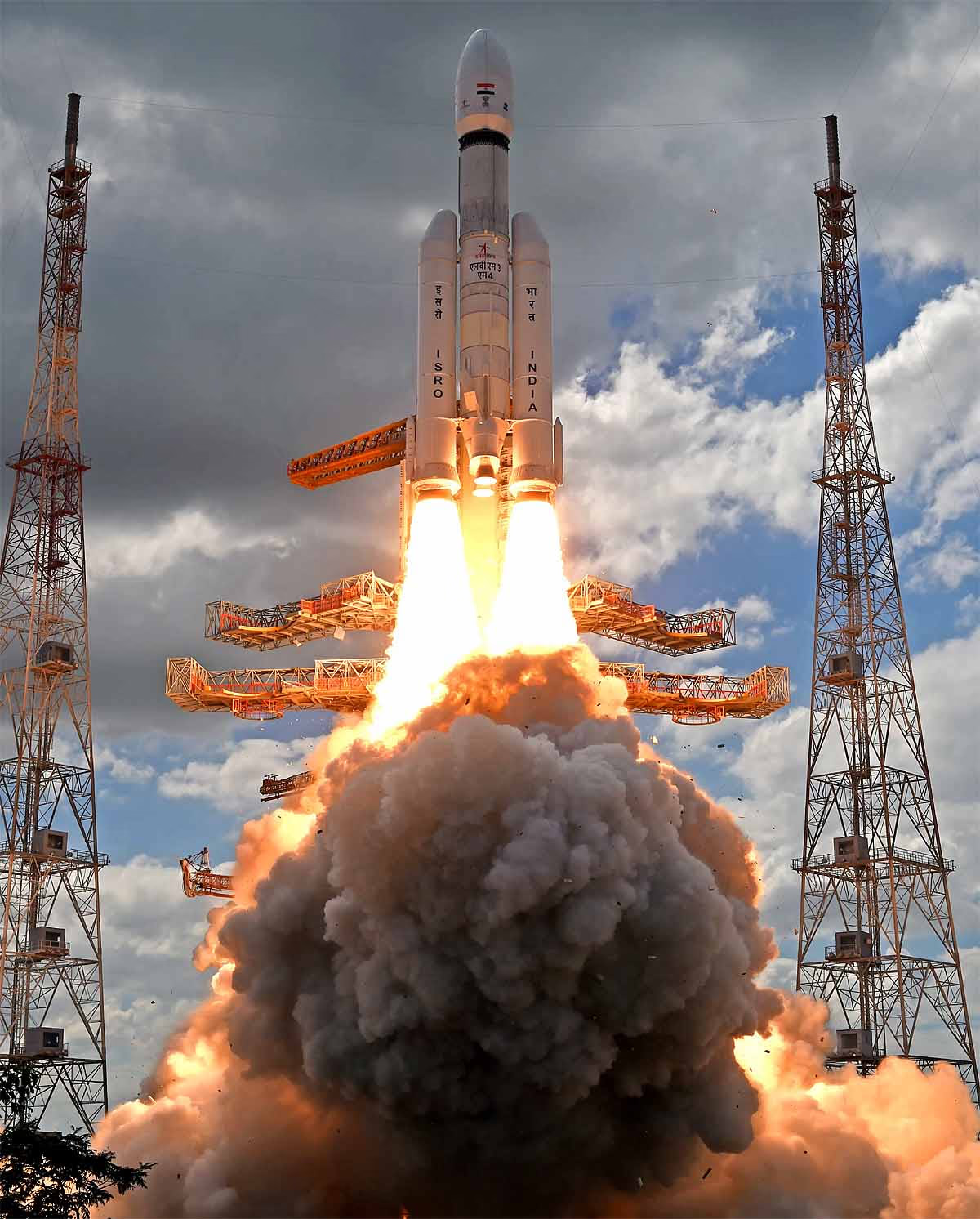
Source: aajtak
According to reports, these engines will be manufactured in India. Hindustan Aeronautics Limited (HAL) and ISRO will establish a new factory for this purpose. With complete technology transferred to India, the country will eventually be capable of producing and exporting these engines to other nations.
Final negotiations are currently ongoing between the two countries, with technology transfer expected to commence by 2026-27. By 2030, India's fully indigenous semi-cryogenic engine will be ready.
Acquiring this technology will place India among select countries with the capability to manufacture semi-cryogenic engines, a technology so far possessed only by Russia, the United States, and China. ISRO scientists are thrilled, noting that the acquisition of the RD-191M will greatly accelerate India's future heavy-lift rocket and human space program progress.