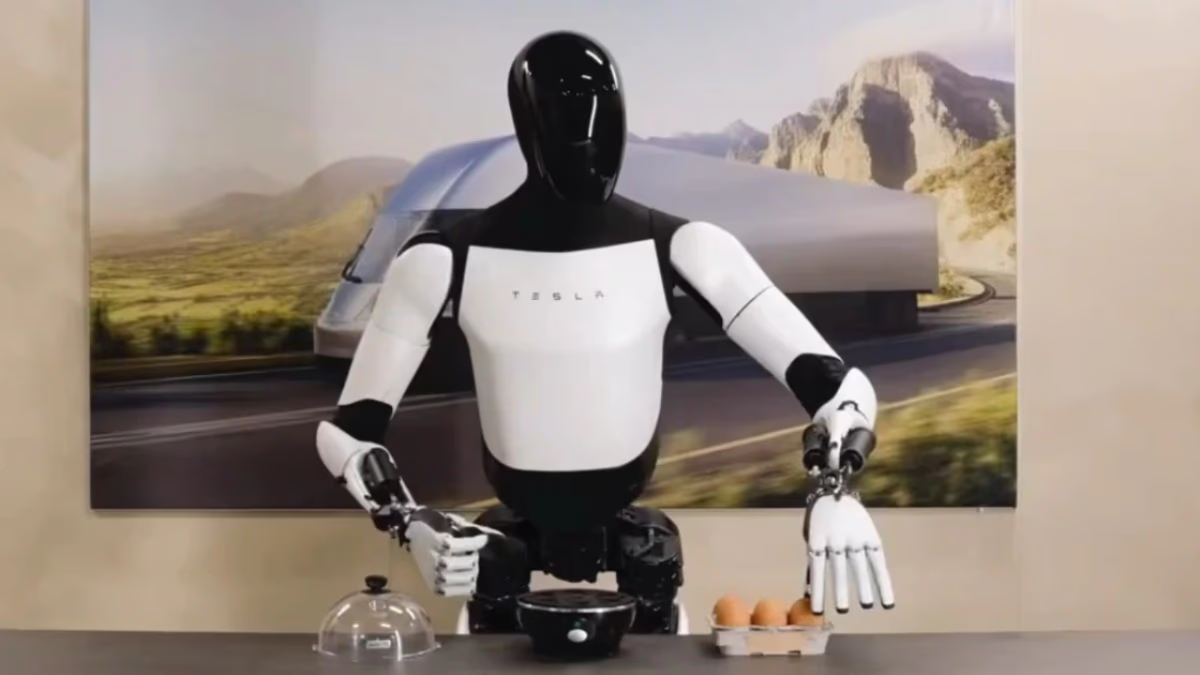
We often speculate whether robots will one day rule the world. The future will answer this, but currently, there are nearly 40 million active robots working alongside humans. They are busy in our factories, hotels, malls, restaurants, and hospitals. Automation is advancing at a rapid pace, but at what cost? How have robots integrated into our world so far, and what lessons have past experiences taught us?
Some tourists arrived at a luxurious and beautiful hotel, only to find no humans in sight. At the reception, smiling dinosaur robots welcomed them. A pleasant, yet faceless voice guided them through the check-in process, and robotic porters carried their luggage to the rooms. This hotel was not only an experiment in tourism but also a new frontier in robotics, an attempt to bring robots closer to humans.
This was in Japan in the year 2015.
The world watched in awe as the first robot hotel offered a glimpse into the future. It seemed like automation was gaining speed, with robots taking over human tasks. Visitors enjoyed interacting with robots for their needs. The tourist influx at this Japanese hotel surged unexpectedly.
But this was just one side of the coin. Within a few months, things began to change. The allure of robots started to wane, both in the eyes of tourists and the hotel management. The update came that the hotel had let go of several robots, as they proved to be more inconvenience than asset, causing discomfort rather than enhancing efficiency.
What Issues Arose?
These robots struggled particularly with understanding multilingual customer demands, handling luggage transportation, and often caused disruptions. Complaints about incorrect commands kept surfacing. Several issues also arose with customer experience, such as comfort, reliability, and problem-solving, where robots frequently failed. Additionally, the reception robots were often unable to handle complex inquiries or modify room bookings, necessitating human intervention despite their presence.
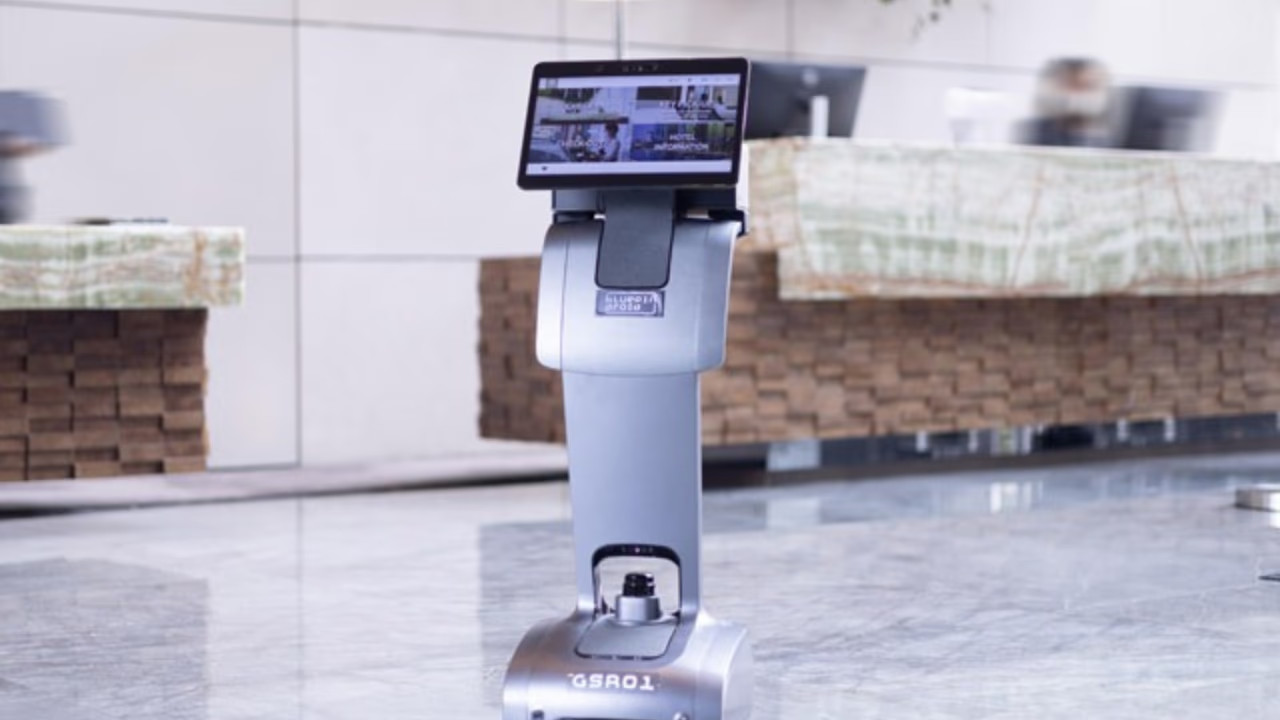
Source: aajtak
For example, a luggage-carrying robot could only move on straight tracks, and a voice-activated clock robot startled guests awake with their snores. It was realized that while robots could follow certain commands, they couldn't match human creativity and emotional intelligence, as they were confined to pre-programmed tasks.
Furthermore, the cost of maintaining and fixing these robots' technical issues often exceeded the expense of hiring a human employee. Complaints from guests, robot breakdowns, and significant maintenance costs led the hotel to begin removing its robot staff. Over four years, more than half of the robot staff, around 243 robots, were let go due to their technical shortcomings negatively impacting customer experience.
What Lessons Were Learned?
The experiment in robotics and its ensuing failure underscored that over-reliance on machines in customer service does not always lead to better outcomes but can sometimes result in disappointment and unnecessary expenses. While robots were not completely dismissed from human life, this failure imparted six crucial lessons about automation:-
1. Instead of complete automation, robots should be used selectively for essential tasks only.
2. Service robots can become a major attraction at entry gates in hotels, malls, and restaurants.
3. Service robots should be used for repetitive and low-value tasks, not for every task.
4. The hospitality industry relies on empathy, problem-solving, and personal interaction. A robot can never calm an angry customer or creatively solve a sudden problem. Human employees can easily accomplish these tasks with their flexibility.
5. Although robots do not earn salaries like humans, their maintenance is not cheap, often exceeding human staffing costs.
6. Robots cannot be entirely trusted for customer and luggage security.
It's been ten years since this experiment in Japan, and the world has come a long way. According to the International Federation of Robotics, today, over 4 million factory robots and 36 million service robots are being used worldwide, growing at a rate of 10% annually. In terms of the largest robot markets, China, Japan, the USA, Korea, and Germany lead globally.
Looking at the official figures, today, more than 4 million robots work in global factories, handling tasks hazardous to humans. The use of robots is increasing in sectors such as healthcare and others, but the world has realized that while robots can be helpful, they cannot do everything.
What Types of Robots Exist?
-Serving Robots: Primarily used as waiter robots, these serve customers with food and beverages.
-Delivery Robots: Designed for delivering food to hotel rooms or orders to tables in restaurants.
-Reception Robots: Deployed in hotels, offices, malls for greeting, check-in/check-out, and inquiries.
-Kitchen or Cooking Robots: Used for specific and repetitive tasks like flipping burgers, adding pizza toppings, or making coffee.
-After the COVID crisis, robots began playing a large role in cleaning and sanitization tasks aimed at protecting humans.
-Factory Robots: These are widely used globally, particularly for tasks that involve handling dangerous activities between machines, manufacturing vehicles or machinery, and tasks like melting and molding hot metal, which are considered highly hazardous for human staff.
Different Uses in Various Countries?
-In India and several other countries, new experiments with robotics are underway, especially for use at entry gates in malls and hotels and in restaurants for serving food. Many cities, like Chennai, Bhubaneswar, Patna, Noida, and Dehradun, have opened robotic restaurants providing customers a unique experience, although they are still in their infancy.
-Similarly, in China, the number of robot-themed restaurants is growing rapidly. Here, robots are extensively used as waiters, chefs, and food delivery robots to hotel rooms.
-Some German restaurants use robot waiters to compensate for skilled labor shortages. Here, robots carry heavy plates, allowing human staff to focus more on customer interaction.
-Budapest, Hungary has cafes and restaurants where robot waiters serve. These robots not only serve food but also interact with customers and can dance for entertainment.
-South Korea is known for its high-tech experiments and rapidly increasing robot usage in restaurants and cafes. Here, serving robots and coffee-making robots are especially popular, reducing customer waiting times.
-In countries like the USA, robots primarily serve as delivery robots, transporting items or food to hotel rooms. Some restaurants, like those in California, use burger-making robots as kitchen robots.
While significant experiments with robots are ongoing, numerous questions about the future persist. The most significant question remains: To what extent and how will the increasing number of robots interfere with human life? Only the future will tell.