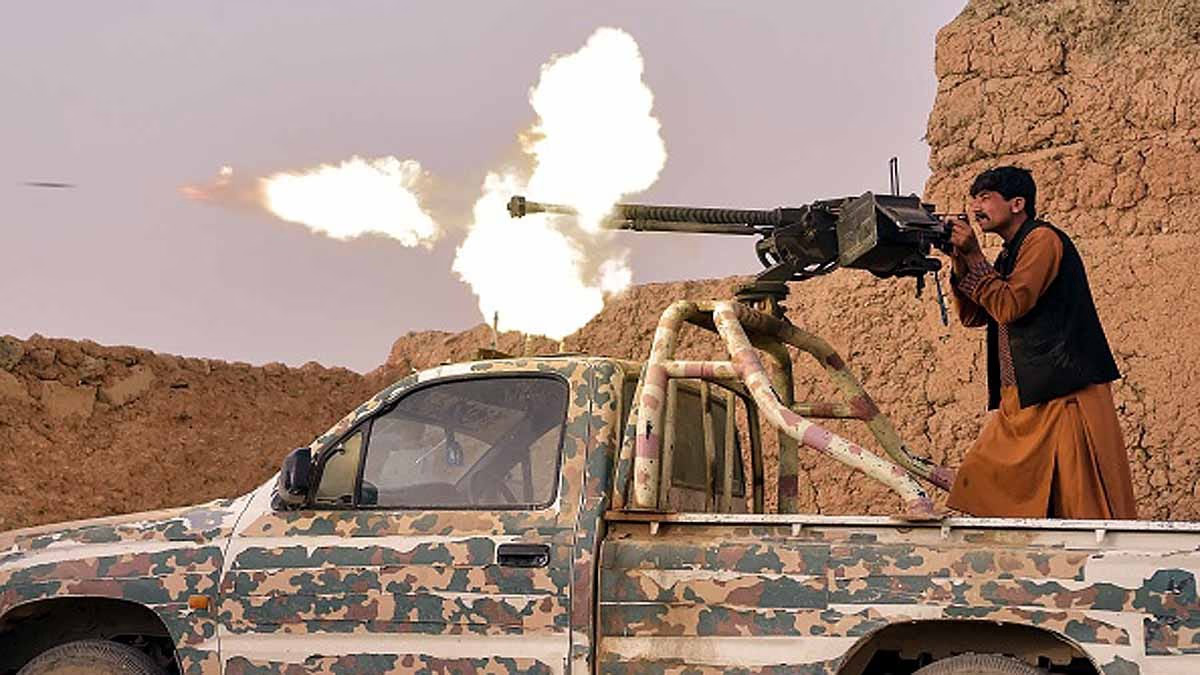
Tensions are mounting between Pakistan and Afghanistan's Taliban regime. Recently, Pakistan executed airstrikes in Afghan territories, provoking the Taliban to threaten retaliation. This leads to the question: How long can the Afghan Taliban army withstand the might of Pakistan's military? Could the Taliban fighters transform traditional warfare tactics?
According to 2026 data from Global Firepower and IISS reports.
Read More: People could turn into vapor, cities obliterated... If a pinch of antimatter exploded, it would be three times more devastating than Hiroshima
Soldier Counts
Pakistan:
Active troops total 660,000 (with 560,000 in the army); a reserve force boosts the figure to 1.7 million, ranking 14th among the world's most powerful armies.
Taliban (Afghan Army):
Active personnel range from 165,000 to 172,000, with plans to expand to 200,000. Ranked 121st globally, hence quite weak compared to Pakistan.
Source: aajtak
Weapons and Equipment Comparison
Pakistan's arsenal includes 2,677 tanks, while the Taliban's is limited to 100-200 mostly obsolete tanks. Pakistan's armored vehicle count exceeds 59,000, complemented by over 6,000 AFVs, whereas the Taliban possess only a few thousand of U.S.-abandoned Humvees.
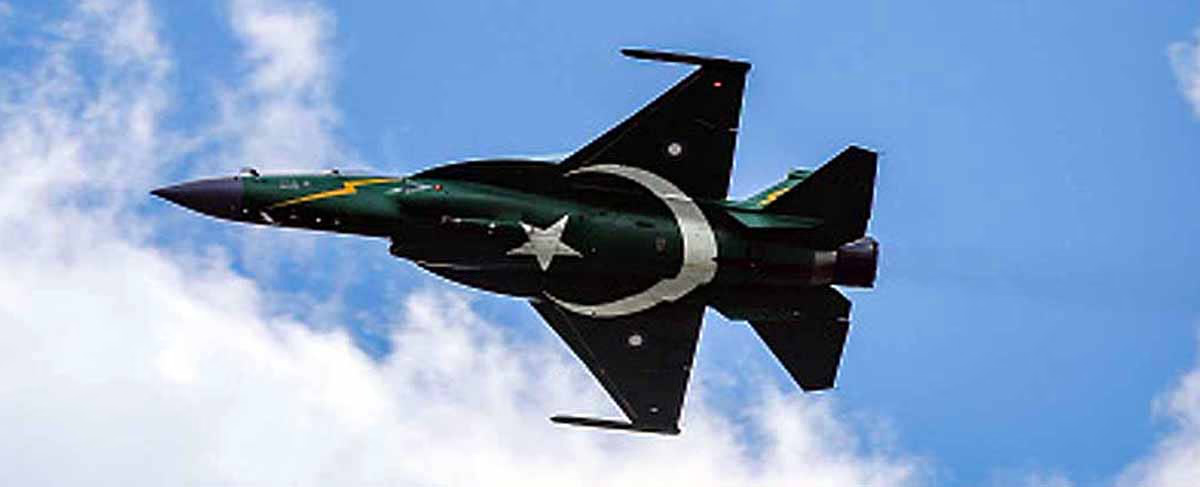
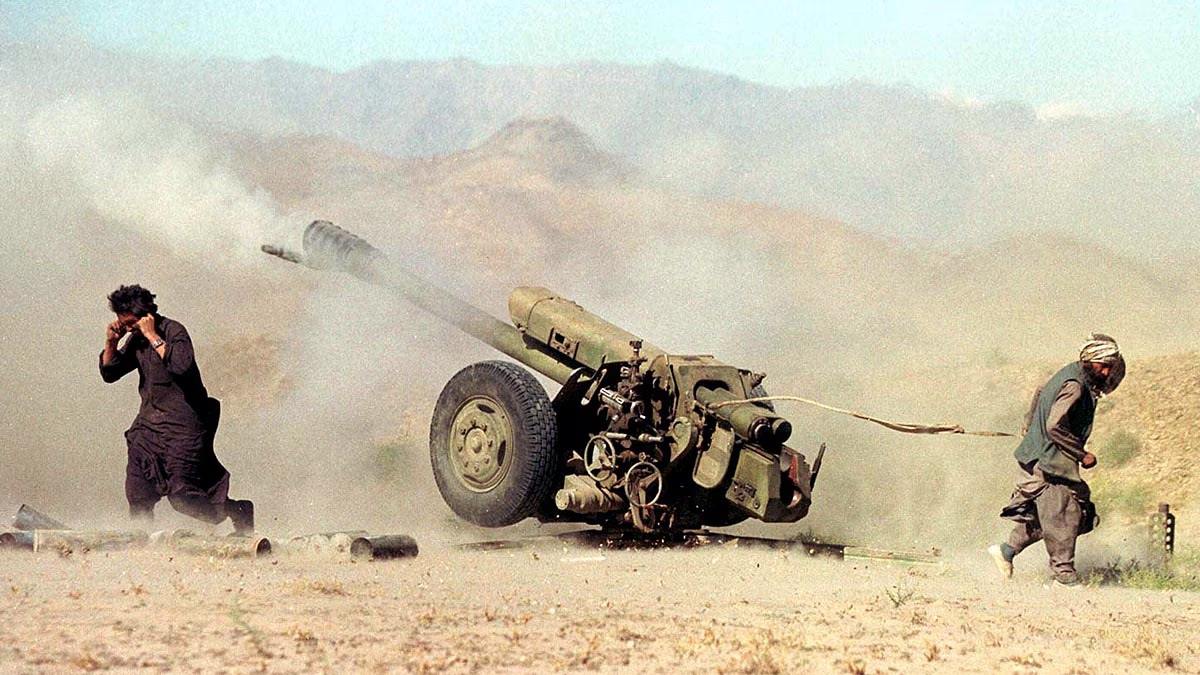
Artillery numbers reveal Pakistan's superiority with over 4,600 pieces compared to the Taliban's few hundred, which suffer from significant maintenance issues. In terms of aircraft, Pakistan touts 1,399 planes, including over 400 modern fighter jets like the F-16 and JF-17. The Taliban manage with merely 6-9 old planes and 23 helicopters, most of which are grounded.
Read More: "We'll inflict such a wound this time... Operation Sindoor continues," the Indian Army warns Pakistan
Pakistan's air force ranks among the world’s strongest, equipped with advanced radar and missile defense systems. Conversely, the Taliban have no real air force. In naval terms, Pakistan commands frigates, submarines, and missile boats, while the Taliban lacks any naval capabilities entirely.
Source: aajtak
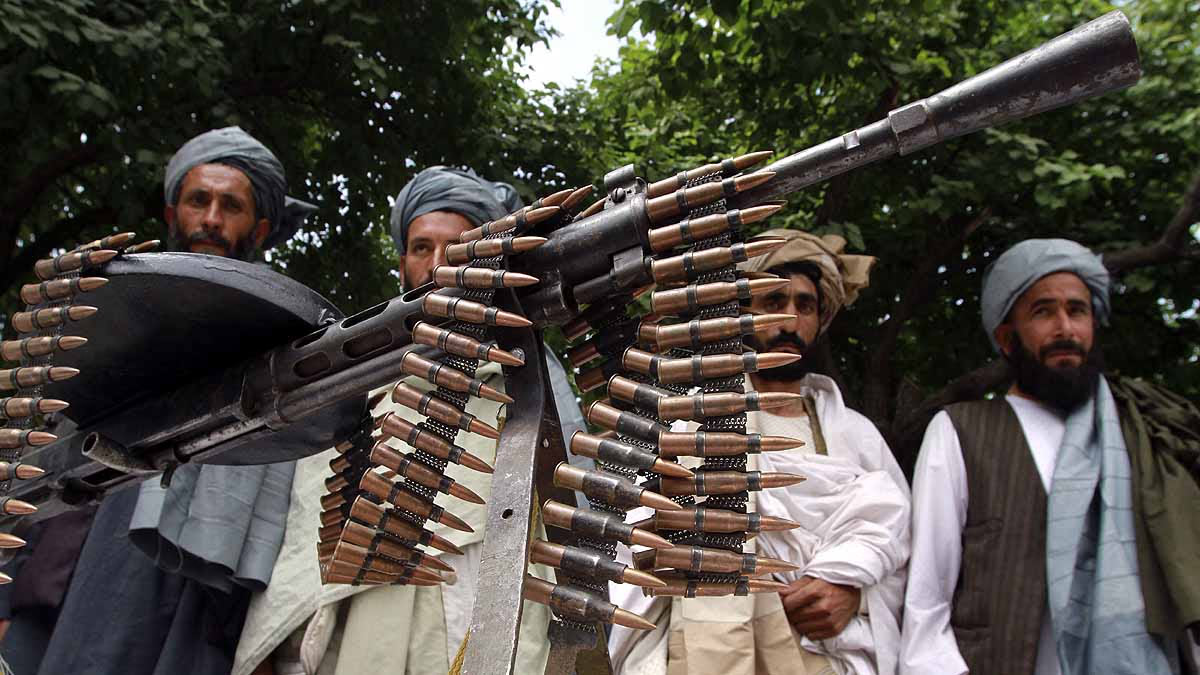
Pakistan is further armed with modern weaponry, drones, nuclear capabilities, and robust logistics (supply lines). The Taliban rely significantly on older weapons abandoned by the U.S. in 2021 – M4 rifles, Humvees – yet face severe shortages in ammunition, fuel, and spare parts.
Strengths of the Pakistani Military
Professional training and modern command systems.
Complete air superiority (dominate Afghan skies within hours).
A robust intelligence agency, ISI.
Capacity for protracted conflicts.
Read More: What Israeli drone does Pakistan fear? Discussions on weaponry possible during PM Modi's visit
Strengths of Taliban Fighters
Unyielding resolve fueled by religious motivation.
Expertise in mountain guerrilla warfare.
Strong local support, especially in Pashtun regions.
Swift, small-unit attacks (elite commandos like Badri-313 and Red Unit).
Weakness:
The Taliban is not equipped for conventional warfare (tank vs. tank, air strikes). With no air cover, they are easy targets for Pakistani jets.
Source: aajtak
Could Taliban Fighters Change the 'War Game'?
Not in direct conventional warfare. Pakistan could deal significant blows within 1-2 weeks.
Yes, in extended guerrilla/asymmetrical warfare.
The rugged Afghan mountains play to the Taliban's advantage.
It could prove costly for Pakistan (akin to the 20-year U.S. involvement).
The TTP (Pakistani Taliban) might increase attacks within Pakistan leveraging Afghan support.
In the past four years, the Taliban have delivered several setbacks to Pakistan. In response to Pakistan's airstrikes, the Taliban vowed appropriate retaliation.
While the Pakistani army significantly outpowers the Afghan Taliban in conventional capabilities, the Taliban’s enduring spirit and advantageous geography could sustain resistance, prolonging the conflict and imposing substantial costs on Pakistan.