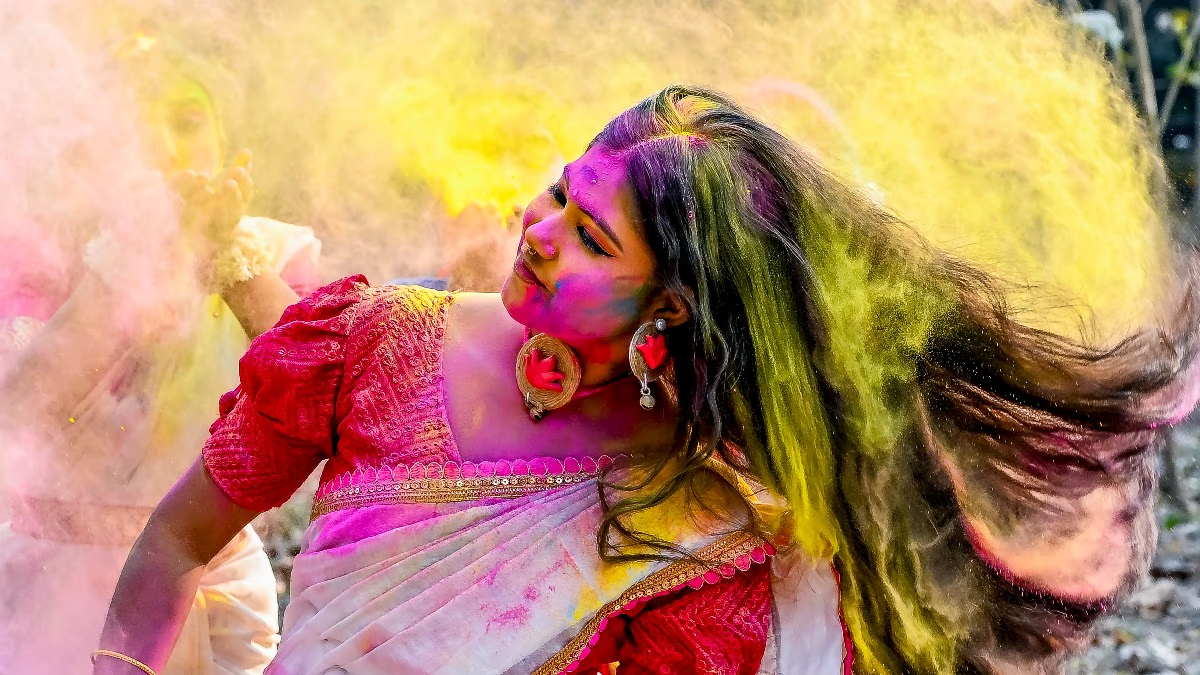
Phalguna marks the twelfth month in the Hindu calendar, widely known as Phagun. It might seem like the year's last chapter is turning, yet it carries the breeze of life's first song. Can an end be so joyful? Where there is no sorrow, only celebration and togetherness, vibrant beats of the dholak echo. What kind of finale is this?
When these thoughts drift through the mind, a cool breeze from mustard fields soothes the heart. Indian philosophy holds – 'Antas Asti Prarambha': every end harbors a beginning. Holi is the celebration of this concealed new dawn.
Look around during the Holi season. Before you immerse in colors, nature has already painted its canvas. The golden mustard flowers, the fiery Tesu and Palash, the blossoming mango trees, and the dripping Mahua, all these signs fill the heart with renewed enthusiasm, heralding the arrival of spring.
The first companion of Phagun is Phag
Every crossroad houses symbols of Sammet, as colors begin to blend in the air. Phag is more than just a song; it's the heartbeat of hearts. After Magh Panchami, groups form, dholaks and damrus awaken, and the melodies of Phag resonate in the air. While it thrives more on rhythm than rules, a slight deviation in tune is permissible if the beat remains intact. Much like in life, maintaining harmony can make imbalances appear beautiful.
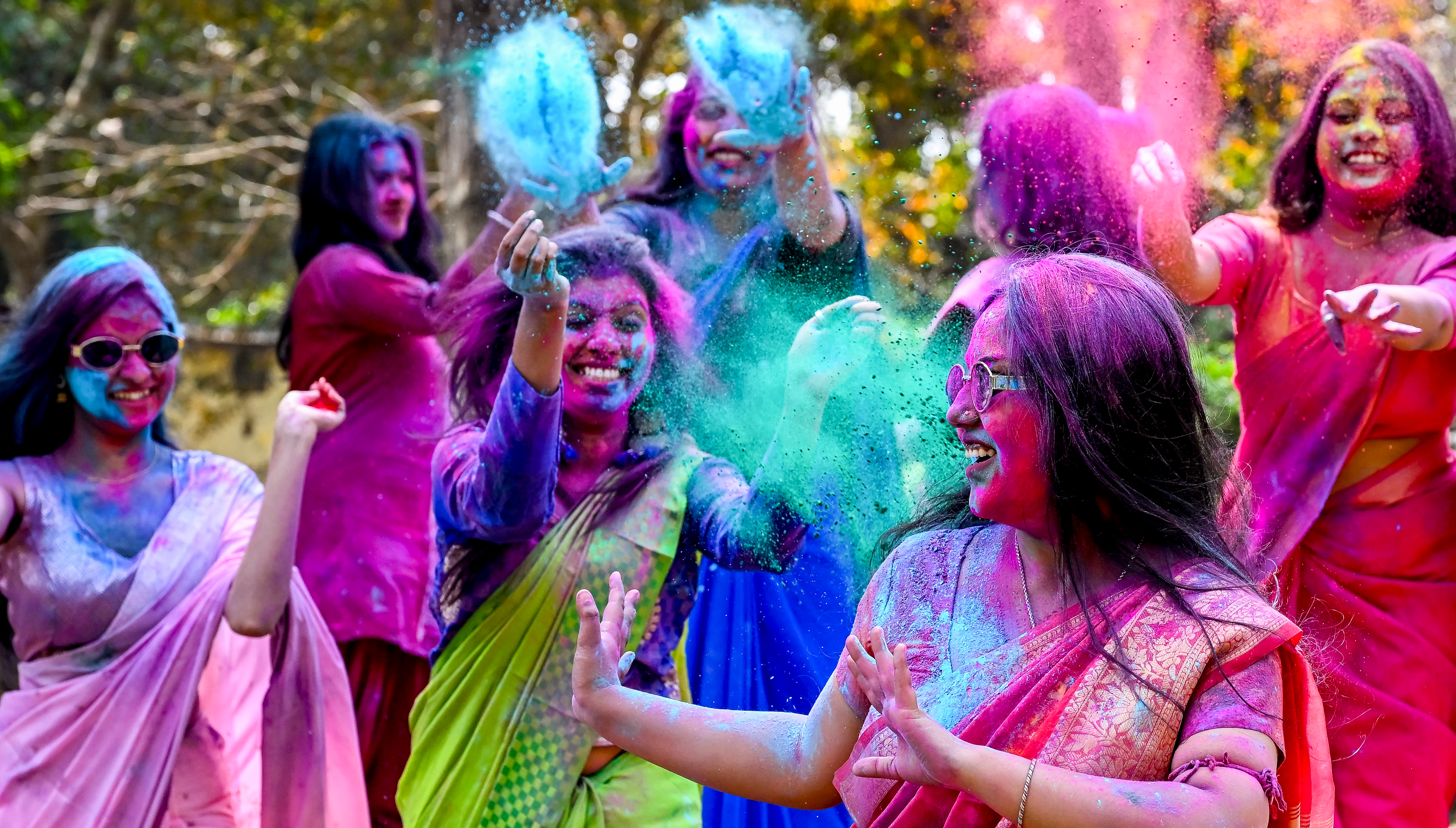
Source: aajtak
Bhojpuri's renowned poet Mahendra Misir did not just sing Phag; he lived it. His songs, when voiced by Sharda Sinha, became immortal. His Phag resonates with the presence of deities not detached but as humans draped in colors, celebrating life.
Look at Mahendra's creation, breathtaking in its simplicity as it humorously portrays Shiva as an eccentric bridegroom.
An Old Groom, a Delight Indeed. Speaks erratic yet is wise. Feasts on sweets and flatbread, Sweet nimbu pickles and mangoes suffice.
An Old Groom, a Delight Indeed. Strumming his damru with a twinkle in his eyes, Adorning Ganga’s charm like a necklace wise. An Old Groom, a Delight Indeed.
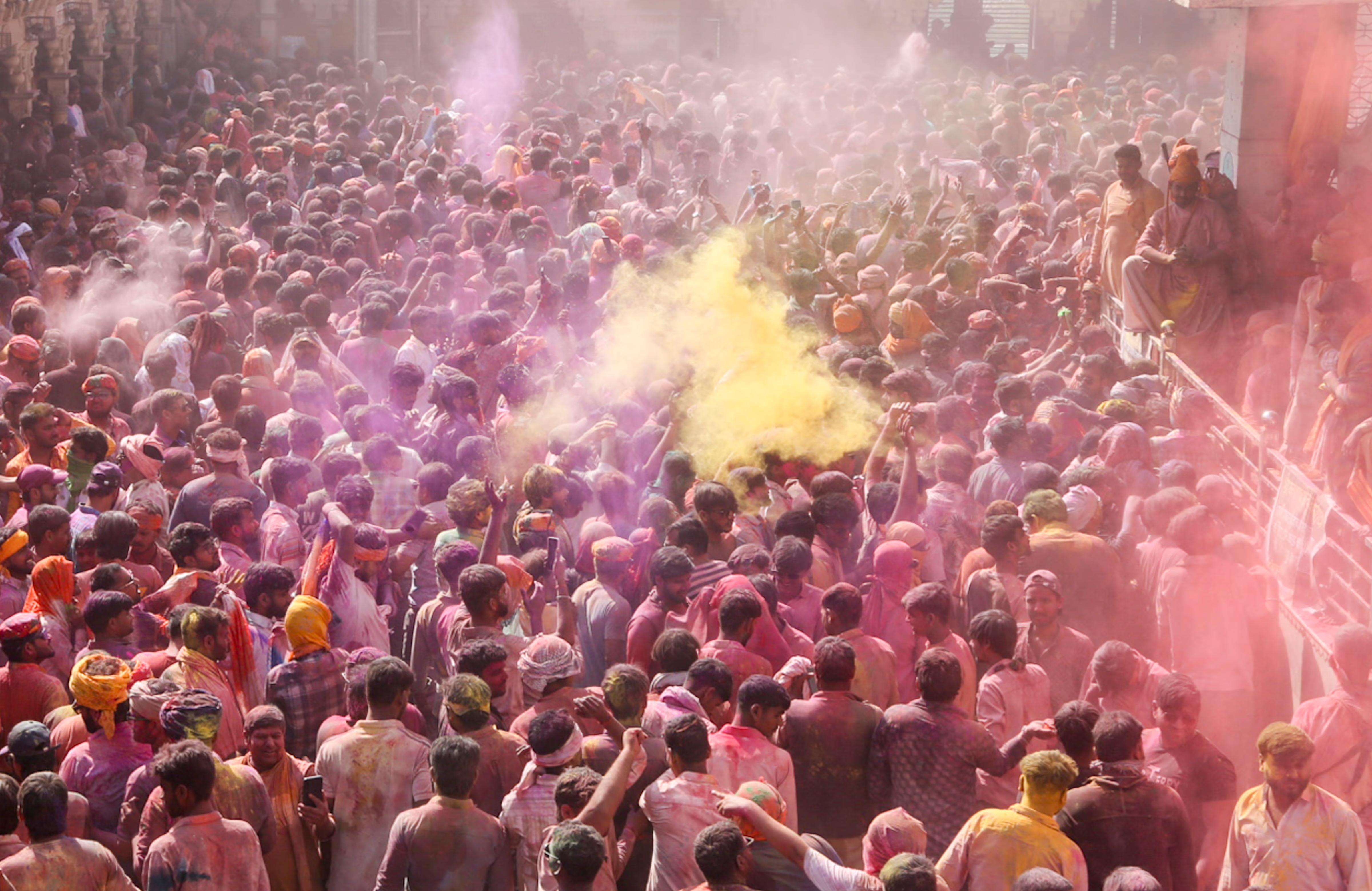
Phagun loosens societal norms temporarily, blurring age distinctions. Everyone, irrespective of adult or child, unites under one color, endorsing Holi’s essence: shed superficial identities and free your spirit. Modern-day festivities may barely span a day, yet true Holi unfolds gradually, first grasping hearts, then community, culminating in the resounding echo of Phag that feels like not an end but the opening of a new chapter.
After Phag comes the second hue of Holi: Jogira. At the chant of 'Jogira Sa Ra Ra Ra', the atmosphere transforms. More than just a refrain, it's a declaration of collective freedom. The roots of Jogira trace back to the Nath tradition. Yogi’s question-answer spiritual hymns transformed into revelry. Originally a warning, then a satire, and ultimately a blend of laughter in Phagun’s open joy.
Source: aajtak
Author Akriti Vigna Arpan, a researcher on eastern folklore, shares that village gatherings in temples were common, where overnight renditions of Phag, Jogira, and Dhamar transpired with musical accompaniment. Jogira exemplifies democracy; it ridicules kings, criticizes bureaucracy, and permits open mockery of societal flaws.
Here's a taste...
Who's the betel leaf for, who thrives on bamboo Who enjoys sweet pancakes, who meets doom
Jogira Sa Ra Ra Ra………………….
The betel leaf is for leaders, the bamboo for the masses Officers relish sweet pancakes as the system collapses
Jogira Sa Ra Ra Ra………………….
Initially, open denunciations are made, then humorously concludes with 'It's Holi, don't mind it.' This reduces societal tension. Jogira merges spirituality and society; it asks questions and answers them, offering satire wrapped in humility. Holi teaches the necessity of discourse within society. Convert complaints to songs, transform anger to jest. Folk wisdom doesn't explode but gently mixes color into water, carrying everything in its flow.
The third hue of Holi, the real one, saturates the soul and consciousness. Earlier, colors were made from Tesu, Palash, and Hibiscus. Immersing flowers was a ritual. Varanasi’s classical Holi gave it elevated stature, reaching homes through maestros like Pandit Sajan-Rajan Mishra and Chhannulal Mishra.
Kabir, who declares every day Holi
Yet the deepest echoes of Holi resonate from saint tradition. Kabir professes: between earth and sky, a cosmic play of colors ensues every single day. Holi burns eternally. Kabir’s Holi vibrant with wisdom's gulal, love’s abeer, and the union of soul and divine. Without Hari, that Holi is mere dust.
Holi reminds us that life itself is a play of colors. Coming and going are part of the cycle. One day, everything turns to ashes. Thus, while time is at hand, grasp the hues within. Days post-Holi, the external color fades, but the joy ingrained in the soul endures generations. Phag, Raga, Rang, Masti, and Malhar—these five integrate to convey that life’s a celebration, not a burden, which is the very essence of Holi.