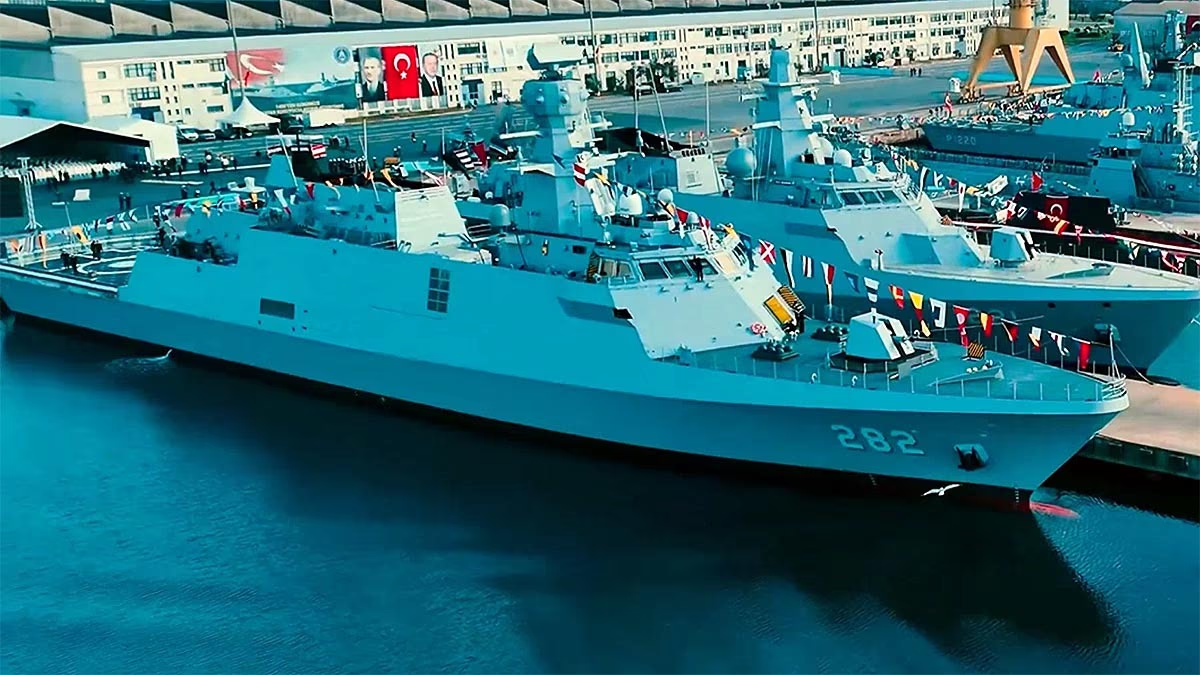
The Pakistan Navy has proudly commissioned its second MILGEM-class warship, PNS Khaibar, at Istanbul Naval Shipyard, with Turkey's President Recep Tayyip Erdogan as the esteemed chief guest. Also present was Admiral Naveed Ashraf, Chief of Naval Staff of the Pakistan Navy.
In his address, President Erdogan hailed the brotherly bond between Pakistan and Turkey, emphasizing the need for heightened collaboration in defense production in the future.
Admiral Naveed Ashraf appreciated the efforts of M/S ASFAT, Istanbul Naval Shipyard, and the OEMs involved in the planning, design, and construction of the PNS MILGEM vessels, and lauded the growing defense partnership between Pakistan and Turkey.
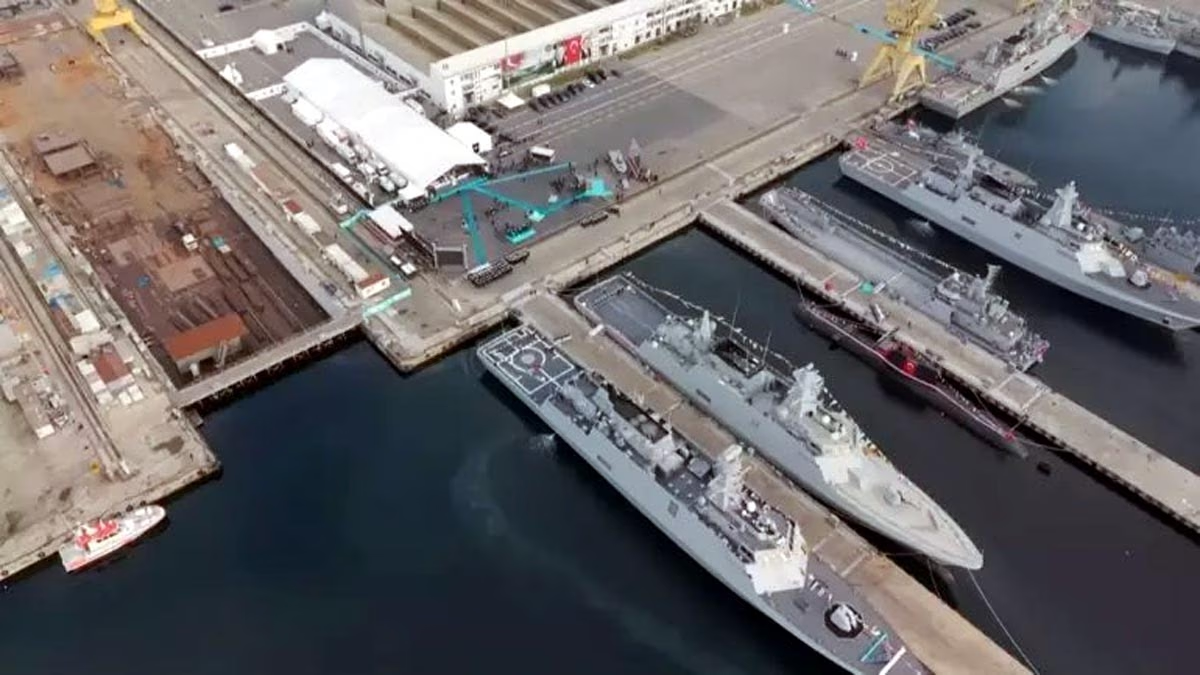
Source: aajtak
President Erdogan toured PNS Khaibar and was accorded a guard of honor. He had discussions with crew members and exchanged views with Admiral Ashraf on regional maritime security, considering future joint efforts between the Pakistan Navy and Turkish Naval Forces (TNF).
Back in 2018, an agreement was inked between Pakistan's Ministry of Defence Production and Turkey’s M/S ASFAT company to construct four MILGEM-class vessels. According to this accord, two ships are to be built in Turkey, while the remaining two are being constructed at Karachi Shipyard in Pakistan with Turkish technical assistance.
The commissioning of PNS Khaibar symbolizes the completion of two ships in Turkey. The first ship, PNS Babar, has already been inducted into the Pakistan Navy, and the remaining ships, PNS Badr and PNS Tariq, are expected to join by 2026 and 2027, respectively.
The MILGEM-class ships of the Pakistan Navy stand as the most advanced surface platforms, equipped with modern command and control systems, state-of-the-art weapons, and advanced sensors. These multipurpose corvettes are capable of anti-submarine warfare, air defense, and surface warfare.
Pakistan's President Asif Ali Zardari and Prime Minister Shahbaz Sharif have congratulated the Pakistan Navy on the commissioning of PNS Khaibar. They noted that this warship will significantly fortify Pakistan's maritime boundaries and play a crucial role in the country's economy, trade, and safeguarding of sea routes.