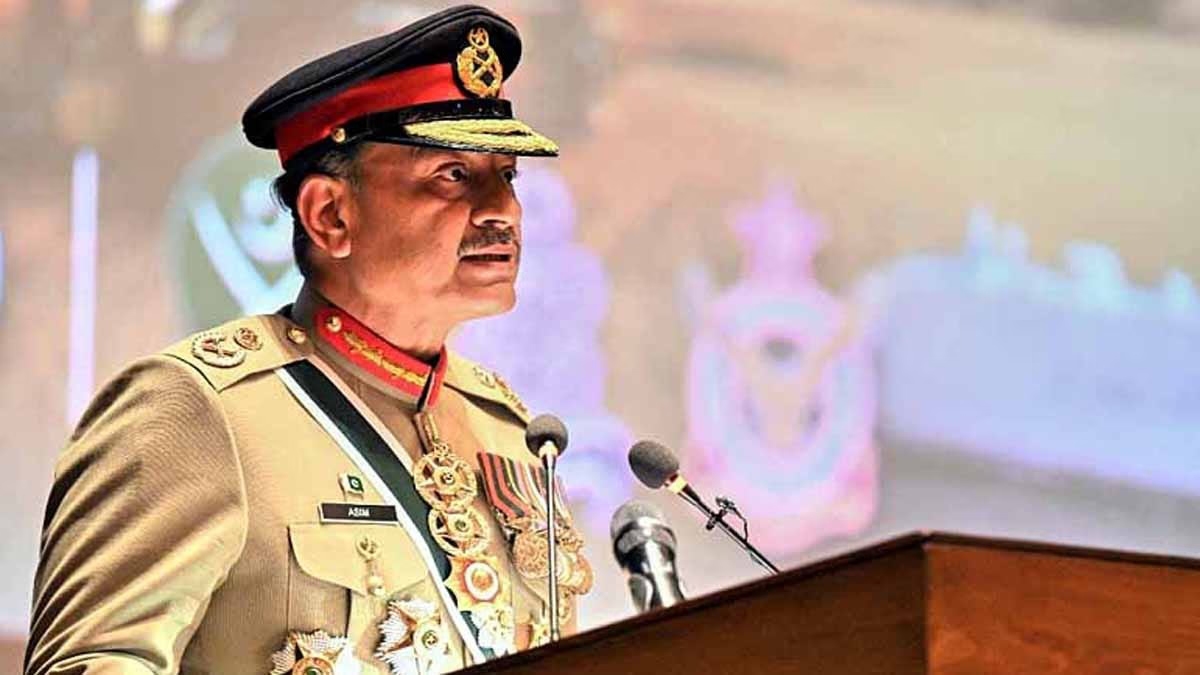
Field Marshal Aasim Munir, Pakistan's army chief, has unveiled a controversial 'Divide and Fragment' plan to break the nation into 12 new provinces. While the government brands it as a 'move for better governance,' experts see it as reminiscent of Britain's old 'divide and rule' policy.
Regions like Sindh and Balochistan view this plan as a seed for rebellion, with Gilgit-Baltistan already in the throes of unrest. Is this plan pushing Pakistan toward a crisis similar to 1971? Let's delve into the reality behind this scheme, regional responses, and potential threats.
Also read: How long will Munir and Trump fly with the aging F-16s? Is America short-changing Pakistan with the new deal?
The Pakistani government and military are devising a plan to divide the current four provinces (Punjab, Sindh, Balochistan, Khyber Pakhtunkhwa) into smaller 12 provinces. On December 8, Federal Communications Minister Abdul Aleem Khan told Geo TV that smaller provinces are necessary to ease administration and accelerate development. Critics claim this is Aasim Munir’s strategy to consolidate power.

Source: aajtak
Back in 1947, Pakistan was carved into five provinces, but 1971 saw the loss of East Pakistan (Bangladesh). The new plan proposes splitting Punjab into four parts, Sindh into two or three, and fragmenting Balochistan into smaller segments.
Recently, Munir extended his tenure by five years with the 27th amendment and brought ISI under his direct control. Experts suggest this plan is designed to weaken oppositions like PTI and intensify military control.
A NewTrack report from December 10 suggests that this scheme will incite rebellion, as regional parties like PPP (Sindh) and ANP (Pakhtunkhwa) plan to oppose it.
Munir's plan is dubbed 'Fragmentation' because it intends to consolidate central authority by creating smaller provinces but could incite minority and separatist groups.
Also read: India issues NOTAM for missile tests... No-fly zone of up to 2520 km
Sindh, Pakistan’s economic powerhouse (home to Karachi), is already ablaze with separatist sentiments. Bilawal Bhutto of the PPP dubbed the plan as a 'conspiracy against Sindh.'
Response: Calls for a 'Sindhudesh' (independent Sindh) have gained momentum on social media. On December 8, thousands protested in Karachi, holding banners claiming Munir's plan aims to erase Sindhi culture. Sindhi nationalist groups like Jeay Sindh Muttahida Mahaz declared this as a British ‘divide and rule’ tactic and vowed not to surrender their land.
Cause: Historically, disappearances, land grabs, and economic exploitation have plagued the region. While 80% of Sindh’s population remains impoverished, much of its revenue funds Islamabad. The plan threatens to fragment Sindh into pieces, weakening PPP’s influence.
Fact: In the 2024 elections, PPP won 80% of the seats in Sindh, but Munir's intervention has sowed discord. On X (formerly Twitter), #Sindhudesh is trending with users proclaiming, 'Sindh Unafraid – Munir's plan unveils the path to freedom.'
Residents view this as a tipping point. Should it materialize, Karachi might shut down, and violence could erupt.
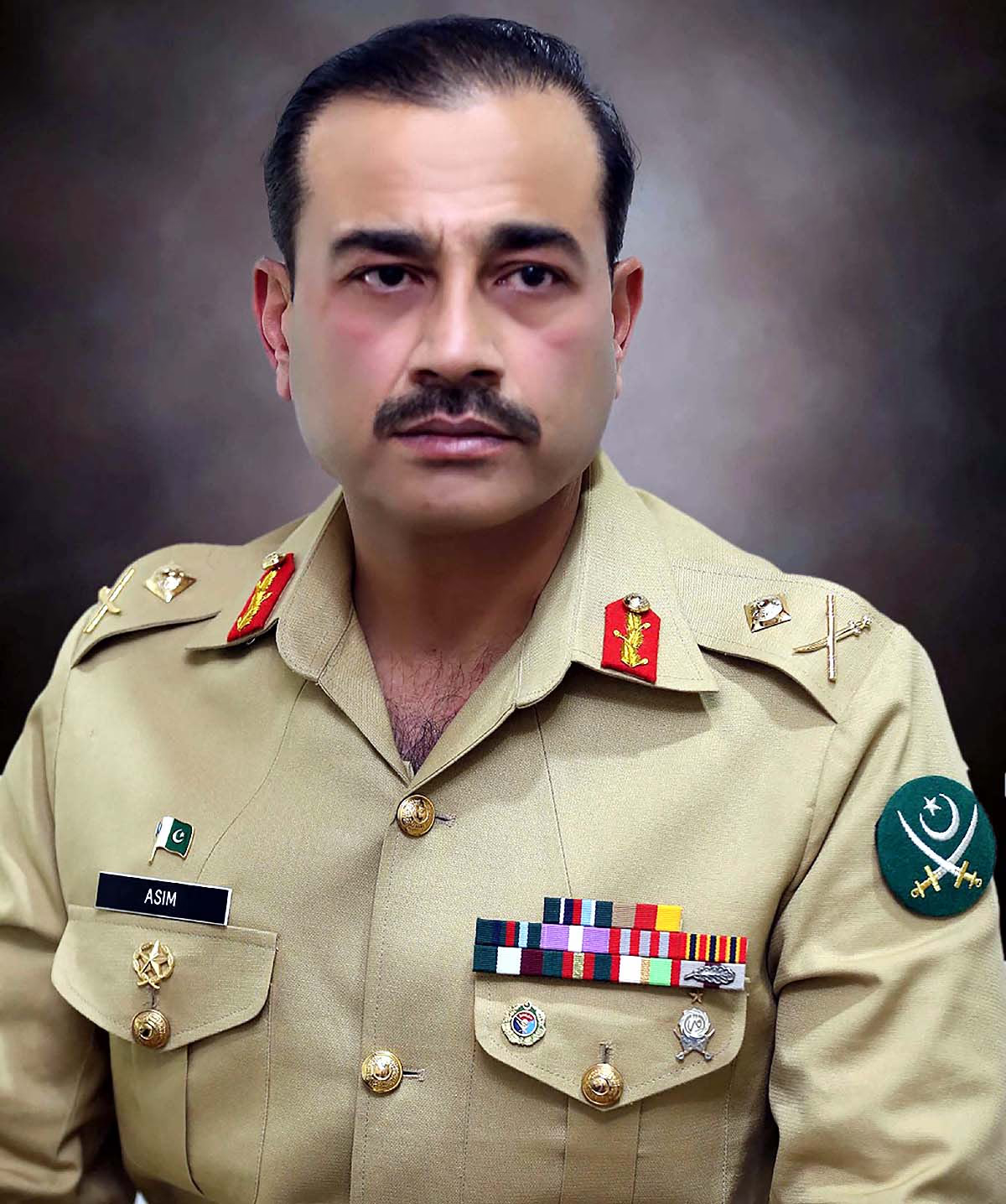
Source: aajtak
Balochistan, the country's largest and resource-rich yet poorest province, is already experiencing heightened separatist fervor. Groups like the Baloch Liberation Army (BLA) are targeting CPEC projects. In April 2025, Munir labeled Baloch insurgents as 'an Indian conspiracy,' but locals view military brutality as the real cause.
Response: The plan is criticized as an attempt to consolidate control with an 'iron fist.' Baloch leader Mir Yar Baloch wrote to Trump, asserting that their oil reserves are being seized by Pakistan. #FreeBalochistan is trending on social media.
Cause: Exploitation of resources, forced disappearances, and economic neglect. In May 2025, 138 disappeared; 72 were killed. Fragmenting Balochistan into three parts seems a tool to suppress insurgency but might fuel the fire, increasing the chance of a civil war.
Gilgit-Baltistan (GB), part of Pakistan-administered Kashmir, is already battling land grabs, power cuts, and political exclusion. Major protests erupted in November 2025, blocking the Karakoram Highway. Human rights groups report forced disappearances.
Response: The decision in December 2025 to deploy the Counter-Terrorism Department (CTD) in GB is perceived as an instrument of repression. In June 2025, traders protested, blocking the road to China for three days. The plan to fragment GB without provincial status could exacerbate constitutional crises, with protesters proclaiming ‘the end of Pakistan’s control.’
Cause: Lack of constitutional status, exploitation of resources (CPEC), human rights violations. A heavy crackdown in November 2025 led to numerous arrests. Implementing the plan might spread unrest throughout the region, igniting the Kashmir conflict further.
Also read: US enhances F-16 capabilities for Pakistan, extending its lifespan by 15 years, as Trump approves the deal.
Pakistan's economy is teetering – under $73 billion in debt and inflation crushing livelihoods. Munir's authoritarian approach may weaken democracy. The division into smaller provinces accelerates separatism.
Experts warn that creating new provinces might suppress insurgency temporarily but could risk fragmentation akin to 1971. Movements in Balochistan, Sindh, and GB are escalating. On social media, #FreeSindh and #BalochistanIsNotPakistan are trending.
Munir claims to defend integrity, but the streets are alive with dissent. The anger is not subsiding. International pressure (from the US and China) might increase, but internal strife may remain unresolved. If the plan is implemented, it could incite a wave of civil war or newfound independence. The message is clear – Pakistan stands precariously on the brink of disintegration.