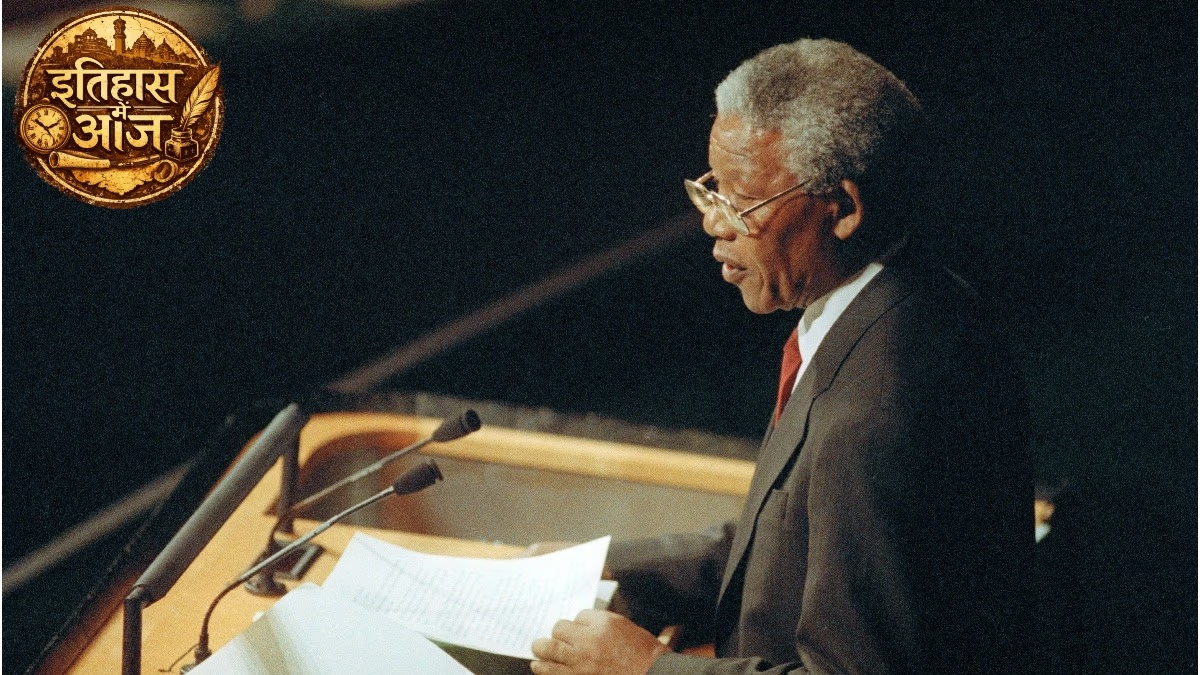
On February 11, 1990, Nelson Mandela was released from prison. Mandela led non-violent movements against apartheid in South Africa, gaining a revered status similar to that of Mahatma Gandhi in India. He is considered the greatest leader in Black politics.
In 1944, Mandela joined the African National Congress (ANC), South Africa’s oldest Black political organization. He became the leader of the ANC’s youth wing in Johannesburg. In 1952, he became the ANC’s deputy national president and supported non-violent resistance against the institution of apartheid—a system of white supremacy and racial discrimination in South Africa.
Following the massacre of peaceful Black protesters in Sharpeville in 1960, Mandela helped organize ANC’s armed branch to initiate guerrilla warfare against the white minority government. Arrested in 1961 on charges of treason, he was later acquitted but was re-arrested in 1962 for illegally leaving the country.
Convicted in the case, he was sentenced to five years and imprisoned on Robben Island. In 1964, he faced retrial on charges of sabotage. In June 1964, Mandela was found guilty along with several ANC leaders and sentenced to life imprisonment. He spent 18 of his 27 years on harsh Robben Island.
Also Read: The Execution of Queen Mary of Scotland: Why She Was Beheaded
Imprisoned in a small, unaccommodating cell without a bed or plumbing, Mandela was forced into hard labor in a lime quarry. He was allowed only one letter every six months and one 30-minute visit per year. Nonetheless, Mandela remained resolute, becoming the symbolic leader of the anti-apartheid movement.
Explore More: When a Black Person First Went to Space, Bernard Harris Made History
He initiated a civil disobedience campaign in prison, prompting South African authorities to improve conditions on Robben Island. Later, he was transferred to a new location where he remained under house arrest. In 1989, F.W. de Klerk became South Africa’s president and started dismantling apartheid.
Discover: How African Americans Gained the Right to Vote: The 15th Amendment in the US Constitution
De Klerk lifted the ban on the ANC, suspended executions, and ordered Nelson Mandela’s release in February 1990. Mandela led the ANC in negotiations with the minority government to end apartheid and establish a multiracial government.
Read More: The First Woman to Become a High Court Judge in India: The Story of Anna Chandy
In 1993, Mandela and de Klerk were jointly awarded the Nobel Peace Prize. A year later, the ANC won the majority in the country’s first open elections, and Mandela was elected President of South Africa. Retiring from politics in 1999, Mandela remained a global advocate for peace and social justice until his death in December 2013.