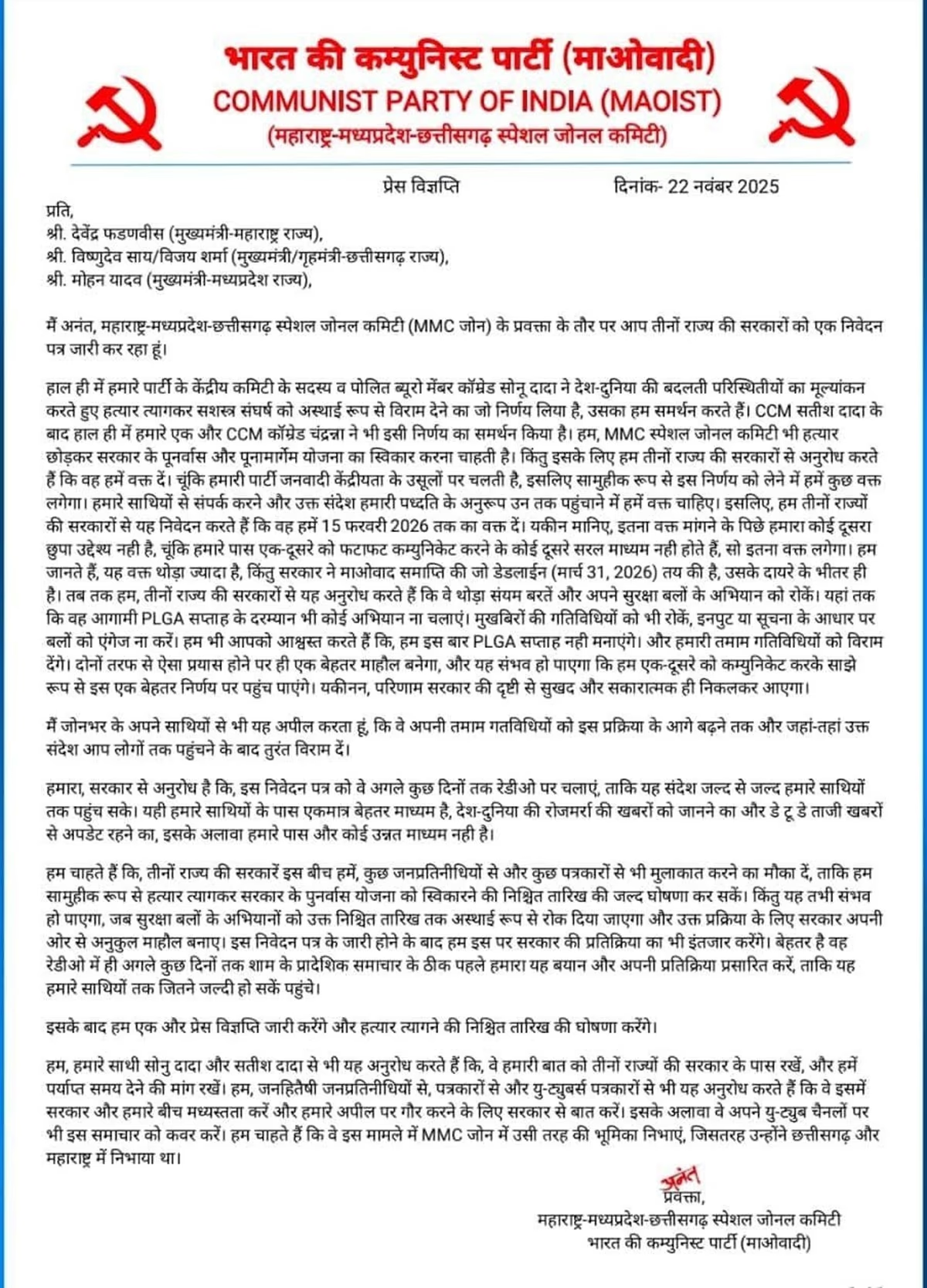
In the aftermath of the notorious Maoist commander Hidma's death, a significant wave of unease has stirred within the organization. Amidst this backdrop, the MMC zone has issued an important letter to the governments of all three states, indicating a willingness among Naxalite commanders to surrender.
The letter clearly states that the central committee aims to temporarily cease the conflict in light of changing national and global circumstances. Hidma's death has further strengthened this resolve. Many seasoned commanders now wish to leave the fight and join the mainstream, contributing to what is considered the most significant strategic shift in the organization's history.
Naxal Commanders' Anxiety
The document mentions that Comrade Soma Dada, a senior member of the party's central committee and politburo leader, has decided to pause hostilities. The MMC zone not only supported this decision but also opted to implement it on the ground. Hidma's demise has led commanders to realize that prolonged jungle warfare is unsustainable. Concerns about their future, safety, and families have mounted, prompting a desire for a secure and orderly surrender process with government oversight.
Directive to Halt PLGA Activities
In a groundbreaking move, the MMC zone's letter directs a cessation of all PLGA activities. For the first time, the organization has issued such explicit instructions to its armed factions. It indicates that insider betrayal has caused internal harm, making it essential to halt hostilities. Commanders have been ordered to cease armed actions in their areas, suggesting a large scale movement towards surrender or ceasefire following Hidma's death.
Leaders Hiding in Jungles Seek Safe Dialogue
The MMC zone has made it clear in the letter that they wish to meet with the governments of Maharashtra, Madhya Pradesh, and Chhattisgarh. The presence of public representatives and journalists is deemed essential for such talks. This is the first instance where top Naxal leaders themselves are calling for a meeting. The organization wants a safe venue for the discussions, allowing them to express their terms. Hidma's death has considerably weakened the confidence of Naxal commanders, hinting at a desire for change.
Ceasefire Indications Until 2026
The letter contains a crucial element: the central committee's message talks about halting the people's war until March 2026. This is deemed the Maoists' most significant strategic shift yet. Numerous commanders see it as an opportunity to save their lives and secure their futures. The organization has instructed its members to cease confrontation until further orders, suggesting that major surrenders could occur in the upcoming months.
Appeal for Government to Take the ‘First Step’
The Naxalite spokesperson has urged governments to read this letter earnestly and take positive actions. The organization seeks a safe corridor for surrendering commanders, alongside requests for better security in camps, legal assistance, and dignified rehabilitation. The letter also implies that if the government responds, Naxalites will announce a surrender date. This movement is seen as a result of the changed realities following Hidma's death.
Source: aajtak
Friction and Fear Among Naxal Commanders
The document acknowledges increased factional friction within the organization. Hidma's death has heightened fears about who might be targeted next. Many commanders have concluded that persistent pressure, encirclement by security forces, and diminishing strength will prevent any further advancement of the people's war. These fears and insecurities have led captains to express a willingness to cease combat and surrender if facilitated adequately.
Morale Dropped Among Jungle Deployed Units
Many units associated with the PLGA and MMC zone have witnessed a sharp decline in morale. The letter admits that communication is limited to select individuals, isolating them further from the outside world. Hidma's death, coupled with internal weaknesses, has convinced them that the ongoing fight is unsustainable. Hence, they seek a safe passage from the government to abandon the organization and live a normal life. This signifies a significant shift among the fighting factions in the jungle.
Looming Soft Stance on Mining, Development, and Displacement
An intriguing aspect of the letter indicates that the organization is now adopting a softer stance on mining companies, displacement, and governmental development projects compared to the past. They've stated that the government should engage with the center for resolving such issues. This alteration illustrates the waning power of the Naxal agenda. Post-Hidma, a lack of concrete direction in leadership has emerged, prompting many commanders to envision collaborative government efforts. In this pursuit, surrender emerges as a more accessible path.
Major Security Changes for Three States
This letter is causing significant ripples in Naxalite regions of Maharashtra, Madhya Pradesh, and Chhattisgarh. Security agencies perceive this as a robust signal of a diminishing Naxalite influence. Hidma's death has expedited this process, with many commanders willing to emerge from hiding. If the government seizes this opportunity, a major transformation on the Naxal front might unfold in the coming months.
Formal Surrender Announcement Imminent?
The concluding part of the letter clearly states that upon receiving a governmental response, they will announce a 'definitive date for laying down arms.' This suggests that surrender isn't just a wish but an integral part of a planned process. A team of 52 aides from the MMC zone is also advancing this mission. If a collective surrender occurs post-Hidma, it could rank among the most notable events in Naxal history.