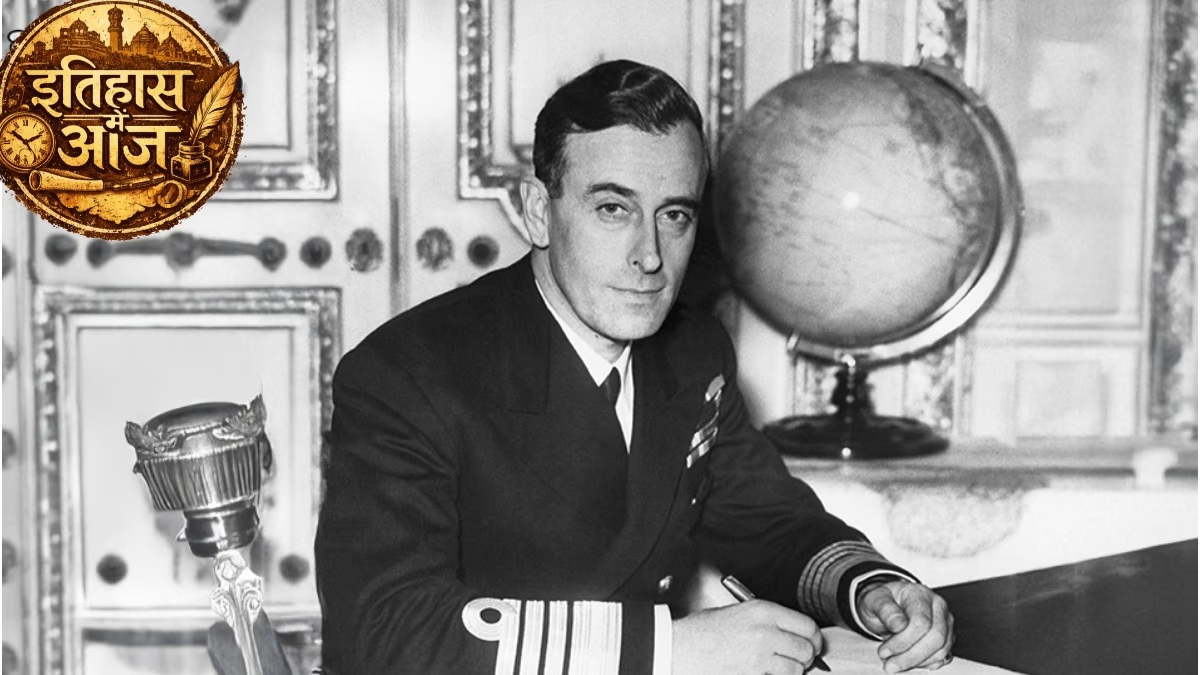
On February 20, 1947, under the advisement of British Prime Minister Clement Attlee, King George VI made the pivotal decision to appoint Lord Louis Mountbatten as the last Viceroy of India. That very day, Attlee announced this in the House of Commons, and a month later, on March 23, Mountbatten took office in India.
During World War II, Lord Louis Mountbatten served as the Supreme Allied Commander of the Southeast Asia Command. Given his sympathy towards the Labour Party and his heritage as Queen Victoria's great-grandson, British Prime Minister Clement Attlee recommended his appointment as Viceroy of India.
On February 20, 1947, following Attlee's suggestion, King George VI appointed Mountbatten as the last Viceroy of India, entrusting him with the responsibility of supervising the transition of power from Britain to India. That same day, Prime Minister Attlee proclaimed Mountbatten's appointment to the House of Commons, followed by his own address at the Joint Services Staff College.
Related Reading: When China Engaged Vietnam in Warfare, Only to Retreat
It's said that Mountbatten was initially reluctant to accept the position due to his lack of political experience and the monumental nature of the task. The Mountbattens arrived in India on March 22, 1947. Subsequently, he succeeded Field Marshal Viscount Wavell, assuming his responsibilities on March 23, 1947, in New Delhi.
Related Reading: The Discovery of Pluto: Once Known as the Ninth Planet of the Solar System
Lord Mountbatten was tasked with overseeing the process of granting independence to British India. Officially, he informed the rulers of Indian princely states about his assumption of Viceroyalty. This marked a historic chapter in India's history.