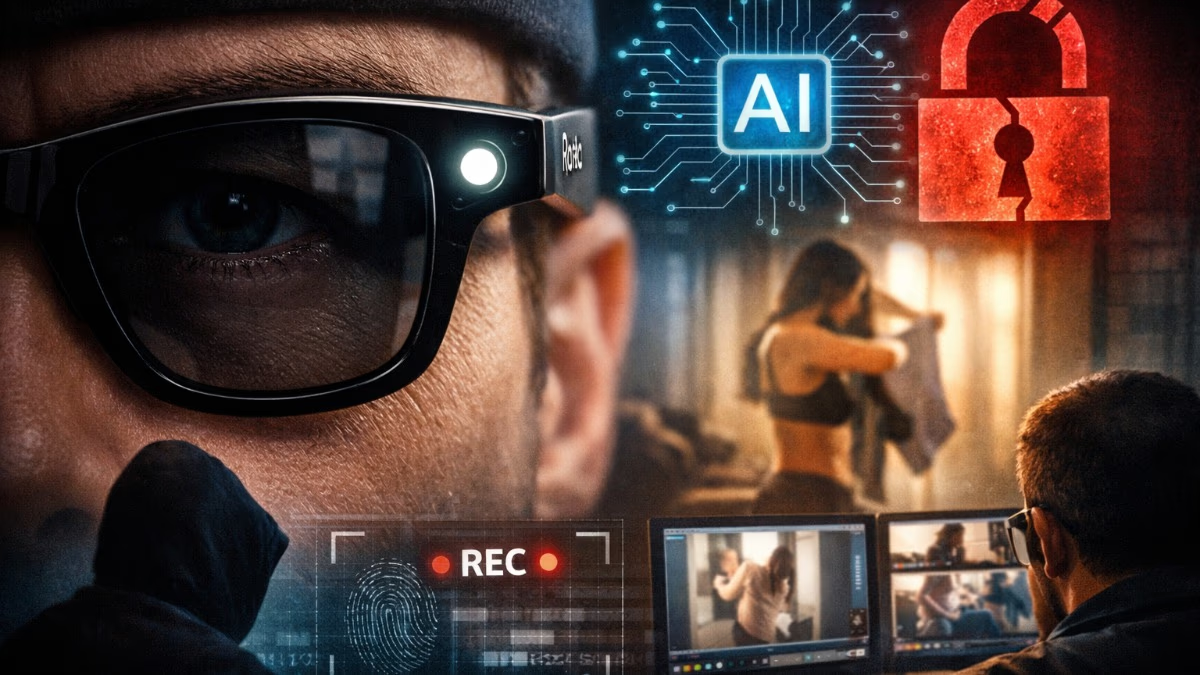
The world is rapidly changing with AI and smart glasses at the forefront. Meta's Ray-Ban smart glasses, hailed as next-generation technology, now face privacy scrutiny, highlighted by a recent report.
The report reveals that some video clips from Meta-Rayban smart glasses are watched by human AI trainers, making wearers unintentionally part of the surveillance.
On February 27, Swedish newspaper
conducted an
into the Meta Ray-Ban partnership and how their AI glasses function. Their findings showed that footage recorded by these glasses is accessed by numerous people, including AI trainers.
From Changing Clothes to Private Moments: Is Everything Being Recorded?
Anonymous sources from a Kenyan company in Nairobi reported viewing videos capturing individuals in their most private and sensitive moments.
Reports mention videos of people changing clothes or sharing intimate moments being inadvertently recorded and reviewed by Meta’s human moderators.

Source: aajtak
The report details how Sama, a Kenyan subcontractor for Meta, provides these employees who assist in identifying objects in photos and videos to train Meta's AI.
Thousands create boxes around objects on screens, which AI systems then use to enhance their models.
Alarming Revelation: From Bathroom Videos to Intimate Encounters
An employee recounted witnessing videos of individuals undressing or visiting the bathroom, unsure if those recorded knew or wanted their footage reviewed elsewhere.
Other employees shared similar experiences. One saw a video where a man left his smart glasses on a bedside table, only for a woman to enter the room and change clothes.
Data annotators saw videos with sensitive information, including credit card details and intimate activities. Some footage may have been recorded intentionally, but much of it seems to lack full awareness or consent.
Such sensitive footage leaks could lead to severe embarrassment and danger.
What Are Smart Glasses and How Do They Work?
Meta, in collaboration with Ray-Ban, created these smart glasses. They appear as regular sunglasses but house tiny cameras, microphones, and speakers.
Users can take photos, record videos, livestream, and query AI assistants using voice commands.
For example, a user exploring a city can capture images with the glasses and ask what a particular building is, receiving immediate information from AI. This potential positions smart glasses as a future key platform.
Surveillance Risks
Issues arise when cameras constantly point at one's face, unbeknownst to the public. Smartphone recordings are obvious, with phones in hand, but smart glasses conceal cameras in the frame corners, often unnoticed.
Meta includes a small LED light that signals recording, but experts argue that amidst crowds or lighting, the warning may be overlooked, leading to unintentional recordings.
Utilization of Data Under the Guise of AI Training
Today, training AI demands vast data—photos, videos, voices, text. The more data, the better the AI performs.
Thus, tech companies gather data from various sources, and Meta's smart glasses could become a part of this ecosystem by recording daily life—streets, homes, shops, people—offering ongoing real-world data.
Fears of Facial Recognition
Smart glasses spark another concern. If cameras integrate with facial recognition systems, any individual's identity is discernible instantly. Experimental technology matches captured photos with internet databases to identify names.
Social media data could potentially reveal phone numbers or addresses. If paired with smart glasses, identifying individuals on the street becomes easy.
Similar Incidents Have Occurred Before
Smart glass-related complaints have surfaced in parts of the US. A university issued a warning about a man using Meta's smart glasses to record unconsented women, later disseminating videos online. The incident alarmed students and faculty, as these glasses are less conspicuous than conventional cameras.
Amidst rising concerns, new apps are emerging to detect nearby smart glasses, developed by programmers.
Such apps utilize Bluetooth signals to discern Meta smart glasses' presence, though the technology isn't fully reliable yet, indicating growing public unease.
What Tech Companies Say
Meta asserts strong privacy commitments, claiming robust measures to protect user data. Additionally, the company states recordings are signaled by LED lights for awareness.
However, privacy advocates argue it's insufficient, as issues extend beyond recording to data use.
Legislation Trails Behind
New technology often outpaces existing laws, and smart glasses exemplify this. In countries like India, public video recording is legal, but with constant-capture cameras on faces, the situation shifts. Current regulations aren't fully prepared for such devices.
What's Next for the Future?
Tech companies envision smart glasses as the next frontier in computation, akin to smartphones revolutionizing the world. They foresee a world where smart glasses integrate seamlessly into daily life, though concerns linger.
If cameras adorn everyone, will it transform the world into a massive surveillance network? This remains an unanswered question for now.