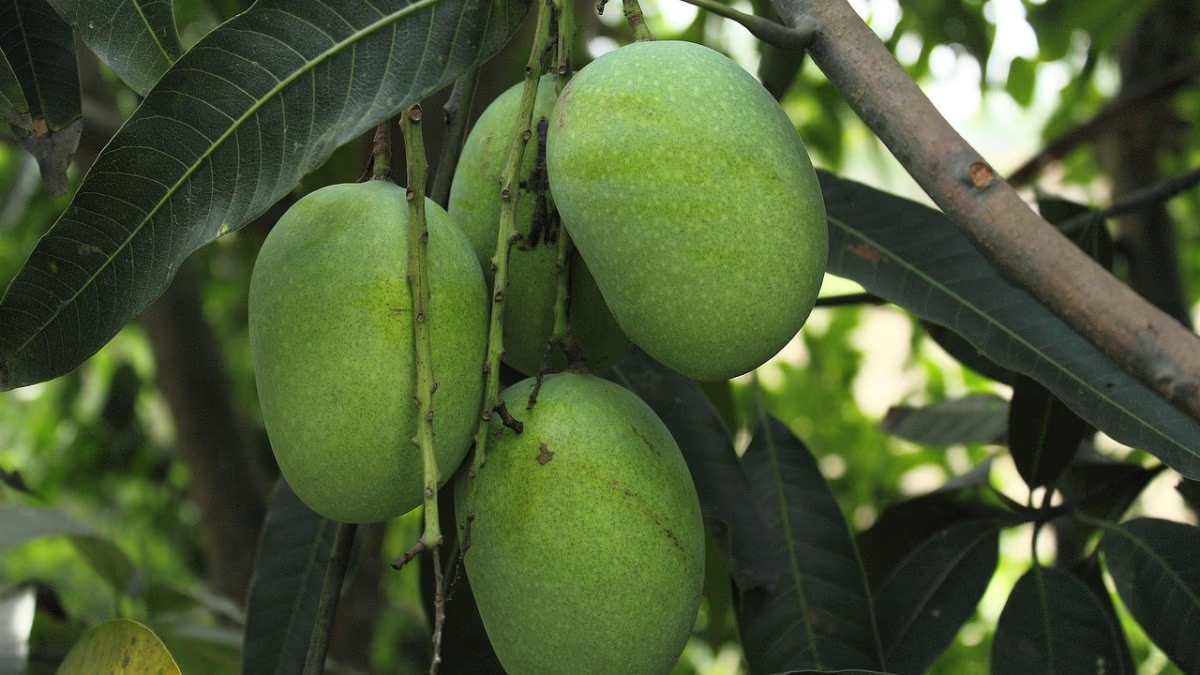
Mangoes are often hailed as the king of fruits, with widespread cultivation across India. To achieve a bountiful harvest, timely and proper care is essential. According to agricultural experts, the months of February and March are particularly crucial for mango trees. This is the time when the trees flower and begin fruit development. Neglect during this period can lead to flower drop, reducing fruit yield. Therefore, adopting the right measures on time can potentially double mango production.
Caring for Mango Trees in February-March
Both agricultural scientists and experienced farmers agree that the following tasks are critical for achieving a bumper mango harvest in February-March.
Proper Management of Irrigation
During February, as the trees begin to flower, minimize watering—or avoid it altogether. Overwatering can promote new leaf growth instead of flowers, thus reducing fruit setting. Once the flowers shed and small fruits (pea-sized) emerge, start light irrigation. In March, water regularly but not excessively. Drip irrigation is recommended as it conserves water and ensures adequate moisture to the roots.
Source: aajtak
Source: aajtak

Source: aajtak
Source: aajtak

Source: aajtak
Fertilizers and Nutrient Management
Use balanced fertilizers to strengthen the tree at this time. Apply organic fertilizers like manure or vermicompost.
Spray micro-nutrients such as boron, zinc, and magnesium.
Apply potassium-rich fertilizers (like NPK 13:00:45 or potassium nitrate). Spray at 3 grams per liter of water, promoting fruit growth, with up to 8-10 mangoes per cluster.
Apply light fertilizers in February to strengthen flowering and reduce the issue of flower drop.
Pest and Disease Management
Dreaded pests during February-March, such as the mealy bug, gujjiya bug, and hopper (sucking pests) can wreak havoc, causing flower and small fruit drop. Conduct the first and second sprays in February itself.
If pest levels are high, consult an expert for chemical sprays but exercise caution during flowering.
Use mulching (dry grass or plastic sheets) under the tree to minimize weeds and conserve moisture.
Pruning
If necessary, perform light pruning. Remove old, dry, or diseased branches to allow better sunlight and airflow. Thinning dense branches enhances flower and fruit production. Avoid heavy pruning as trees are in the flowering stage during February-March.