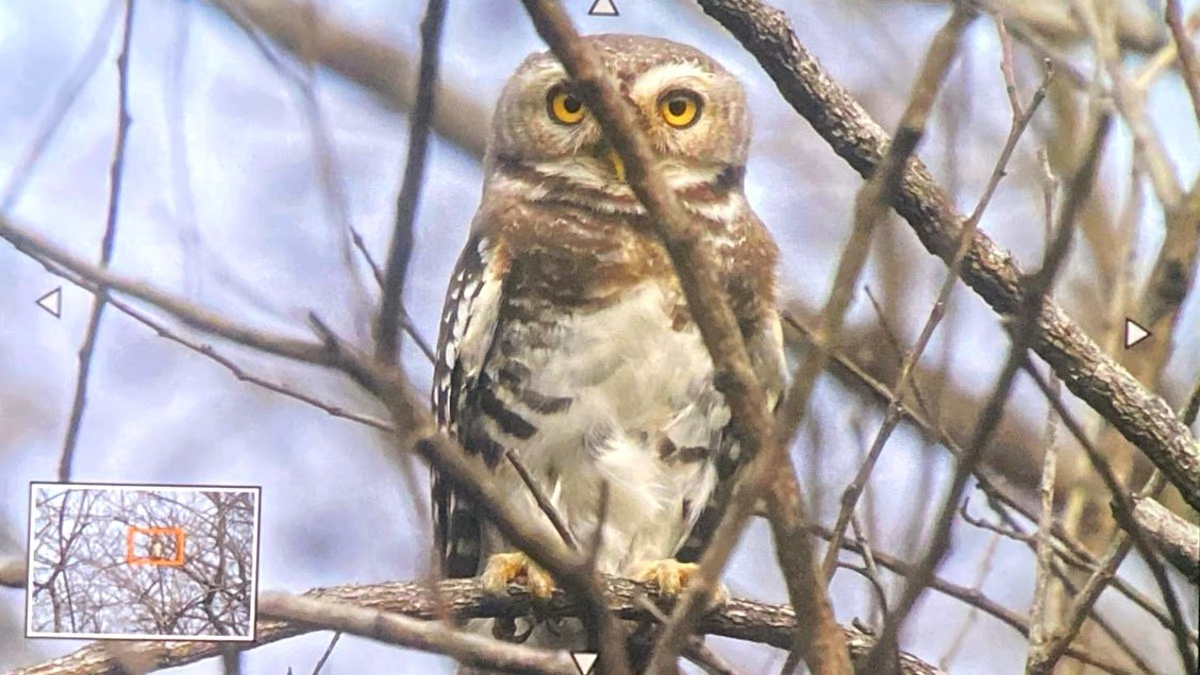
Kuno National Park, famous as a sanctuary for cheetahs, celebrates another rare achievement. The presence of the 'Forest Owlet', one of the world's rarest birds of prey, marks significant improvements in the ecosystem of the area.
The Forest Owlet was first discovered in 1872 but was presumed extinct after 1884. After an absence of 113 years, it was rediscovered in 1997 in the Nandurbar district of Maharashtra, creating a stir in the ornithological world.
Presently, it inhabits fragmented forests of central India, including Madhya Pradesh (Khaknar, Piplod), Maharashtra (Toranmal, Melghat), and Gujarat (Dang, Purna Wildlife Sanctuary).
Previously in Madhya Pradesh, the Forest Owlet was found only in eastern Khandwa, Burhanpur, and Betul districts. Tourism guide Labh Yadav first spotted this rare bird in Kuno's Parond Beat during a local tour, drawing immediate attention from the forest department due to its highly restricted distribution and conservation status.
Based on distinctive identification features, Vivek Patel of Wildlife Research and Conservation Society, Pune, confirmed its presence on-site, marking the first authentic record of the species from Kuno National Park.
Unlike most owls, the Forest Owlet is primarily active during the day. It is most active between 6 to 10 AM and can be seen perched on high branches even in the sun's heat.
Currently listed as 'Endangered' by the International Union for Conservation of Nature, the Forest Owlet's global adult population is estimated to range between 250 to 999 individuals.
Further surveys are necessary to understand its distribution in Madhya Pradesh. Once believed extinct and rediscovered in 1997, the Forest Owlet now faces ongoing threats from habitat degradation and fragmentation, highlighting the ecological significance of Kuno National Park’s forests.
The sighting of the Forest Owlet indicates that conservation efforts for the cheetah are enhancing the ecosystem, facilitating the return of other endangered species. The discovery in the northwest region of Madhya Pradesh thrills bird conservation experts.
This event sheds light on the vital role that conservation projects play in promoting biodiversity within protected areas. The renewed interest in birdwatching and ecological tours around Kuno is expected to boost local tourism and awareness.