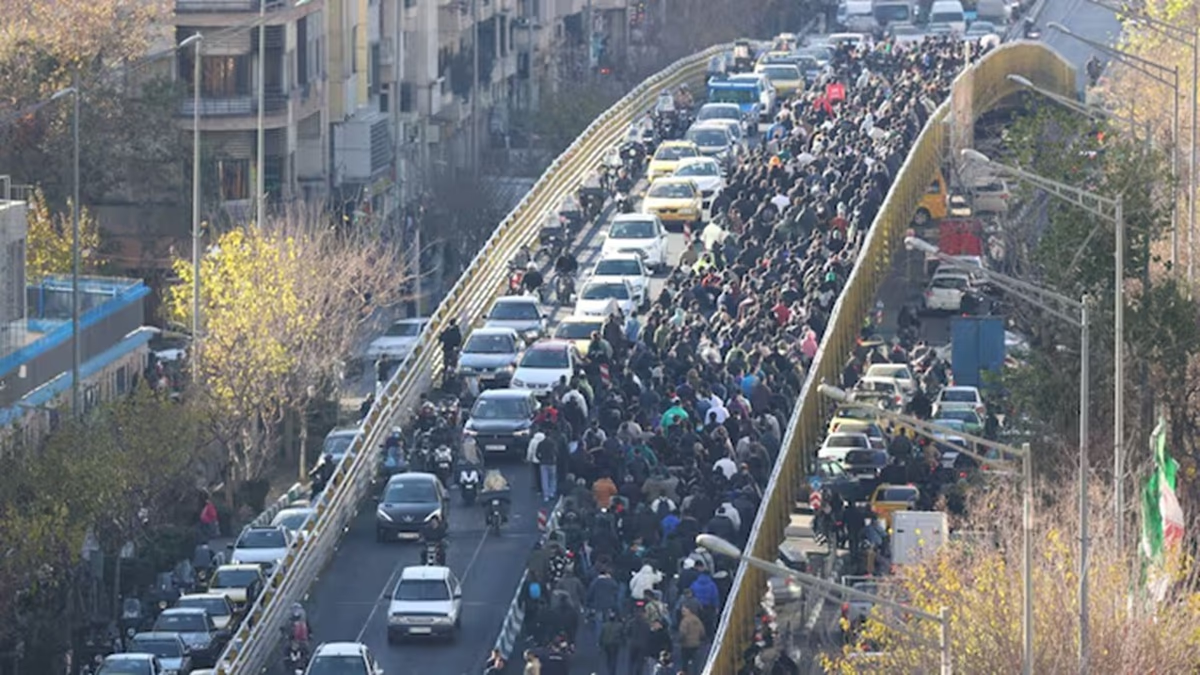
Turmoil has swept across the streets of numerous cities and towns in Iran for the past two days. The Iranian rial has plummeted to a record low against the US dollar while inflation has surged to an alarming 42.2%, with food prices alone soaring by 72%. This has posed the greatest challenge in three years to the religious rule led by Supreme Leader Ayatollah Ali Khamenei, as widespread public dissent rolls through Tehran's Grand Bazaar out to cities like Mashhad, Isfahan, Shiraz, and Hamadan.
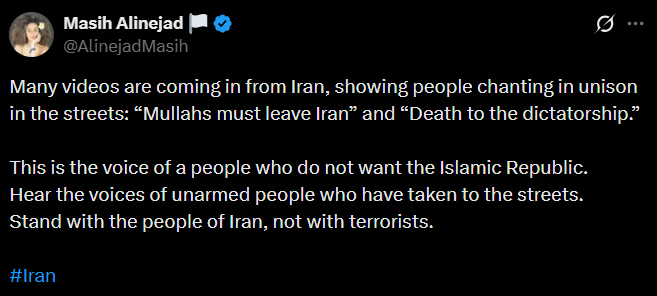
Iranian-American journalist Masih Alinejad, via social media platform X, shared videos where voices ring out in unison with cries of 'The clerics must leave Iran' and 'Down with dictatorship'. She highlighted this as the collective voice of a people desiring to leave the Islamic Republic behind. Iran, with over 92 million residents, faces dire economic hardships and worsening law and order that have put Khamenei's government in a deep crisis. This tumult comes when Iran is already under pressure due to actions at its nuclear sites from Israel and the US, alongside struggling with Donald Trump's 'Maximum Pressure Policy'.
Source: aajtak
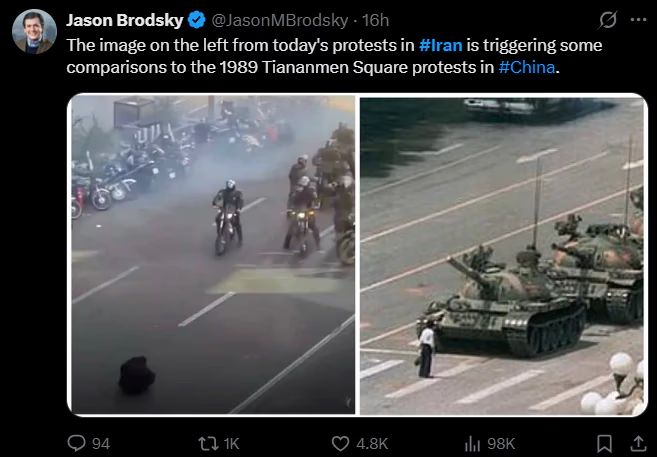
Meanwhile, an evocative image shared by Iranian diaspora has captured global attention, depicting an individual seated calmly on a Tehran highway as security forces on motorcycles approach. Jason Brodsky, Policy Director at United Against Nuclear Iran (UANI), compared this scene to the iconic 'Tank Man' of the 1989 Tiananmen Square protests. Some analysts note the presence of pro-Shah chants, stirring memories of the regime toppled by Khamenei's 1979-supported movement.
Source: aajtak
However, Iranian state media have attempted to portray these protests as limited in scope. The state news agency IRNA termed them economic grievances rather than political, citing mobile phone vendors' anger over the rial's drop. Security forces resorted to tear gas and force to disperse crowds, with videos quickly gaining traction online. The Governor of Iran's Central Bank, Mohammad Reza Farzin, resigned, which President Masoud Pajeheki accepted, acknowledging on social media that citizens' livelihoods remain a priority and monetary reform is in the pipeline.
Why Have the People Taken to the Streets?
The recent protests, commencing on December 28th, mark the largest since the nationwide uprising of 2022-23 triggered by Mahsa Amini's death. Clashes between protestors and security forces surfaced in Tehran and Mashhad on Monday. In central Tehran, a hub of government and commercial activities, protests echoed through. Viral social media videos showed chants of 'Don't fear, we're all together' ringing out from within a shopping complex in the Grand Bazaar. The historic decline of the rial has almost obliterated ordinary citizens' purchasing power, putting food, medicine, and daily needs out of reach. Amidst this economic strife, traders, shopkeepers, and small business owners in Tehran, Isfahan, Shiraz, and Mashhad have taken to the streets.
Source: aajtak
Is the Trump Factor to Blame?
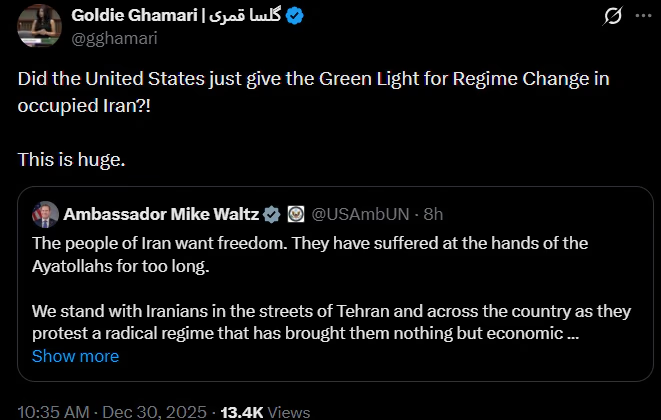
The grim economic state of Iran is largely attributed to international sanctions. The US withdrawal from the 2015 nuclear deal and Trump's Maximum Pressure Policy have severely impacted Iran's oil revenue. With further tightening of these sanctions upon Trump's January 2025 re-election, conditions have worsened. Former US Secretary of State Mike Pompeo noted that the anger seen from Iranians against Islamic rule was unsurprising.
He argued that extremism and corruption have squandered a promising nation. Experts believe that the internal dissent against Islamic rule in Iran is neither entirely foreign-sponsored nor spontaneous - it is a culmination of prolonged economic suffering and political fatigue. The Trump administration's pressure indirectly spotlighted the Iranian regime's internal failures, plunging Khamenei's 'mullah rule' into an existential crisis.