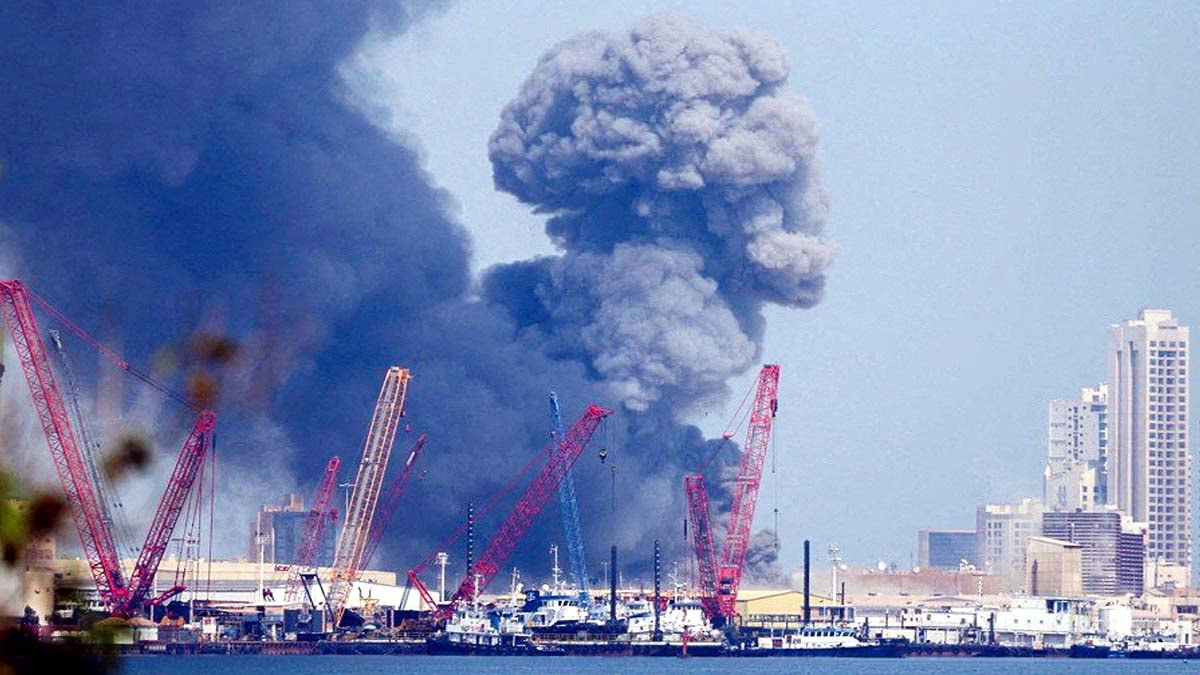
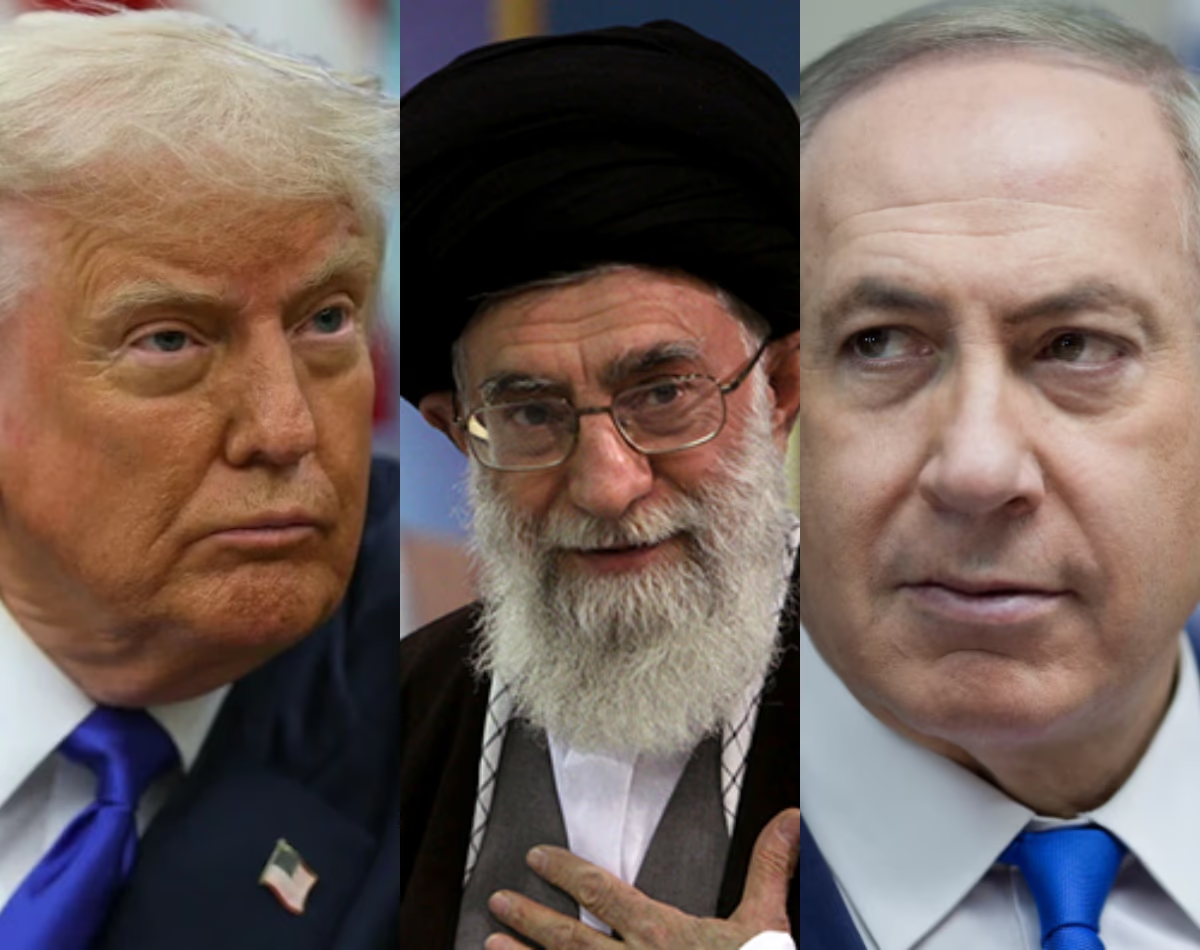
The aggression from Israel and America against Iran has escalated global tensions. Reviewing updates on the US-Israel Iran War, we observe the confirmed death of Ayatollah Ali Khamenei by Iranian military, state news agency IRNA, and 'Press TV', following announcements by Trump and Israel. Despite his death, attacks persist, amplifying global anxieties about crude oil supply. The root cause is Iran's vast oil reserves, and disruptions here could lead to chaos in several major countries, including China. Let us delve deeper into this.
Will Oil Surge Beyond $100?
Due to the US-Israel Iran War, there is a high likelihood of a significant surge in oil prices. Numerous reports hint at a sharp rise in Crude Oil Prices next week. With continued attacks on Iran by the US and Israel, coupled with shipping obstructions at the Strait of Hormuz, tensions surrounding Middle East oil supply have heightened.
Even before the war began, fears drove crude prices upward, with Brent Crude increasing by 2.87% last Friday to approximately $73 per barrel. Experts now predict a sharp rise amid the intense warfare. According to the Center for Strategic and International Studies, if Iran interrupts tanker traffic due to the conflict, Brent crude oil could exceed $90 per barrel. Analysis from JPMorgan Chase shows that crude oil prices could soar over $100 per barrel amid severe disruptions in the Middle East.
Source: aajtak
Iran Holds 209 Billion Barrels of Oil Reserves
On February 28, America's and Israel's actions against Iran, and subsequent retaliations by Tehran, have once more dragged the Middle East to the brink of a crisis. While military operations remain the focal point, their deep impact on global energy markets is imminent.
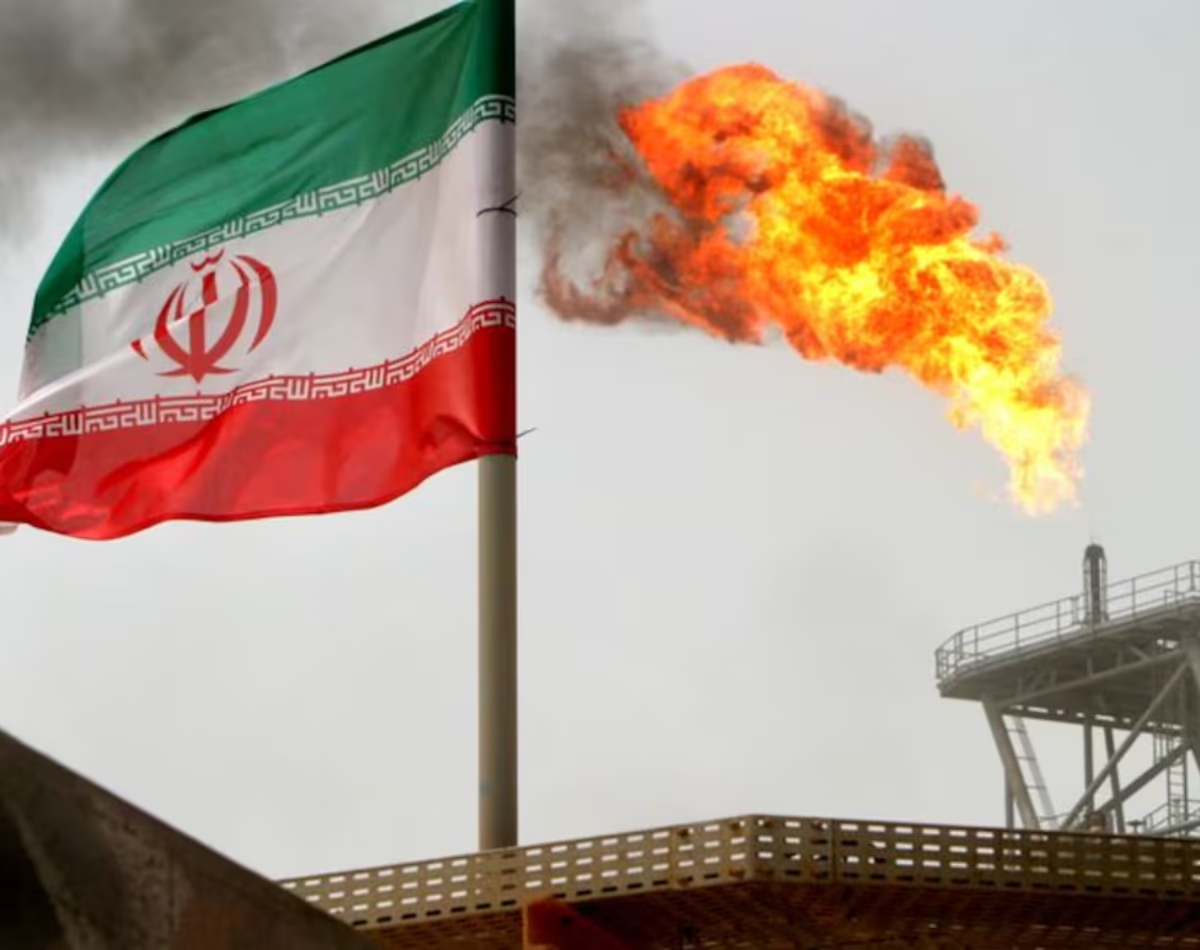
The unrest emanates from Iran holding the world's third-largest proven oil reserves. According to projections for fiscal year 2024-25, Iran possesses an astounding 208-209 billion barrels of oil reserves. This amount represents around 12% of global oil reserves and roughly a quarter of the total reserves in the Middle East. Despite sanctions and limited foreign investments over the years, Iran continues to play a pivotal role as a crucial supplier in the highly competitive oil market.
Source: aajtak
Daily Oil Production in Iran
Presently, Iran produces approximately 3.3 to 3.5 million barrels of crude oil daily, constituting about 3% of global supply. Along with this, the nation also produces around 1.3 million barrels of condensate and other liquids per day. As OPEC's third-largest producer, Iran contributes about 4.5% to the global oil supply. At its zenith in 1974, Iran produced nearly 6 million barrels daily. OPEC data indicates that production has since declined to approximately 3.1 million BPD, yet the country remains a formidable power in energy markets. Despite sanctions, daily production continues at around 1.5 million barrels.
According to consultancy firm FGE, Iran's domestic refining capacity stands at approximately 2.6 million barrels per day. Last year, in 2025, Iran exported around 820,000 barrels per day of fuel products, including LPG, slightly less than in 2024. Major refineries in Iran include Abadan, one of the oldest and largest in the Middle East, along with Tehran, Isfahan, Bandar Abbas, Arak, and Tabriz.
Source: aajtak
Strait of Hormuz Obstruction Escalates Tensions
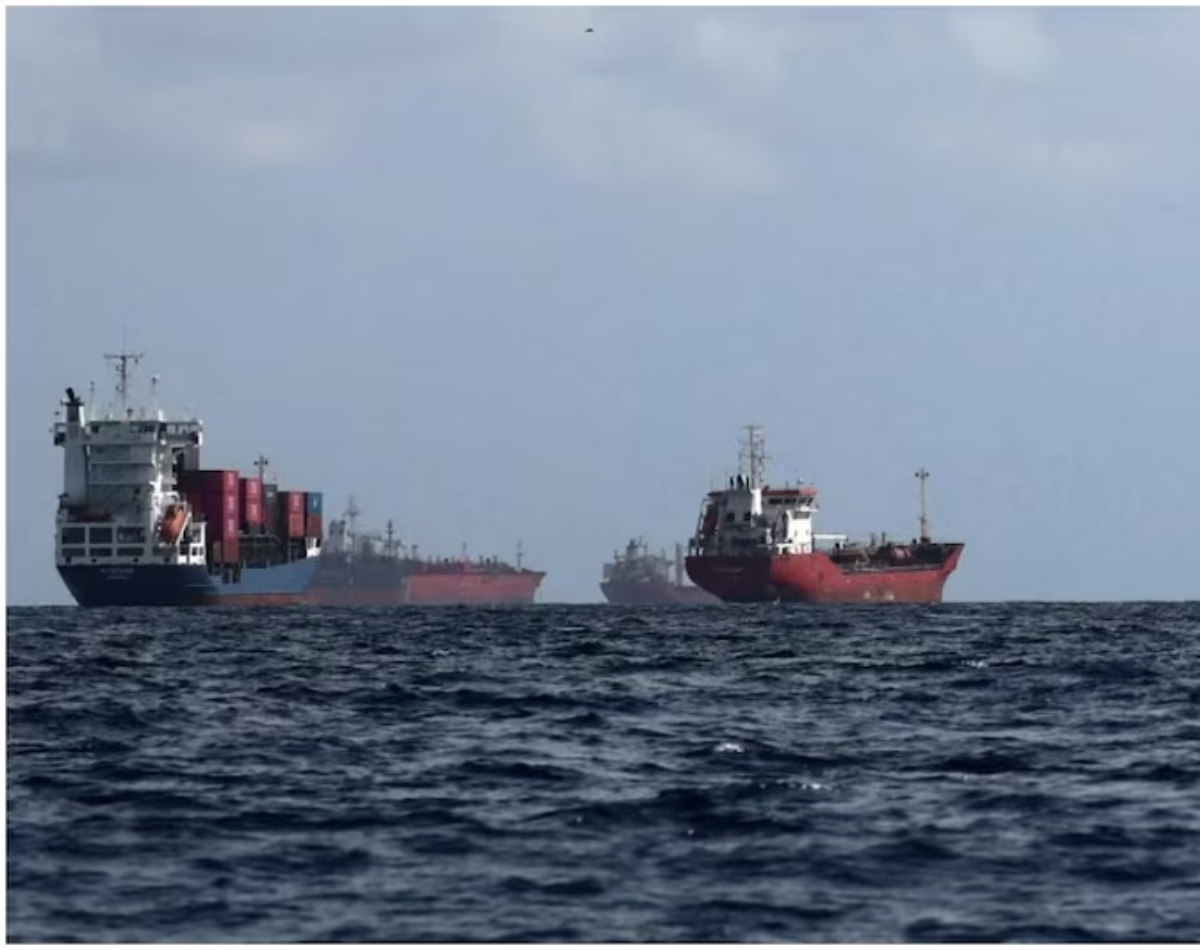
About 90% of Iran's crude oil exports navigate through Kharg Island via the Strait of Hormuz, a crucial maritime route that currently sits at the heart of global concern. Such alarm is warranted, as nearly 20% of global oil supply flows through the Strait daily. The oil moving through this corridor majorly originates from Gulf producers like Saudi Arabia, Iraq, UAE, Kuwait, and Qatar, ultimately reaching significant Asian markets such as China, India, Japan, and South Korea.
Why is China Greatly Concerned?
Sanctions have restricted Iran's ability to freely sell oil, yet the nation still manages to export around 1.3 to 1.5 million barrels of crude daily. In 2023, Iran's net oil export revenue was estimated at $53 billion, surpassing $37 billion from 2021. A significant portion of this, over 85-90%, goes to China, making it Iran's largest customer. Reports indicate that China imports over a million barrels daily, making any disruption in Iranian oil supply a severe blow to China.