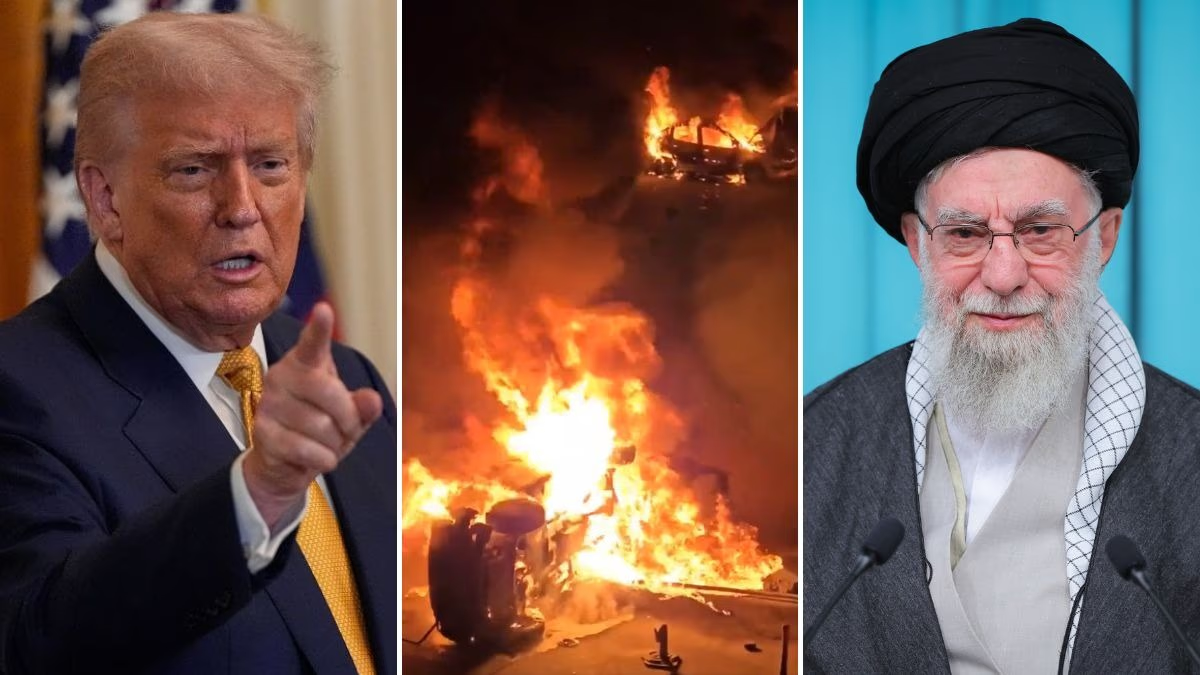
For nearly two weeks, Iran has been gripped by protests against its collapsing currency. The situation took a dramatic turn on Thursday night after exiled Crown Prince Reza Pahlavi urged people to take to the streets against the Islamic Republic. In response to Pahlavi's call, crowds gathered in large numbers, organizing rallies. In a bid to clear the streets, the government deployed security forces.
Reports suggest that large-scale demonstrations are occurring in at least 50 cities across Iran. Consequently, the government has cut off internet and telephone lines. People are taking to the streets, chanting slogans against Iran's government. Notably, chants in support of Reza Pahlavi, once punishable by death, are now loudly echoing through the protests.
According to Human Rights Activists News Agency in the USA, at least 39 people have died, while over 2,260 have been detained during these protests. Meanwhile, US President Donald Trump has expressed support for the Iranian people, stating that if attempts are made to silence their voices, repercussions will follow.
Why Did Protests Suddenly Escalate?
In 1979, just before the Islamic Revolution, Iran’s then-Shah Mohammad Reza Pahlavi fled to the USA. His son, Crown Prince Reza Pahlavi, still lives in exile there.
Protests in Iran began on December 28 when shopkeepers in the capital, Tehran, started rallying over the plummeting value of the Iranian Rial against the US dollar, soon spreading to other cities across the nation.
Exiled Crown Prince Reza Pahlavi called upon the people to fill the streets in protest against the Islamic Republic. He proclaimed, 'The world's eyes are on Iran. Take to the streets, unite and amplify your demands. I warn the Islamic Republic, its leaders, and the Revolutionary Guard that President Donald Trump and the world are watching you closely. Injustice against the people will not go unanswered.'
According to local people, as soon as 8 PM struck on Thursday night following Pahlavi’s call, people rushed to the streets, chanting slogans like 'Death to dictatorship' and 'Death to the Islamic Republic,' alongside phrases like 'This is the final fight; Pahlavi will return' in support of the Shah.
Internet Shutdown, Reports of Violence
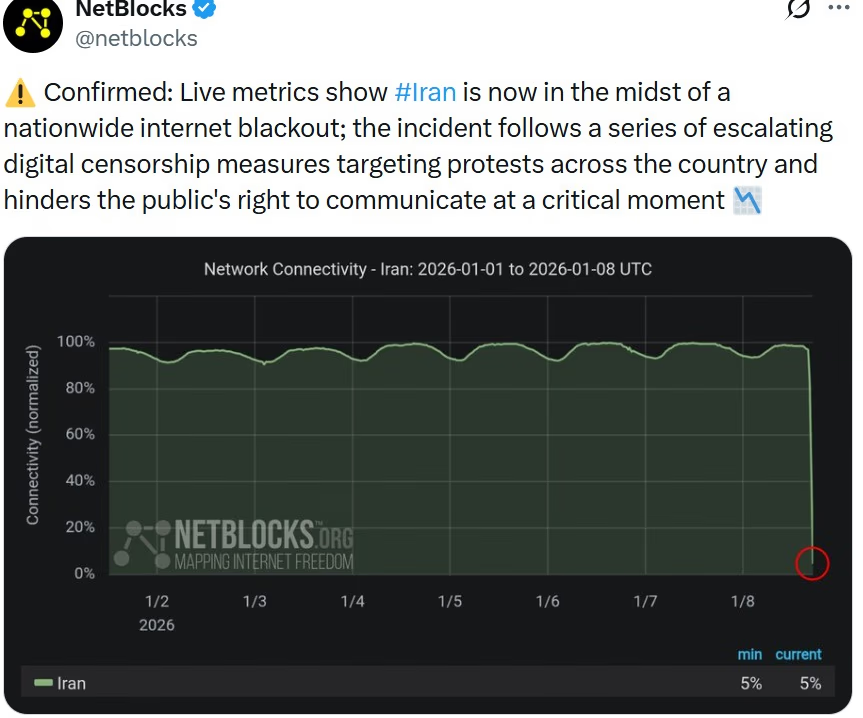
With the situation growing uncontrollable, the Iranian government has disabled internet services and cut telephone lines. The internet monitoring group NetBlocks reported that real-time data indicated disruption among several service providers, causing many areas in the country to go offline.
Meanwhile, protests are becoming increasingly violent, with reports of confrontations between protesters and security forces emerging from various locations. It is said that demonstrations are ongoing in 50 cities.
Source: aajtak
Local media reported a lethal stabbing of a police colonel outside Tehran. Meanwhile, gunfire erupted in Lorestan Province's Lordegan city, leading to the deaths of two security personnel and injuries to 30 individuals.
A deputy governor from Khorasan Razavi Province told Iranian state TV that five individuals were killed in an attack on a police station in Chenaran, nearly 700 kilometers northeast of Tehran, on Wednesday night.
Trump Issues Another Warning to Iran
Since the start of the protests in Iran, US President Donald Trump has issued multiple warnings. In an interview with conservative radio, Trump stated, 'I’ve informed them that if they begin killing people, as they do during riots, they will face significant actions from us.'
This follows an earlier warning from Trump last week, where he vowed American assistance if Iran used violence against peaceful protesters.
Why Are Protests Happening in Iran?
Iran has seen numerous large-scale protests over the years. The last substantial wave occurred in 2022 after Mahsa Amini's death. Currently, the protests are centered around the economic crisis. Demonstrations began on December 28 in Tehran.
Protesters are directing their anger towards Iran’s Supreme Leader, Ayatollah Ali Khamenei, blaming the Islamic Republic for the country's economic turmoil.
A significant factor driving the current protests is the depreciating currency. Shopkeepers lament that its value has plummeted to 1,400,000 Iranian Rials per US dollar.
In recent years, Iran’s currency has sharply declined. In 1979, during the Islamic Revolution, one US dollar was valued at 70 Rials. In 2015, during the nuclear agreement period, one dollar equaled 32,000 Rials.