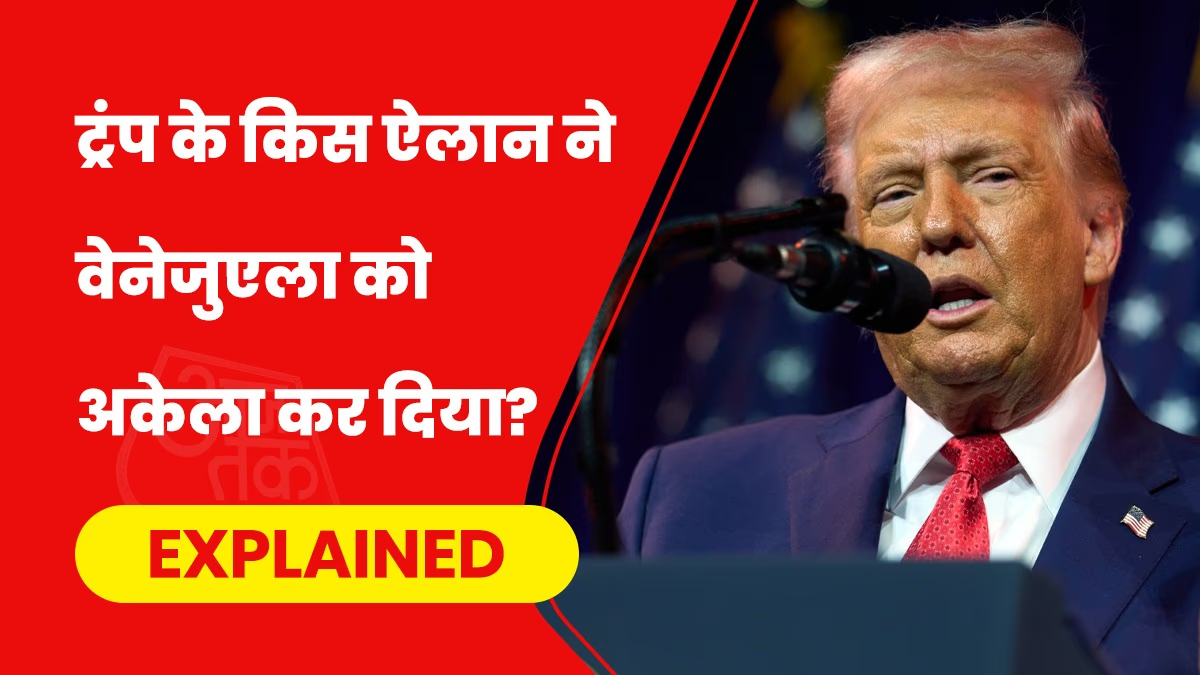
In his second term, Donald Trump set his sights on winning the Nobel Peace Prize, allegedly halting wars to no avail. Now, the Trump administration reveals a new expansionist approach. By incarcerating Venezuela's president on drug trafficking charges, the US showed its hand. The story doesn't end there. The US will control sales of Venezuela's vast oil reserves, forcing the country to buy essential goods exclusively from America.
This scenario resembles being cast adrift at sea, only to be ‘rescued’. Venezuela's complete loss of economic independence is imminent. If unable to sell its oil and the US dictates transactions, Venezuela surrenders its power to choose trade partners and allocate earnings, reducing its government to mere ceremonial status while real control lies elsewhere.
Profits from oil sales will return to Venezuela, funding its government's imports, from pharmaceuticals to electronics. Essentially, the nation relinquishes autonomous import-export rights, slipping into complete economic control by an external power.
This form of governance is termed economic imperialism. Although appearing independent, sovereign decisions are beyond its reach.
Source: aajtak
The immediate impact is political. With resources in Washington's grip, Venezuela's leader will be a puppet, selected from afar. Though democratic in appearance, actual governance will align solely with US preferences, merely echoing 'Yes, Boss'.
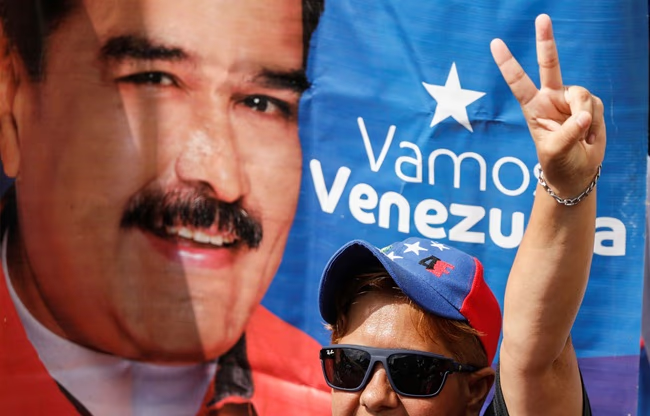
Currently, after Maduro's detainment by America, Vice President Delcy Eloína Rodríguez acts as interim president. However, Trump remains hostile towards her, threatening worse than Maduro’s fate if she defies US stipulations. Caracas now operates under Washington's directives.
Foreign policy suffers drastically. Economic dependency stifles dissent. Venezuela's global stance will mimic America's, rendering it a shadow on the international stage.
Strategic decisions face similar constraints. Choice of defense partners or military drills are dictated by external pressures. Often, strategic bases and resource deals occur under economic coercion.
Venezuela, having aligned closely with Moscow and Havana's communist ideals, now faces shift under capitalistic American influence, risking alienation from longstanding allies.
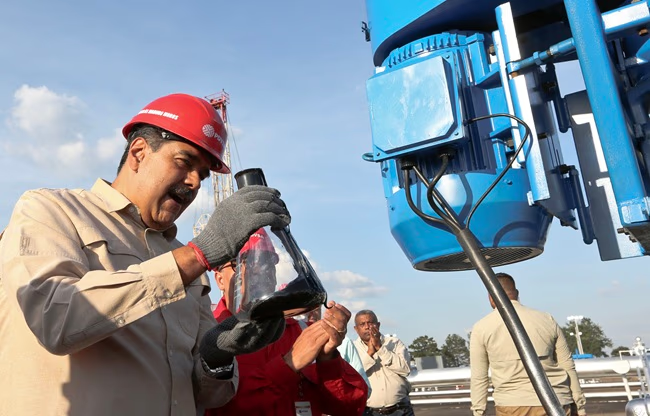
Source: aajtak
In domestic terms, Venezuela mirrors a dependent partner, acquiescing to avoid conflict due to lack of alternatives. Yet, the US refrained from destroying its military, simply removing its leader and securing its resources, asserting control over territory and decisions.
This is neo-colonialism, governing through resource control. Foreign nations appear generous yet dominate sovereign affairs.
This method proved effective. Post-World War democracy races left conventional conquest obsolete, though ambitions remained. Thus emerged absolute economic control. China excels at this, systematically targeting nations under President Xi Jinping.
Take Sri Lanka—initially laden with development loans at China's behest. As repayment loomed amidst political instability, time to monetize development was scarce, leaving no repayment path. Hence, China secured the Hambantota port on lease, influencing policy to this day, even distancing Sri Lanka from traditional allies like India.