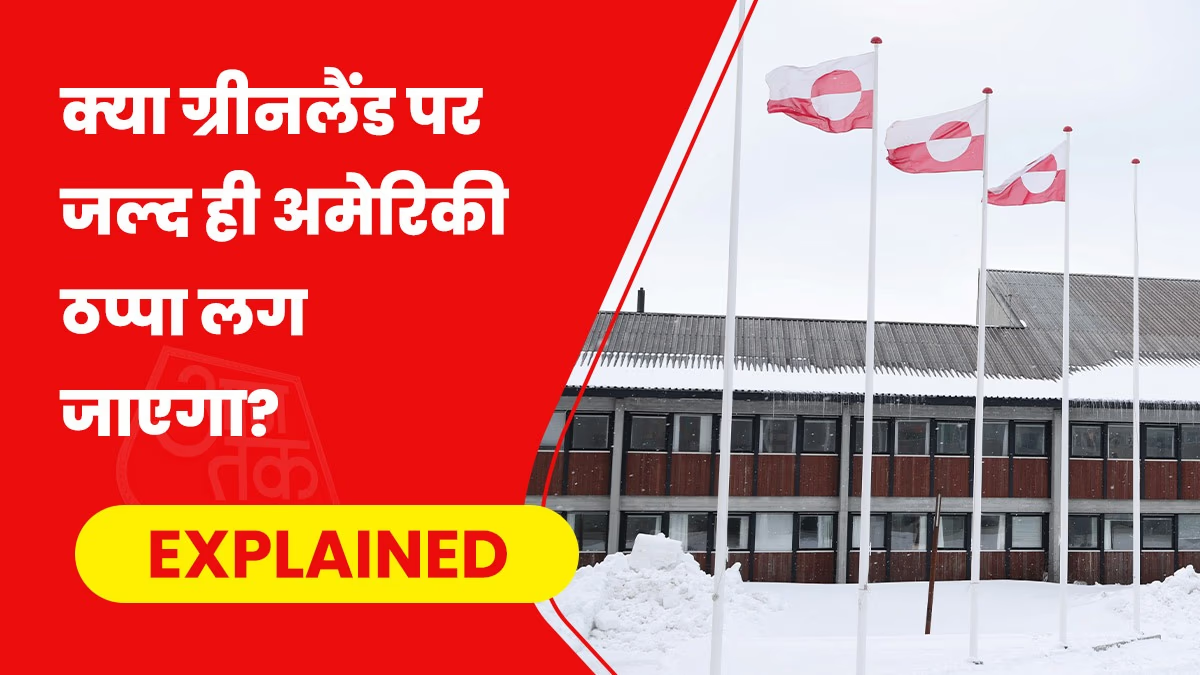
Under Donald Trump's tenure, America's expansionist aspirations are evident: he covets territories like Panama, Canada, and Greenland. Earlier this year, the U.S. military detained the Venezuelan president and took over its resources. Greenland, laden with immense potential, is next on his list. Unlike Venezuela, the U.S. may quietly take over Greenland.
Greenland, home to roughly 60,000 people, relies on Danish forces for security, hardly a match for America. Reports suggest that the U.S. could seize the island with just five helicopters, but such overt actions would tarnish its international reputation, prompting America to explore subtler tactics.
A Spark of Independence Ignited in Greenland
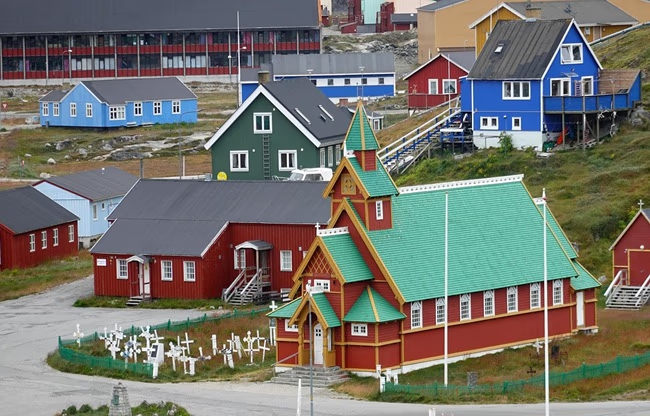
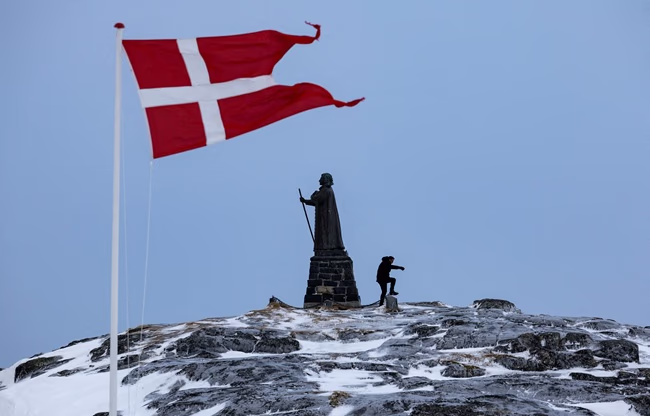
Once Trump assumed presidency, his administration broached Greenland's independence. Though a Danish territory, Greenland enjoys substantial self-governance. America envisions a fully independent Greenland, negotiating directly without Denmark's intermediaries. Over time, the U.S. subtly encourages Greenlanders to favor autonomy, potentially sparking a referendum. If the majority opts for independence, negotiations with Nuuk and Copenhagen may unfold.
Source: aajtak
Surveys last year revealed 56% of Greenlanders favor independence, while 28% oppose it.
Trump Advocates' Influence in Greenland
Danish media claims Trump-affiliated groups subtly exert influence in Greenland. Danish Intelligence (PET) warned of foreign powers establishing their presence. If this holds, it's not unprecedented; consider Russia's similar maneuvers in Ukraine, supporting separatist elements, comparable to what America reportedly attempts in Greenland.
Russia combines on-ground and online strategies. It collaborates with ideologically aligned groups like extremists, migrants, or business allies, while using fake accounts online to manipulate perspectives, portraying itself as vital to a region's growth. This consistent messaging leads audiences to embrace Russian influence as inevitable.
Source: aajtak
America Cultivating Similar Illusions in Greenland
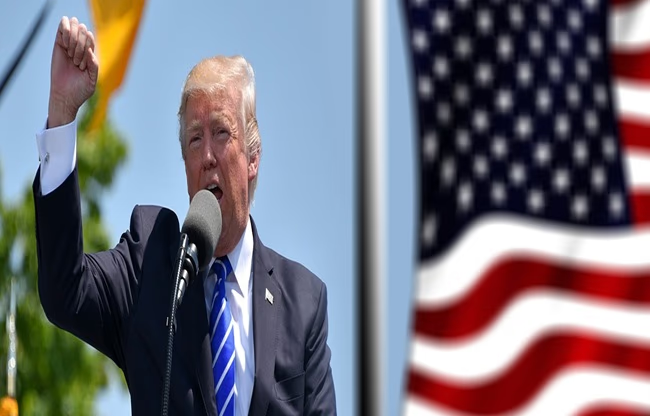
Vice President J.D. Vance, during last year's visit to Greenland, emphasized that its citizens should decide their future: independence or alignment, stating that America desires partnership. This veils conquest rhetoric under the guise of liberally framed autonomy.
If a referendum occurs swiftly and endorses independence, America will still need to fortify its influences, possibly by incorporating Greenland as a U.S. state. Some Trump allies explored this idea previously, with images of Greenland draped in an American flag surfacing on social media.
Source: aajtak
Offering Compromises via Agreements
However, many Greenlanders resist choosing the U.S. over Denmark. Consequently, America considers other avenues. Since May last year, reports suggest the Trump administration eyes a Compact of Free Association (COFA) with Greenland, akin to those with Micronesia, the Marshall Islands, and Palau. Such agreements typically grant military access in exchange for security assurances and free trade, lending America strategic influence under the façade of independence. Greenland may reject these terms, wary of Trump's disposition to enforce his will, reneging on promises as seen in prior examples.
The European Union, especially Denmark's allies, would vehemently oppose any separation. They wouldn't condone, but instead exert pressure against it.
America's Trump Card: Ukraine
If Europe refrains from siding with the U.S. on Greenland, Washington could leverage Ukraine's security as conditional. Europe, fearing Putin, might begrudgingly align with America, impacting Denmark and consequently, Greenland.
Source: aajtak
The Standoff Between Denmark and Greenland
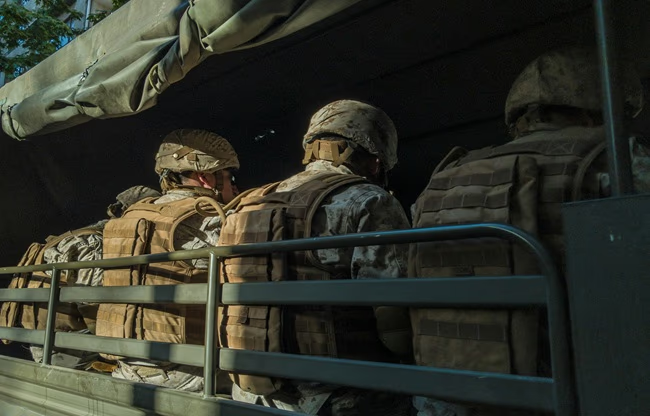
Should both Denmark and Greenland resist, America's last resort would be military intervention. Deploying a modest troop, America could lay claim to Greenland with minimal force. Roughly 500 American officers are already stationed in Greenland, alongside 100 New York National Guards annually aiding research missions. An embassy presence further signifies ongoing U.S. interests. Experts suggest an American takeover could transpire in half an hour, should conflict arise.
Conversely, Greenland's defense capabilities are scant, lacking its own army and relying on Denmark's Joint Arctic Command, which lacks rapid modernization and resources.
Despite viable military options, America's strategy views this as a last measure, aware of the NATO repercussions such action entails. Trump, often vocal about NATO, acknowledges its U.S.-initiated foundation as a strategic nuclear deterrent. Disrupting NATO's stability jeopardizes U.S.-Europe ties, potentially isolating Washington amid geopolitical tensions, a scenario Trump seeks to avoid.