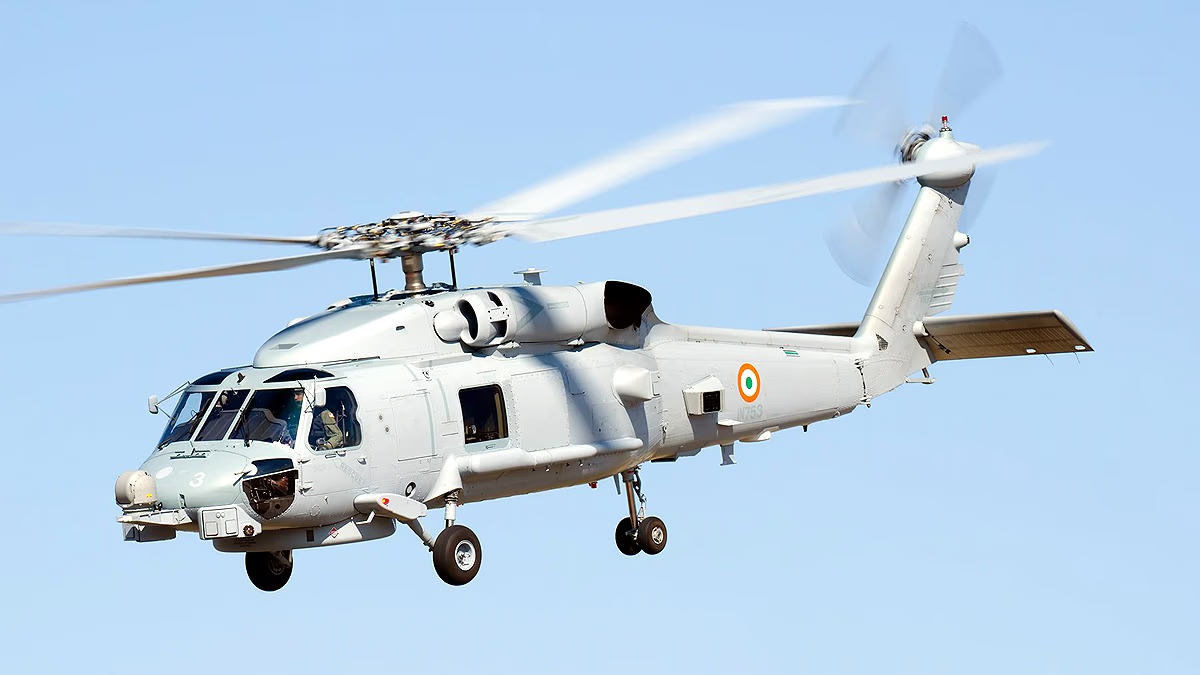
The Indian Navy is actively strengthening its maritime and aerial capabilities. Today, at the naval base INS Hansa in Goa, the Navy commissioned its second MH-60R 'Romeo' multi-role helicopter squadron INAS 335 (Osprey). The event was presided over by Navy Chief Admiral Dinesh K. Tripathi.
This commissioning marks a significant stride in the modernization of the Indian Navy. Acquired from the United States in 2020, the second complete squadron of the 24 MH-60R helicopters is now ready. The first squadron, INAS 334, was commissioned in March 2024 in Kochi. These helicopters have immensely boosted the Navy's anti-submarine warfare, surface attack, surveillance, and search-rescue capabilities.
Read more:
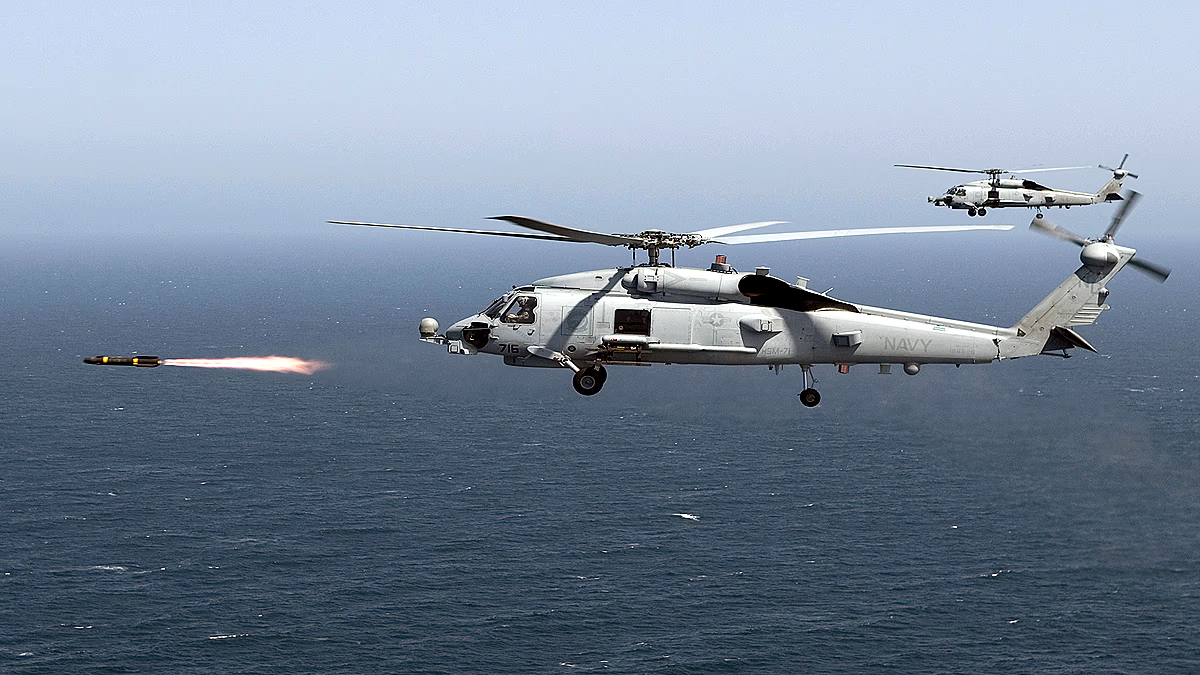
The MH-60R 'Romeo' is one of the world's most advanced multi-mission helicopters, crafted by the American company Lockheed Martin. It is the primary helicopter of the US Navy. Its key features include:
Source: aajtak
Advanced weaponry: Hellfire missiles, Mark-54 torpedoes, rockets, and machine guns.
Sensors and sonar: Cutting-edge dipping sonar, sonobuoy launch system, and multi-mode radar for enemy submarine detection in deep seas.
Self-defense system: Infrared devices and chaff-flares that activate upon threat detection.
Operational versatility: Capable of taking off and landing on destroyers, frigates, aircraft carriers like INS Vikramaditya and INS Vikrant.
Multi-functionality: Capable of submarine hunting, surface ship attacks, maritime monitoring, rescue operations, and even counteracting cyber threats.
Read more:
These helicopters will prove highly beneficial against the expanding Chinese naval activities and submarine deployments in the Indian Ocean Region (IOR). Naval officials assert that these helicopters can track and strike enemy submarines from afar, significantly enhancing the security of Indian vessels at sea.
In May 2025, in response to the Pahalgam terrorist attack, India launched Operation Sindoor, executing precise missile and airstrikes on terrorist bases in Pakistan and PoK. Air and missile warfare played a pivotal role in this operation. Although tension in the region has de-escalated, threats persist. The Navy continues to strengthen its preparedness with these advanced helicopters. Experts believe that MH-60R helicopters will provide substantial advantages in future conflicts, particularly in defending maritime boundaries.
Read more:
Captain Dhirendra Bisht, commanding officer of the squadron, stated that this helicopter is equipped with cutting-edge weapons, sensors, and avionics. It is designed to tackle both conventional and asymmetric threats. The technical staff highlighted that these helicopters can detect and continuously track enemy submarines in both deep and shallow waters. Pilots have dubbed it a nemesis to adversaries at sea.
India will receive a total of 24 MH-60R helicopters, many of which have already arrived. These helicopters will be deployed on major naval ships, further strengthening India's maritime power in the Indian Ocean.