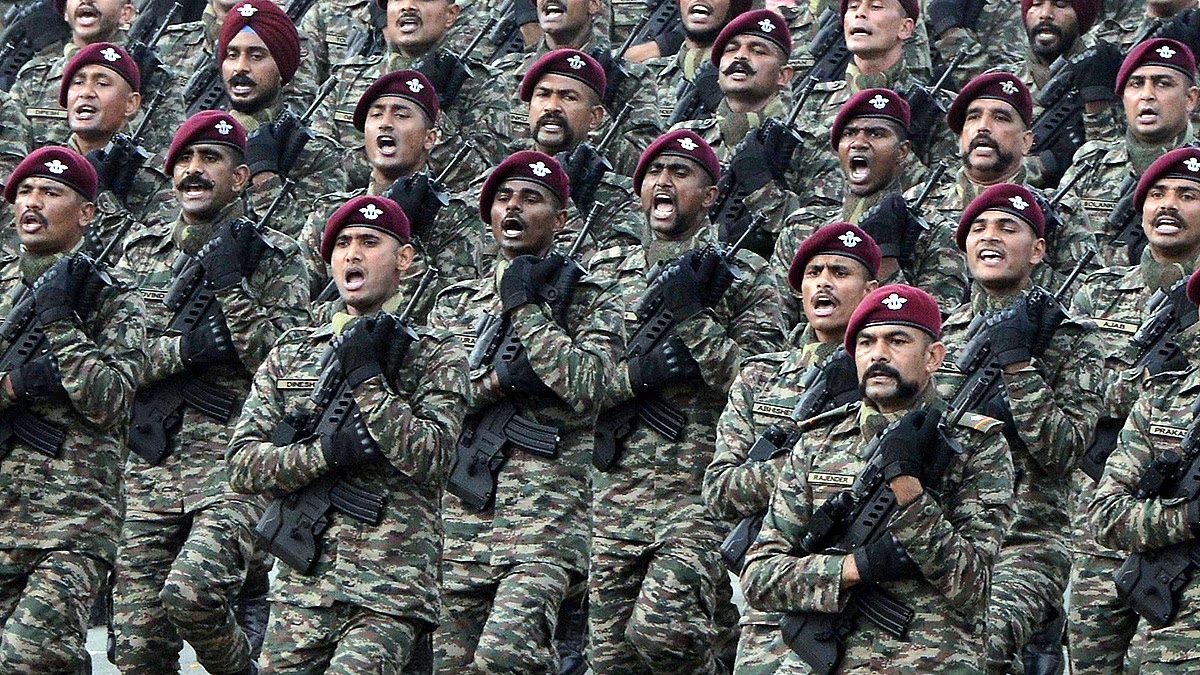
Congress leader and former Maharashtra Chief Minister Prithviraj Chavan stirred a political storm with a contentious statement during a press conference in Pune on December 16. He used Operation Sindoor as an example, claiming that during the operation, not even a single kilometer saw movement from the ground forces. Everything involved was purely aerial and missile warfare.
Chavan questioned if future warfare will follow this trend of aerial and missile confrontations, raising doubts about the necessity of maintaining a 1.2 million-strong army or repurposing soldiers for other tasks.
Also Read: 'India had lost on the first day of Operation Sindoor', a controversial statement by former CM and Congress leader Prithviraj Chavan
This statement was further controversial as per government and military sources, Operation Sindoor was considered a strategic triumph for India. In response to the murder of 26 civilians in Pahalgam in May 2025, India carried out precise missile and air strikes on terrorist bases in Pakistan and PoK.
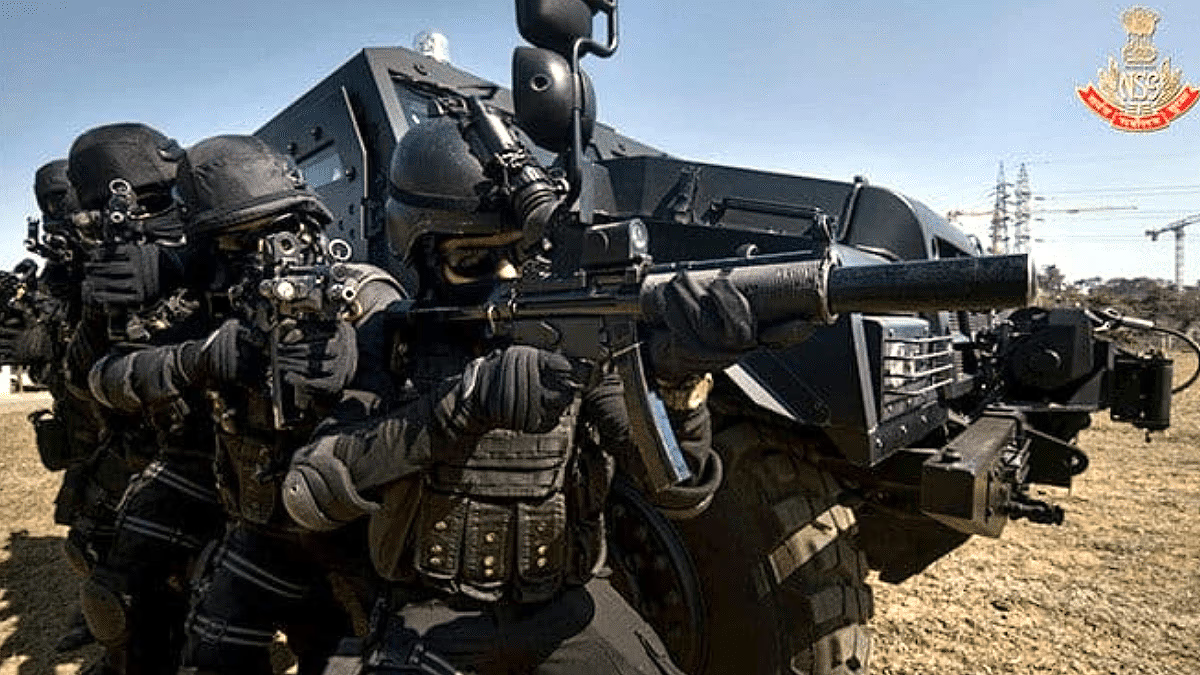
Source: aajtak
The operation concluded with a ceasefire on May 10, seen as a measured yet decisive action by India. Chavan's comments drew sharp criticism from the BJP, with spokesperson Shehzad Poonawalla accusing Congress of traditionally disrespecting the armed forces, calling it a 'surrender mindset.' Many perceived it as a blow to military morale.
Chavan argues that modern warfare is increasingly technology-driven—an era dominated by drones, missiles, cyber warfare, and precision strikes. The demand for vast infantry is diminishing. His suggestion has partial validity...
Also Read: Making history after 93 years... Sai Jadhav becomes the first female officer to pass out from IMA
Practical Aspects...
Countries like the USA are reducing troop numbers to concentrate on technology (AI, drones).
In India, reforms like the Agnipath scheme and theater command are being introduced to create a smaller, more efficient force.
Maintaining a large army is costly, with significant spending on salaries and pensions, money that could be directed toward modernization (new missiles, drones, cyber defense).
In operations like Sindoor, the role of aerial and missile warfare was predominant.
Impractical and Risky Aspects...
India's lengthy borders (with thousands of kilometers of disputed regions with China and Pakistan) necessitate a substantial ground force for preventing intrusions, terrorism, and insurgency.
Ground troops are essential for territorial occupation or defense (as seen in Kargil 1999 or Galwan 2020). Airstrikes alone cannot secure territory.
A sudden significant cutback might dampen military morale, weakening preparedness.
Global trends also oppose this view—most nations are increasing their forces and budgets.
Experts suggest India should modernize its military (enhancing technology while maintaining stable numbers), but significant reductions would be risky.
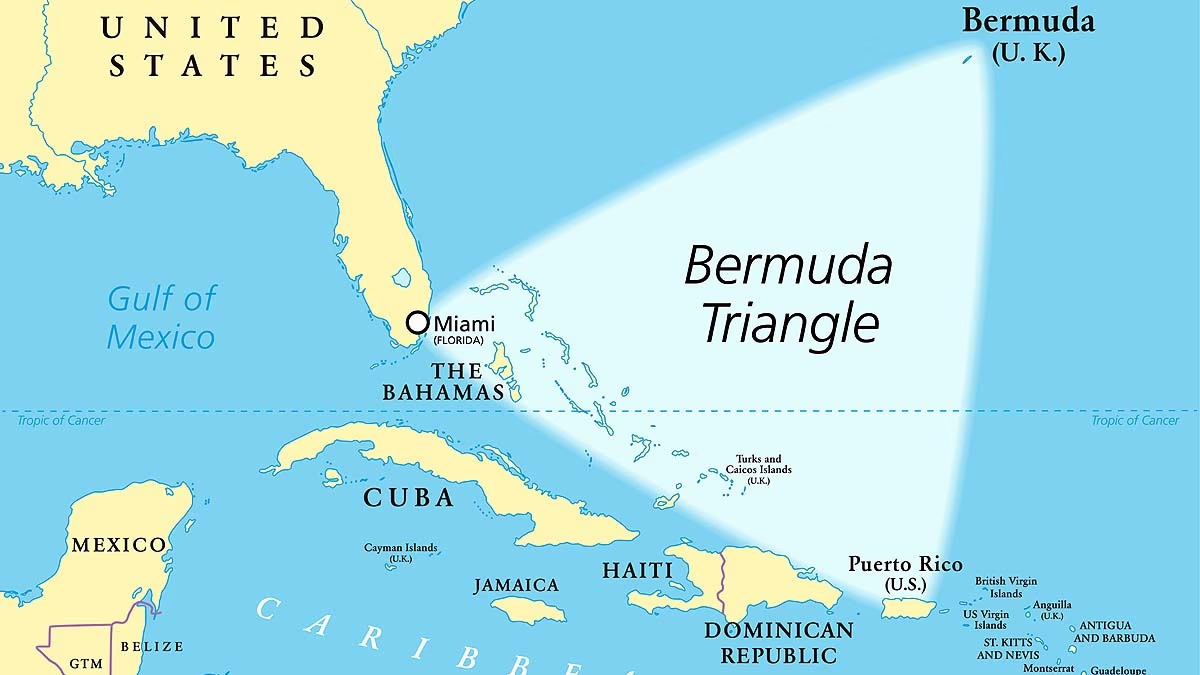
Also Read: New revelations about the mysterious Bermuda Triangle where planes and ships disappear...
Contrary to Chavan's proposal, global trends indicate increases in forces and defense budgets. According to SIPRI's 2025 report...
2024 saw global military spending reach a record $2.718 trillion—a 9.4% rise from 2023, the fastest since the Cold War.
A 37% surge over the past decade.
Over 100 countries raised budgets in 2024.
Increased spending across all regions (Europe, Middle East, Asia, the Americas, Africa).
Reasons include Ukraine-Russia conflict, Gaza engagements, Asian tensions.
Personnel numbers also saw overall growth (particularly in Europe and Asia). Some developed countries are focusing on technology, keeping numbers stable.
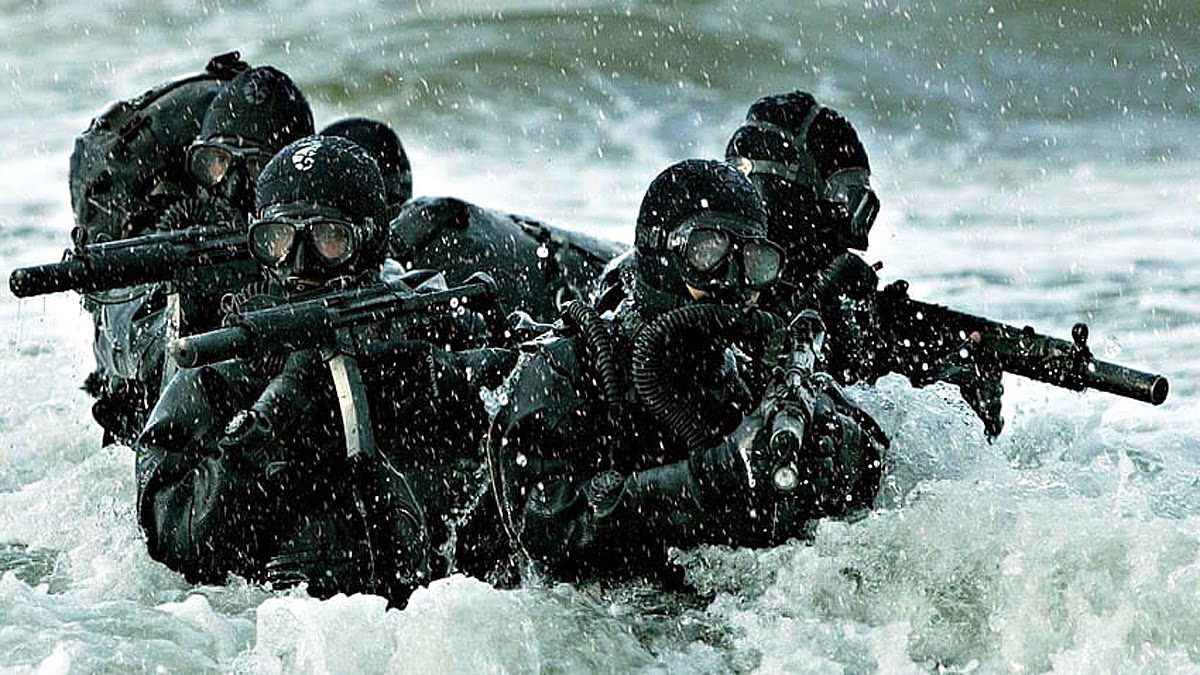
Source: aajtak
USA: $997 billion (annual increases)
China: $314 billion (growing continuously for 30 years)
Russia: approximately $149 billion (rapid growth due to Ukraine war)
Germany: $88.5 billion (significant jump in 2024)
India: approximately $86 billion (42% increase over the decade)
These five countries account for 60% of global spending.
Iran: 10% reduction in 2024 ($7.9 billion).
Morocco: continuous reductions.
Some other smaller countries.
In summary, the global trend is upward. Peace appears elusive, with future expenditures likely to rise. For countries like India, balance is crucial—embrace technology, but retain ground strength.