India's space industry has taken a giant leap forward. Ahmedabad-based company Azista Space has successfully captured images of the International Space Station (ISS) using its 80-kilogram satellite, AFR. This historic achievement marks the first time an Indian private company has tracked and imaged another spacecraft from space.
Known as in-orbit snooping or space watch, this groundbreaking technology can potentially monitor enemy satellites or missiles in the future, significantly boosting India's ability to secure its space assets, which surpass over 50 satellites valued at more than 500 billion INR in orbit.
AFR Satellite Captures ISS Images
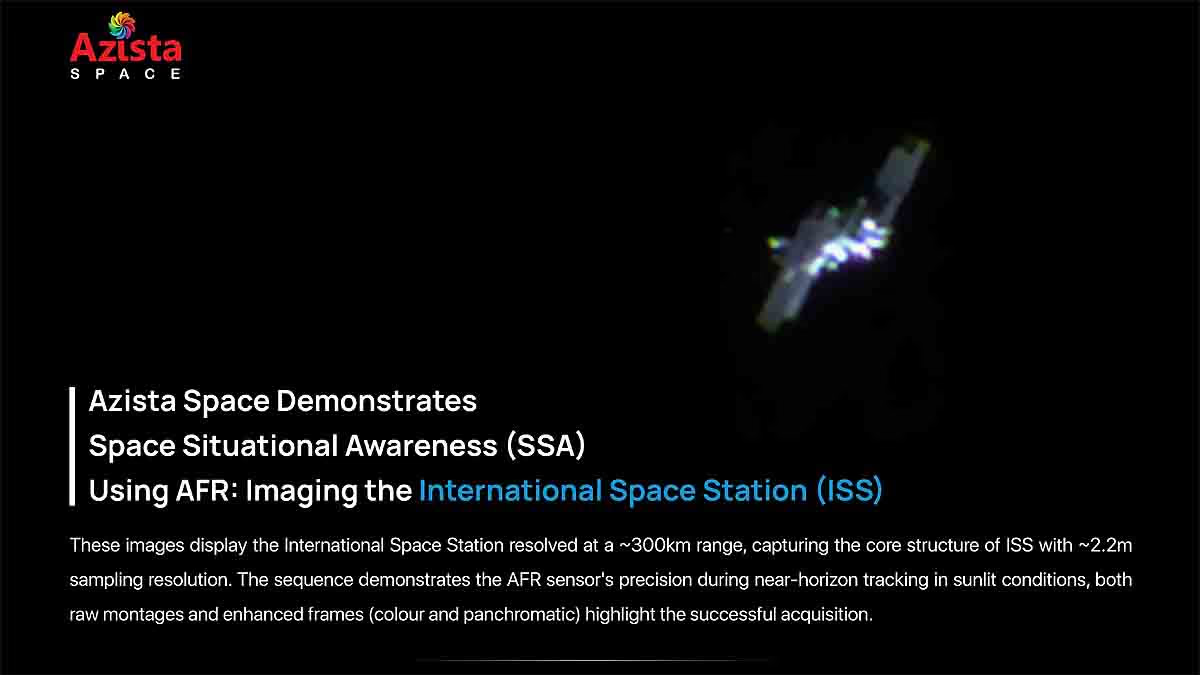
On February 3, Azista Space undertook a challenging experiment. Their AFR (ABA First Runner) satellite successfully tracked and imaged the ISS, which orbits approximately 400 kilometers above Earth. With two successful attempts, AFR captured 15 images from a distance of 250 to 300 kilometers, even against the sun's direction.
The company posted on X (formerly Twitter) that they tracked the ISS, capturing high-resolution images at 2.2-meter sampling. Both attempts were 100% successful, showcasing AFR's tracking algorithm and imaging accuracy. Launched on June 13, 2023, by SpaceX's Falcon-9 rocket, AFR has been in orbit for over two and a half years, focusing on Earth observation tasks.
This initiative positions India uniquely, as previously, only major powers like the USA, Russia, or China possessed such capabilities. Azista claims AFR is India's sole satellite capable of such feats.
Azista Space: Pioneers in Private Space Technology
Azista Space, located in Ahmedabad, Gujarat, operates out of Sanand, home to Asia's first private satellite factory. Capable of producing 50 satellites annually, the company specializes in designing, developing, manufacturing, and integrating satellites, space-borne systems, and payloads. Their team members have contributed to over 12 ISRO missions.
Excelling in electro-optical payloads, imaging processing, and satellite bus engineering, Azista customizes solutions to meet clients' SSA (Space Situational Awareness) needs. While AFR specializes in Earth observation, it now includes space watch capabilities.
Source: aajtak
Understanding In-Orbit Snooping
In-orbit snooping involves tracking and imaging other satellites or objects from space. AFR employed its sensors to accurately orient itself towards the ISS and capture images.
Technical Highlights
Range: 250-300 kilometers
Resolution: 2.2-meter sampling, ensuring clear visibility of finer details.
Tracking: Satellite algorithms accurately follow ISS's position.
Challenges: Sunlight, speed, and distance add complexity to the task.
This technology is a core component of space situational awareness (SSA), which involves monitoring, tracking, and predicting the behavior of human-made satellites, space debris, and natural objects like asteroids in Earth's orbit, preventing collisions, and ensuring safe space operations.
Why This Achievement Matters
With over 50 operational satellites supporting communication, navigation, Earth observation, and surveillance, valued at over 500 billion INR, safeguarding them amid geopolitical tensions is paramount. SSA provides timely alerts against potential threats like enemy satellites or attacks.
Security: Vigilance on adversary satellites or missiles.
Private Sector Involvement: Private companies join traditionally government-led spaces like ISRO.
Strategic Advantage: Strengthened space security amidst regional tensions, notably with neighbors like China or Pakistan.
Economic Impact: A burgeoning space industry generates jobs and boosts exports.
Azista asserts that this strengthens India's space security. The company's SSA satellites and payloads can be tailored to meet mission-specific needs.
Future Prospects
This achievement catapults India's space industry into new heights. Private companies now develop technology akin to superpowers. Looking ahead, satellites like AFR may track space debris or support missions, with government initiatives boosting the sector, including IN-SPACe and new policies.