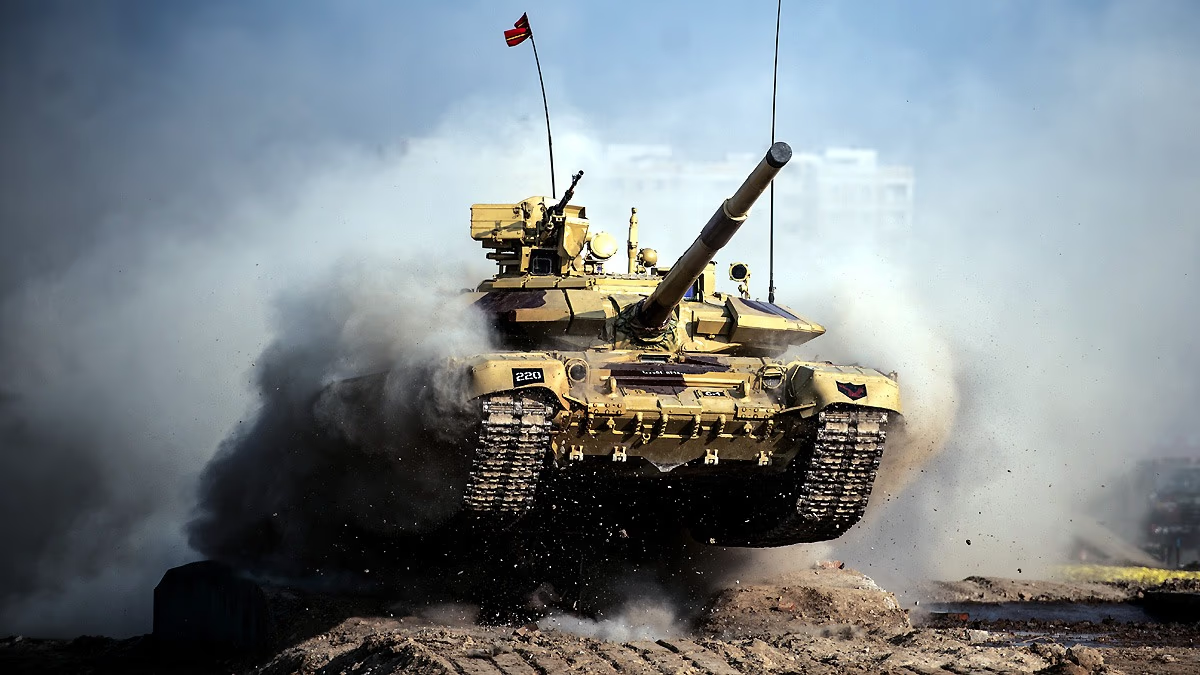
On February 1, 2026, Finance Minister Nirmala Sitharaman presented the Union Budget for 2026-27 in Parliament. The Ministry of Defense has been allocated a total of ₹7.8 lakh crore, a significant increase from last year's ₹6.81 lakh crore, indicating a strong commitment to bolstering defense capabilities. A provision of ₹2.19 lakh crore is earmarked for the modernization of defense forces, rising from the previous ₹1.80 lakh crore.
The total defense budget, which stands at ₹7.8 lakh crore, reflects a 14-15% increase over the previous year (which had only a 9.5% rise).
The capital budget dedicated to modernization will grow from ₹1.80 lakh crore to ₹2.19 lakh crore, funding new acquisitions, weapons, equipment, and technology advancements.
Focus on boosting domestic production (self-reliant India), fostering indigenous arms manufacturing, and enhancing exports. Defense production levels already stand at a record high.
This budget increase is vital, given the escalating global tensions – such as those involving Russia-Ukraine, the Middle East, and challenges on the India-China and India-Pakistan borders. It's imperative for India to modernize its forces with technologies such as drones, missiles, fighter jets, and cyber security.
Major Projects in the Pipeline
The Ministry of Defense has several significant projects underway or scheduled to commence soon, supported by this new budget...
Rafale Fighter Jets: Plans to procure additional Rafale-Ms (26 or more) for the Navy. With the Air Force already operating 36 Rafales, further purchases are on the agenda.
Submarines: Under Project 75I, the acquisition of six new stealth submarines featuring AIP technology is a major undertaking.
Unmanned Aerial Vehicles (UAVs/Drones): Investments to include high-altitude drones like the MQ-9B, indigenous drones, and counter-drone systems. Recent conflicts have underscored the strategic importance of drones.
Additional projects: LCA Mk1A/Mk2 Tejas fighter aircraft, LCH Prachand helicopters, BrahMos missiles, S-400 air defense systems, and new missile/radar systems.
These projects will amplify the strength of the armed forces, with domestic companies receiving a larger share of the budget.
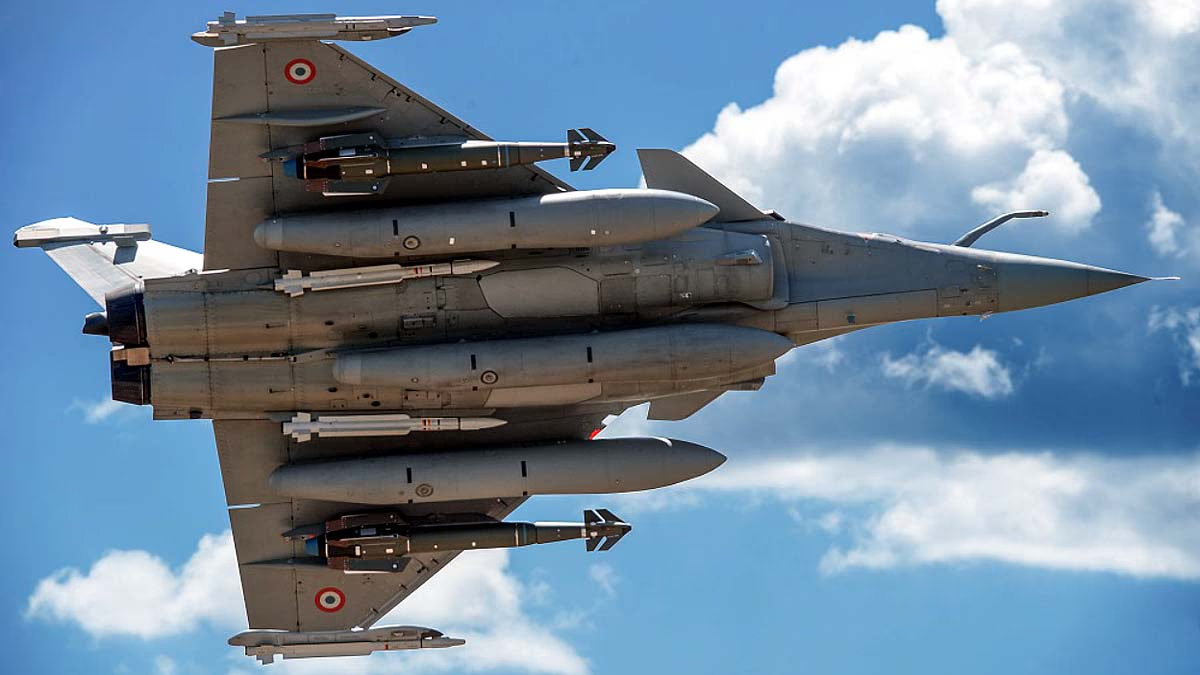
Source: aajtak
Why Such a Large Budget?
Global threats have increased – learning from events like Operation Sindoor.
Defense experts had sought a 20% budget hike, a request which has been fulfilled.
The export goal: ₹50,000 crore in defense exports by 2029.
Benefits for India in the Defense Sector
New Relief Measures:
The 2026 budget provides significant advantages to the defense sector. Basic customs duties on raw materials have been waived, facilitating domestic production of imported aircraft parts. This will expand maintenance, repair, and overhaul (MRO) facilities, benefiting defense sector units by increasing domestic output and reducing costs. Customs duties are waived on components for military, training, and other aircraft as well.
Impact of Aviation Fuel (ATF) on Defense
Aviation turbine fuel (ATF) is crucial for the Indian Air Force (IAF) since fighters like Su-30MKI, Rafale, Mirage, MiG-29, and tankers like IL-78 operate on it. ATF prices have been high recently (2.2% YoY increase in January 2026, but a 7.2% MoM decrease), influenced by the global oil crisis (Middle East tensions, Russia-Ukraine conflict).
Source: aajtak
Issue:
The IAF faces a shortage of mid-air refueling capabilities, with the aging IL-78 fleet. Rising ATF costs could impact training, operations, and long-range missions. An increase in global oil prices or supply disruptions can reduce the operational readiness of fighter jets. A 1% increase in ATF costs can reduce airline profits by 3%, affecting defense as well.
Impact:
While not an immediate crisis, as ATF is procured through the defense budget and strategic reserves exist, high costs over time could reduce flight hours, impacting readiness. The industry calls for ATF to be included under GST to reduce taxes.
Moving Towards a Solution:
The government is working on bio-fuels and sustainable aviation fuel (SAF), targeting a 1% SAF blend by 2027. This will decrease import dependency and benefit defense.
This budget marks a significant advancement in strengthening India's defense. With a capital allocation of ₹2.19 lakh crore, it supports the acquisition of modern weapons, technology, and ensures forces remain prepared. The government emphasizes self-reliance, reducing imports, and fortifying the nation economically and militarily.