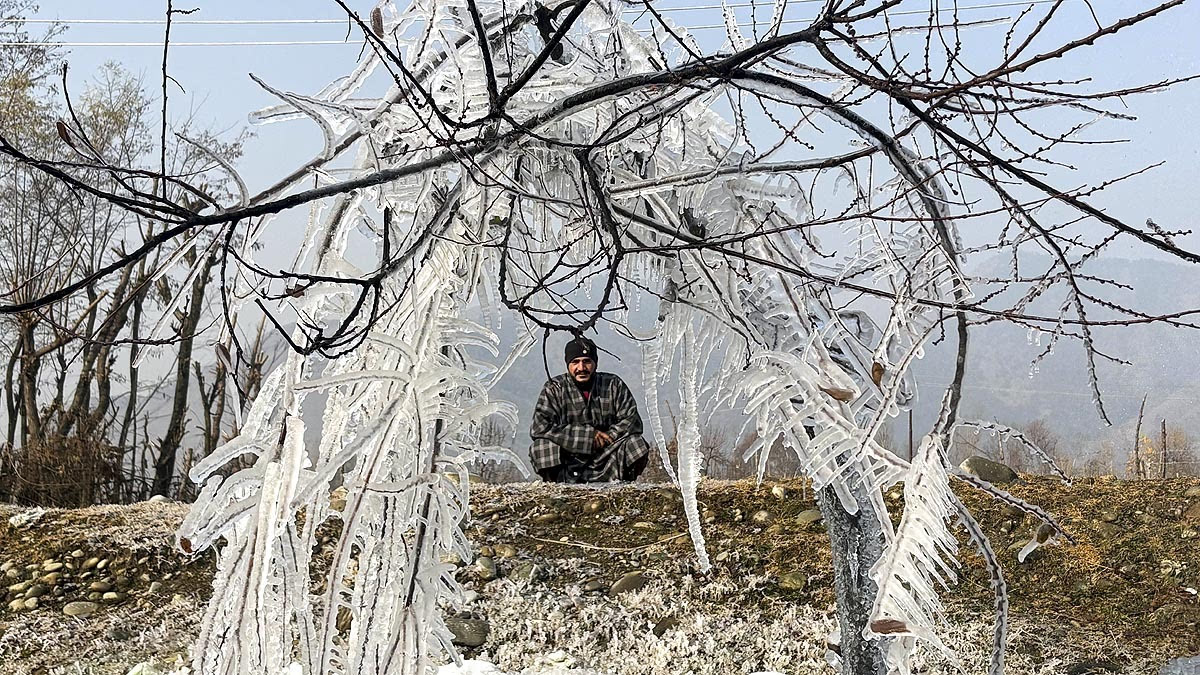
India is witnessing a shift in cold wave patterns. Down to Earth's (DTE)
reveals these episodes are no longer confined to the primary winter months (January-February). These waves are now erratic, altering their timing and geography, adding to weather uncertainty.
What Happened in 2026?
This year, January recorded a total of 24 cold wave days across the country. Yet, February bore witness to none even though winter ends on February 28. According to IMD, temperatures are expected to exceed normal by 2-4 degrees Celsius. The last cold wave was seen on January 25 in parts of Rajasthan, Himachal Pradesh, and Haryana, while Himachal observed cold wave conditions till January 27.
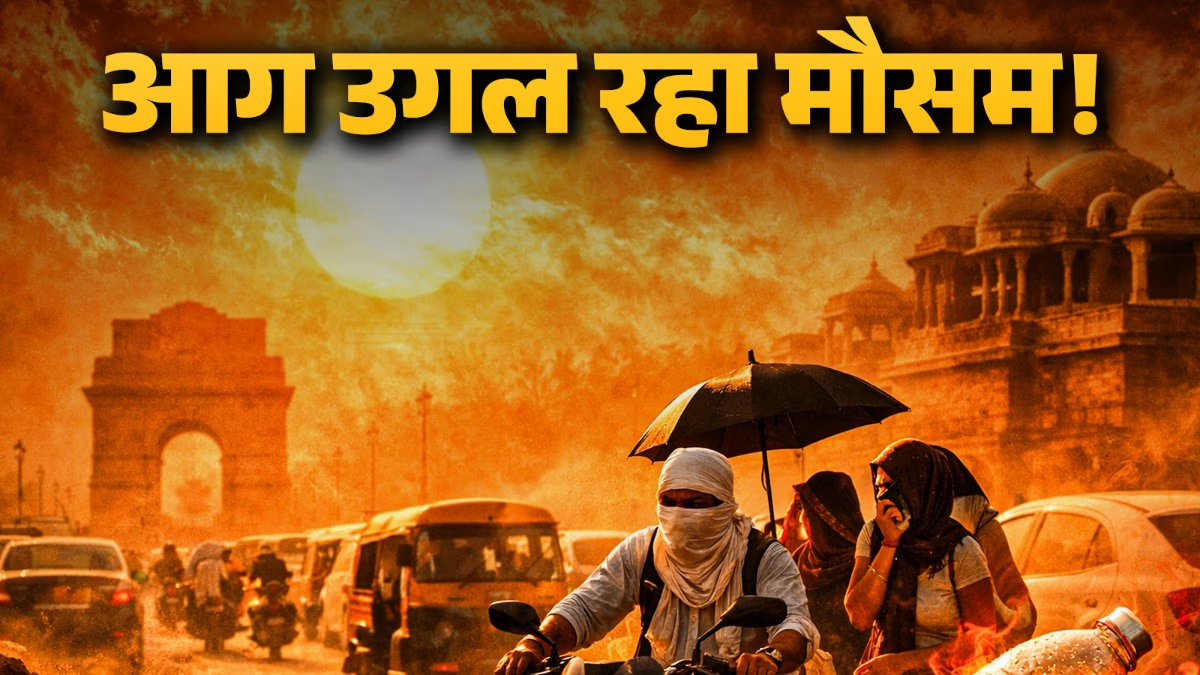
Also Read: February Heat Waves Resembling April... Reasons Behind Early Sweating Patterns
As a result, February 2026 turned into the first month without a single cold wave in five years. The preceding Februarys from 2022-2025 saw 6, 1, 7, and 5 cold wave days respectively.
The entire winter season (January-February) of 2026 had a total of 24 cold wave days spanning 15 states and union territories, marking it as the second lowest in five years (21 days in 2023 was the least). The previous years saw 38 days in 2024, 30 in 2022, and 26 days in 2025.
Source: aajtak
What is a Cold Wave?
As per IMD,
Cold day: Maximum temperature plummeting by 4.5 to 6.4 degrees below usual.
Severe cold day: Beyond 6.4 degrees low.
Cold wave: Minimum temperature dipping 4.5 to 6.4 degrees below usual.
Severe cold wave: A fall greater than 6.4 degrees.
Also Read: Antarctica... Melting Ice and Climate Change Predicament
Shifting Locations?
From 2022 to 2026, cold waves predominantly affected northern, northwestern, and central India, with varying spread year on year.
2022: Spanning 14 states over 30 days, no southern or southeastern impact.
2023: Most spread in five years across 17 states, but only 21 days. Incidents occurred in Telangana and Karnataka.
2024: Spanning 38 days, yet limited to just 13 states.
2025: Restricted to nine states, but an incident in Telangana.
2026: Widespread across 15 states, second only to 2023, with Karnataka as the sole southern state impacted. Odisha experienced 7 cold wave/cold day events.
Source: aajtak
Major Temporal Shift: Rise in Post-Monsoon
Typically, cold waves are scarce in November-December (post-monsoon) and heightened in January-February (winter). From 2022-2024, 65-72% incidents occurred in winter. However, 2025 flipped this scenario—65% post-monsoon (49 days, the most in five years) and only 35% in winter.
November 2025 alone had 20 cold wave days (10 times more than 2022), starting on November 7. These waves spread across 13 states covering northwest, central, east-northeast, and south regions, indicating that cold waves are breaking free from core winter months.
Also Read: Sukhois Destroying Enemy Runways while MiG-29 Takes Down Tanks... Pokhran 'Air Power' War Capability Testing
Causes and Impacts?
The analysis suggests conditions in 2023 (potential development of El Niño) may account for February's reduced chill. The previous year saw higher cold due to La Niña affecting south, central, and east. El Niño may hasten winter's end, intensifying heat. The scarcity of cold waves can damage rabi crops like wheat, where cold is crucial.
The analysis reveals India's cold wave patterns are evolving—an earlier arrival, wider geographical spread, rising irregularity. These fluctuations could signal climate change-induced major transformation. Constant monitoring is crucial for better preparation of farmers, health, and disaster management sectors.