November is here, typically a time when Kashmir is blanketed in a thick layer of snow. Himalayan black bears, locally known as Haput, usually retreat to their dens, sinking into deep hibernation. This year, though, the snow hasn't arrived, and food in the forests has dwindled, prompting bears to venture hungry into human habitations.
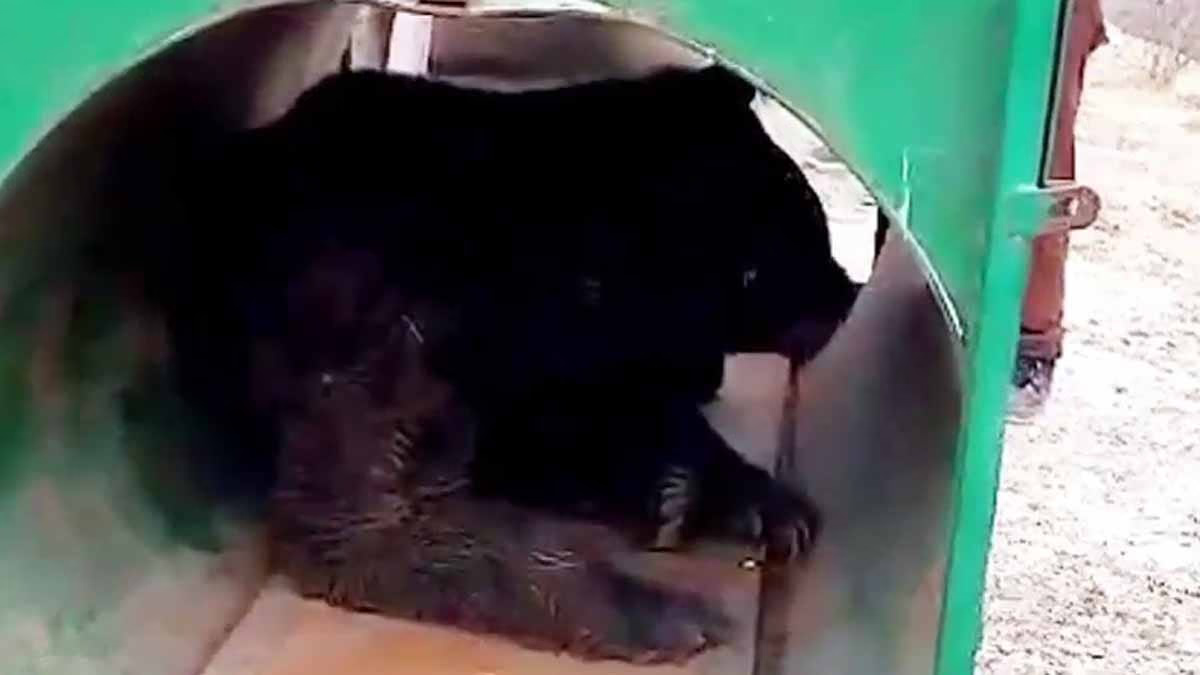
Officials from Kashmir's Wildlife Department have reported capturing around 50 bears just in November—a number unprecedented in recent years. These bears have invaded village apple orchards, scouring through garbage heaps, and occasionally have been spotted reaching the shores of the Dal Lake in the heart of Srinagar.
Read more: Indonesia: The Consequences of Deforestation! Nature's Retaliation, Several Villages Wiped Out, 836 Deaths
Wildlife expert Dr. Intiyaz Ahmad Loon explains that bears typically hibernate from December to March, needing cold and snow for this. Over the past few years, though, temperatures have remained above normal, with little or no snow. The dwindling supply of wild fruits, nuts, and insects in forests has driven bears, starving and desperate, into human territories seeking food.
Residents note that while December has started with a biting chill, neither snow nor rain is falling. Meteorologists concur, acknowledging that global warming is rapidly altering Kashmir's climate.
Previously, snow would cover highland areas by late November.
Now, many places still await snow well into mid-December.
A lack of natural forest food forces bears into an uncomfortable adaptation.
The arrival of bears in villages poses a dual threat...
Bears have attacked people, leaving 15-20 injured this year alone.
Angry residents sometimes retaliate by killing bears.
Captured bears are released back into the wild, but they often return.
Officials highlight that bears are attracted by exposed garbage heaps and apple-walnut orchards. Once they realize they can easily find food in human areas, they recurrently visit.
Read more: Alaknanda in Space... Indian Scientists Discover a Galaxy with JWST's Help
The Wildlife Department has assembled special teams on 24-hour alert to capture and relocate bears to distant forests. Villagers are being educated about proper waste disposal. In some areas, electric fencing is being installed.
Sightings of bears even in residential zones and along Boulevard Road by the Dal Lake in Srinagar have alarmed residents. Local resident Ghulam Mohammad expresses his concern: "It used to be that bears were confined to the forests. Now, it feels as if the forest itself has arrived at our doorsteps."
Experts deliver a dire warning: if climate change isn't controlled, snowfall patterns don't stabilize, and waste management isn't improved, the annual conflict between humans and bears will only escalate.
Kashmir's beauty has always been tied to its snow and forests—now both are on the decline. The forest is knocking at our doors. This isn't just the tale of bears, but a forewarning about what the future holds.