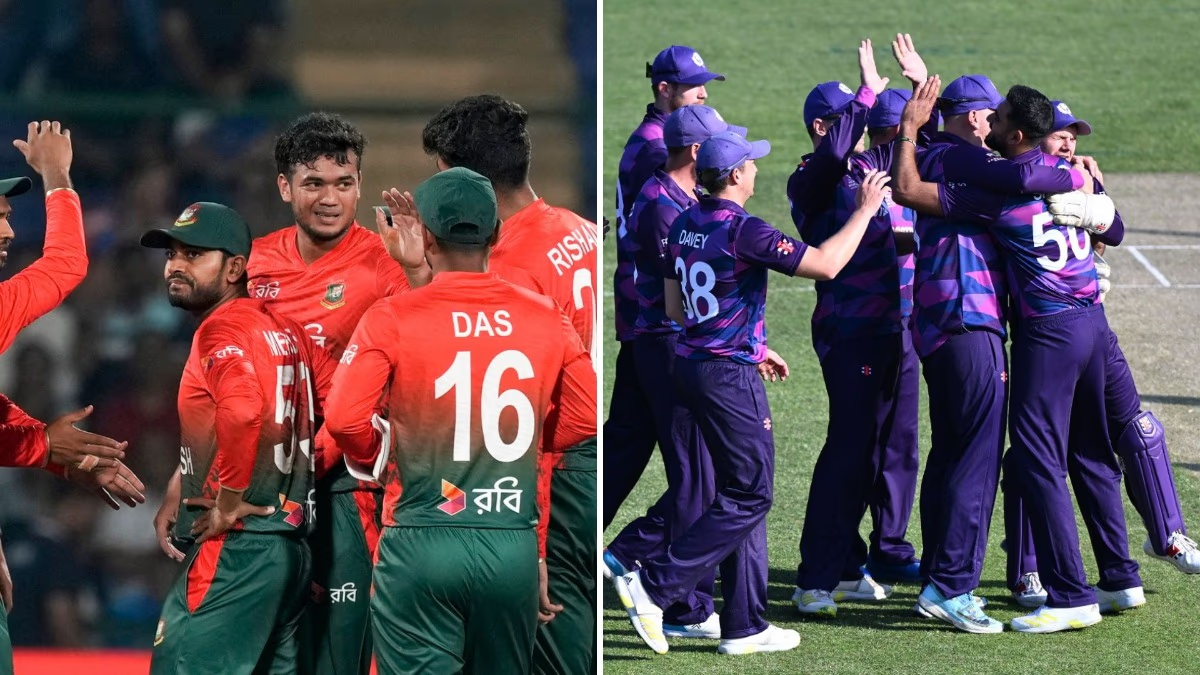
On Saturday, January 24, the International Cricket Council (ICC) clarified the decision to exclude Bangladesh from the 2026 T20 World Cup and replace them with Scotland. The ICC revealed that the Bangladesh Cricket Board (BCB) cited security issues and requested to transfer the tournament venue from India to Sri Lanka, stating it would not send its team to India.
Prolonged negotiations between ICC and BCB ensued, intensifying when ICC stated there would be no change to the predetermined schedule. Sticking to its stance, Bangladesh eventually announced an official boycott of the tournament. The appeal to the Dispute Resolution Committee proved futile, leading ICC to decide on Scotland's inclusion instead of Bangladesh.
The ICC has now released a comprehensive statement explaining the rationale behind its decision.
Read More: Will Pakistan Also Boycott the T20 World Cup? ICC Faces Threat Over Bangladesh's Ouster
Why Did ICC Remove Bangladesh?
The ICC stated that the security concerns raised by the Bangladesh Cricket Board about playing matches in India underwent thorough scrutiny. Several rounds of discussions occurred between ICC and BCB over the past three weeks.
The ICC also mentioned it conducted independent security assessments with internal and external experts. These evaluations concluded there was no credible or certified security threat to the Bangladesh team, officials, or supporters in India. As a result, BCB's demands were not accepted.
The ICC stated that the ICC Business Corporation (IBC) provided the Bangladesh Cricket Board with a final deadline of January 21 to confirm tournament participation. However, with no response by the deadline, ICC decided to include Scotland as the replacement team.
Read More: Bangladesh Shows Stubbornness... ICC Ousts Them from the T20 World Cup, This Team Makes Entry
No Security Threats Affirmed by ICC
According to the ICC's statement, 'Security assessments revealed no credible or confirmed threats to Bangladesh's national team, officials, or supporters in India. Considering these findings and the broader implications, ICC determined that altering the published schedule was unnecessary. Ensuring tournament fairness, program integrity, and the interests of all teams and fans was crucial.'
The statement continued, 'Following a meeting on Wednesday, the IBC Board asked BCB to clarify within 24 hours whether it would participate per the set schedule. Without confirmation within the given time frame, ICC proceeded with its established rules and qualification process to include a replacement team.'
Why Scotland Got the Spot
The ICC also elucidated that Scotland was the highest-ranked T20 International team not previously qualified for the tournament. Currently ranked 14th in T20I standings, Scotland surpasses teams like Namibia, UAE, Nepal, USA, Canada, Oman, and Italy.
Through this decision, Scotland will play in the T20 World Cup for the sixth time, placed in Group C alongside England, West Indies, Italy, and Nepal.