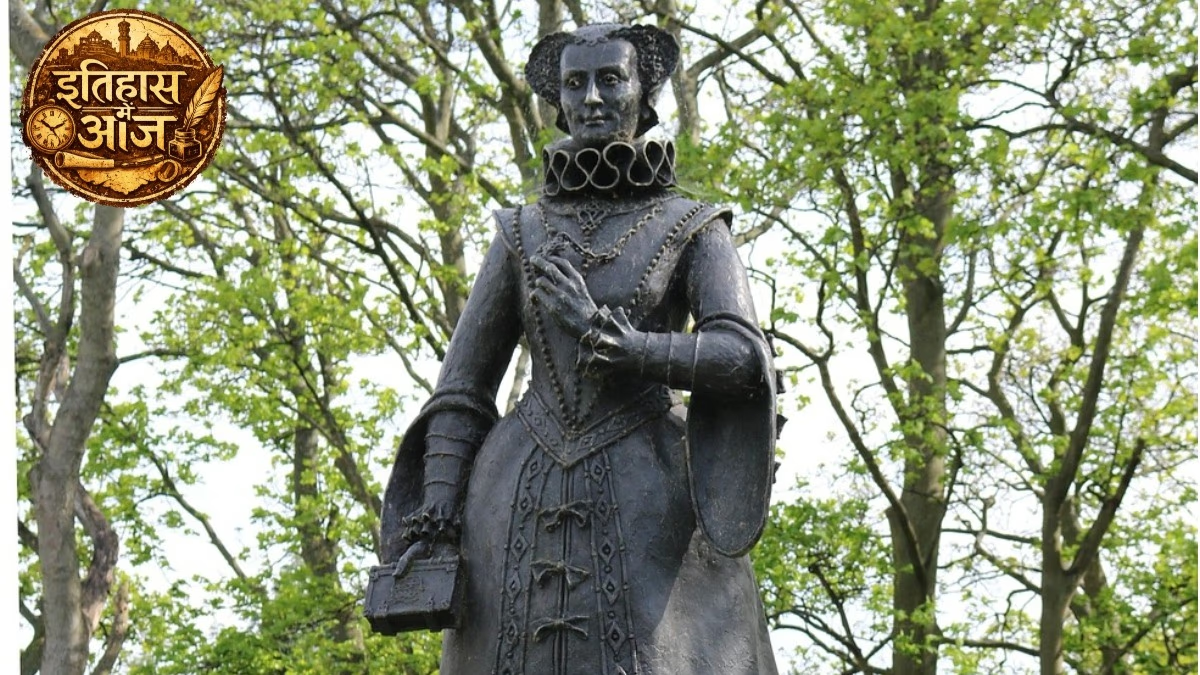
Blindfolded and with solemn grace, Queen Mary of Scotland knelt on a cushion at the specially prepared scaffold in England's Fotheringhay Castle and began her Latin prayer. The executioner's first strike with the axe missed its mark, hitting her head instead of her neck. The second attempt almost severed her neck but met resistance from a small bone. With the third strike, her head was completely severed.
Before an assemblage of onlookers, the executioner displayed her severed head, shouting, 'God save Queen Elizabeth!' As the brown wig slipped, revealing Mary's short, gray hair, the Earl of Kent declared, 'May this be the end for the queen's foes.' This somber chapter unfolded on February 8, 1587, marking the execution of Queen Mary in England.
For 19 long years, Queen Mary of Scotland endured captivity in England's Fotheringhay Castle, her life shadowed by accusations from Queen Elizabeth of plotting regicide. Just seven days before her execution—on February 1—Queen Elizabeth I signed Mary's death warrant, sealing her fate on February 8, with accusations of involvement in the deadly conspiracy.
The Tale of Queen Mary
In 1542, at a mere six days old, Mary ascended to Scotland's throne following the death of her father, King James V. Her mother entrusted her upbringing to the French court, and by 1558, Mary wed the French Dauphin, who became King Francis II in 1559, only to die the following year. Returning to Scotland, Mary took up her role as ruler of the nation.
To solidify her claim to the English throne, Mary wed her English cousin, Lord Darnley, in 1565. However, Queen Elizabeth opposed the union, leaning toward Robert Dudley, a man whose father's name bore the stain of treason and who was rumored to have been Elizabeth's suspect lover.
Tragedy struck in 1567 when Darnley was mysteriously killed in an explosion at Kirk O' Field. Fingers of suspicion pointed at Mary's lover, the Earl of Bothwell, who was acquitted but later wed Mary, provoking the ire of Scottish lords. Mary, rallying an army against the lords, succumbed to defeat, leading to her imprisonment at Lochleven and forcing her abdication in favor of her son, James.
Fleeing captivity in 1568, Mary assembled a formidable force, which ultimately faltered, prompting her flight to England. Initially welcomed by Queen Elizabeth, Mary soon became a focal point of Catholic and Spanish plots to dethrone Elizabeth, leading to her prolonged house arrest.
A turbulent 19 years of captivity culminated in 1586 as a plot against Elizabeth surfaced, prompting Mary's trial and subsequent conviction for conspiracy, sealing her fate with a death sentence. February 8, 1587, witnessed the execution of Queen Mary for treason. Her son, King James VI of Scotland, quietly accepted her demise and upon Queen Elizabeth's death in 1603, ascended to unite the crowns of England, Scotland, and Ireland.