India faces escalating security challenges, especially from neighboring regions, making it imperative to bolster its armed forces. The recent Operation Sindoor clearly demonstrated India's capability for swift and decisive action against terrorism. Following this operation, the Defense Ministry is gearing up to request around a 20% hike in its budget for the fiscal year 2026-27.
In April 2025, a horrific terrorist attack occurred in Pahalgam, Jammu & Kashmir, where Pakistan-supported terrorists killed 26 innocent people. This was not only a cross-border incident but an attempt to incite religious hatred within India. In response, India launched Operation Sindoor on May 7, 2025.
Also Read:
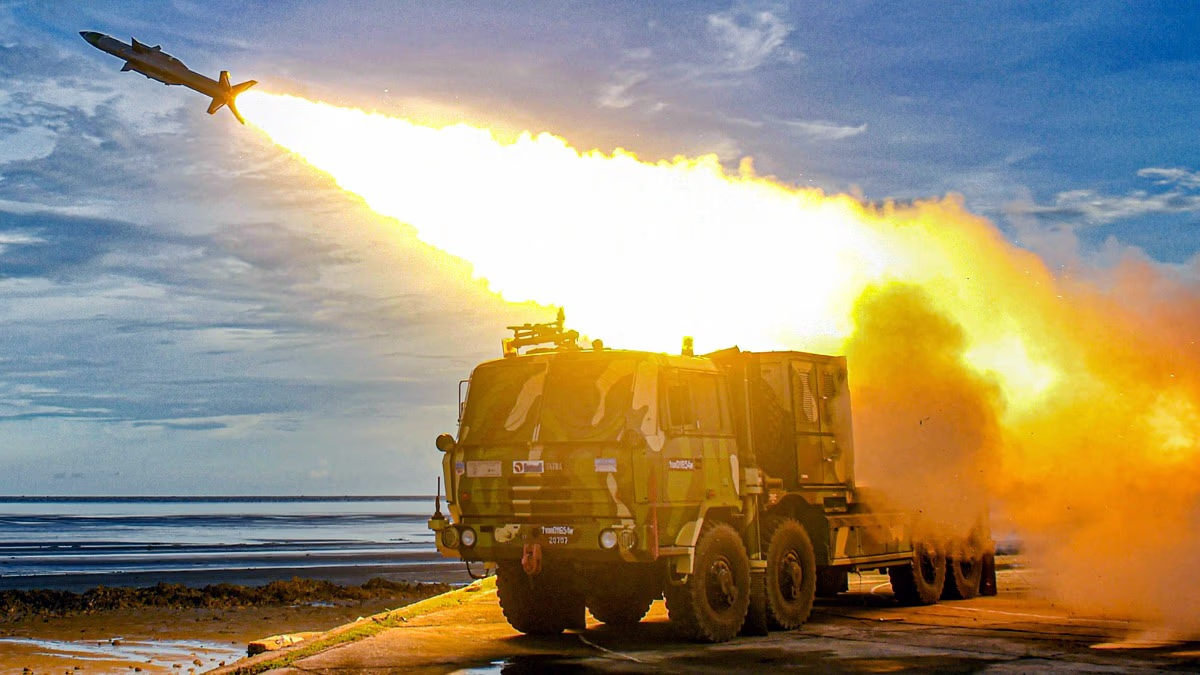
During Operation Sindoor, the Indian Army precisely destroyed nine major terrorist hideouts across Pakistan and Pakistan-administered Kashmir using advanced technologies like BrahMos missiles, Akash air defense systems, and indigenous drones. Despite Pakistan's counteraction with numerous drones and missiles, India's multi-layer air defense successfully neutralized them. This operation lasted just 4-5 days but showcased India's military prowess and the reliability of indigenous weaponry to the world.
Operation Sindoor has proven that India is advancing beyond its past policy of strategic restraint. Direct and swift responses to terrorism are now the new normal, as declared by Prime Minister Narendra Modi, emphasizing that terrorists and their supporters will not be treated differently.
Lessons from Operation Sindoor:
The threat from drone attacks is increasing.
Strengthening air defense systems is crucial.
There's a notable gap in long-range offensive weapons (standoff weapons).
Accelerated modernization and enhanced military readiness are essential.
Defense Secretary Rajesh Kumar Singh recently indicated the need for a significant budget increase, considering India's tough neighborhood and long-term security requirements, expressing hope for Finance Ministry's support.
Also Read:
Source: aajtak
The defense ministry was allocated a record ₹6.81 lakh crore for the fiscal year 2025-26, marking an approximate 9.5% increase from the previous year. This includes...
Capital expenditure (for new weapons and equipment purchases): ₹1.80 lakh crore.
Revenue expenditure (salaries, maintenance, fuel, etc.): approximately ₹3.12 lakh crore.
Pensions: ₹1.61 lakh crore.
Research and Development (for DRDO): ₹26,817 crore.
A significant portion of this budget supports the Atmanirbhar Bharat initiative, with 75% of capital expenses allocated for indigenous purchases.
Also Read:
For 2026-27, the Defense Ministry will seek around a 20% increase, potentially taking the budget past ₹8 lakh crore. This hike will focus on these key areas...
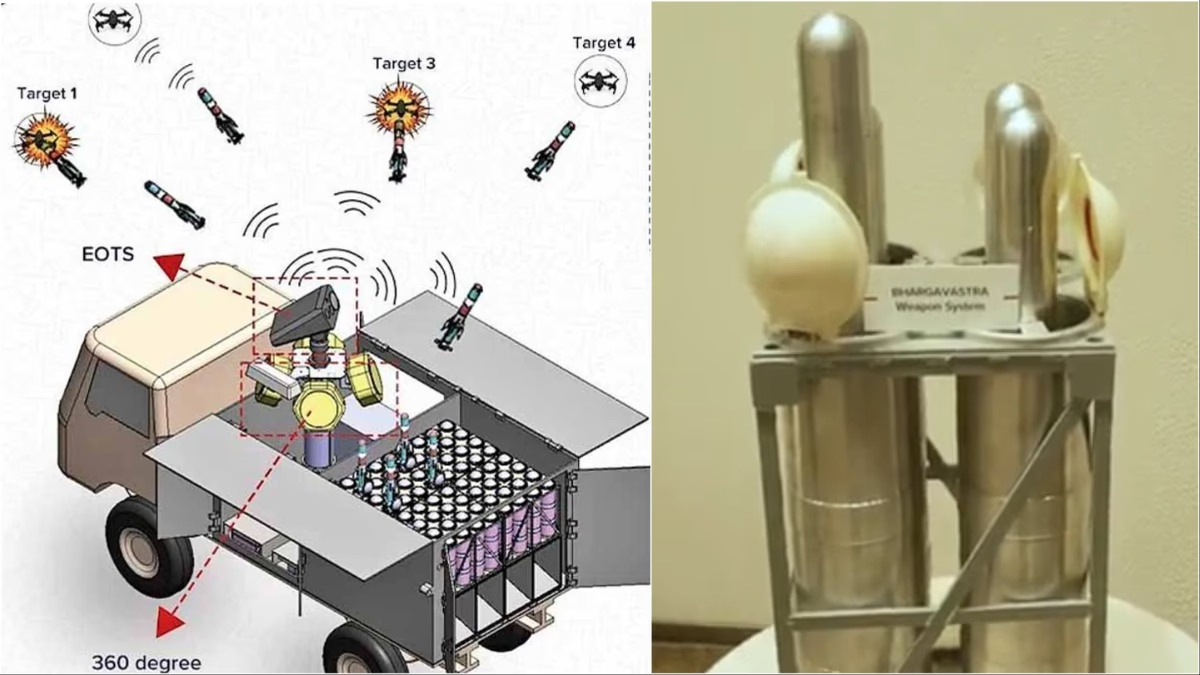
New Drones and Anti-Drone Systems: Acquisition of kamikaze and surveillance drones. Drawing lessons from Pakistani drone attacks to elevate anti-drone tech like the Bhargavastra system.
Air Defense Systems: More units of systems like Akash and S-400. Expand multi-layer defense across the nation, particularly in border areas.
Offensive Weapons: More long-range missiles (greater range BrahMos). Standoff weapons for targeting enemies from a distance. New fighter jets, helicopters, and artillery.
Indigenous Production and R&D: Accelerating Atmanirbhar Bharat. Increased funding for private companies and MSMEs. Collaborations between DRDO and the private sector for new technologies.
Borders: Strengthening roads, bridges, airbases, and logistics.
India spends only 3% of global defense budgets for protecting 17% of the world’s population (compared to China’s 12%). Operation Sindoor showcased the efficacy of indigenous arms, yet further investment is vital to ensure readiness. This increase will not only enhance security but also create jobs and empower Indian companies.
Operation Sindoor symbolizes India's new defense policy - strong, self-reliant, and responsive. The upcoming defense budget is a significant step in this direction. India is now not only ready to respond but also prepared to root out threats entirely.