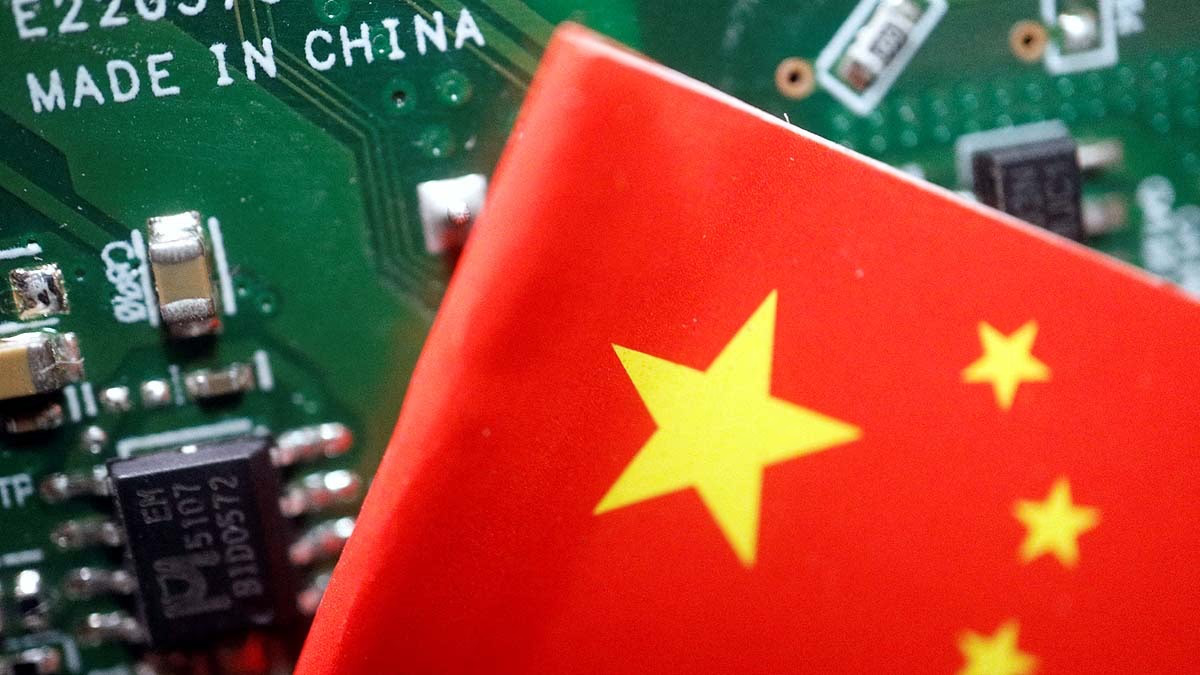
In a significant breakthrough, China has secretly developed a prototype machine capable of producing advanced AI chips. According to a special report by Reuters, this Extreme Ultraviolet Lithography (EUV) machine was previously exclusive to Western countries, particularly the Dutch company ASML. Despite years of attempts by the US to block this technology from China, the nation has managed to achieve this monumental feat.
The EUV machine inscribes incredibly tiny circuits onto silicon wafers using beams of extreme ultraviolet light—thousands of times thinner than a human hair. This technology leads to more powerful chips utilized in AI, smartphones, and weapons technology. Currently, only ASML has this technology with machines priced at around $250 million (over 2 billion rupees).
Read More: Special delivery by military train to Kashmir Valley... A major achievement by the Indian Armed Forces
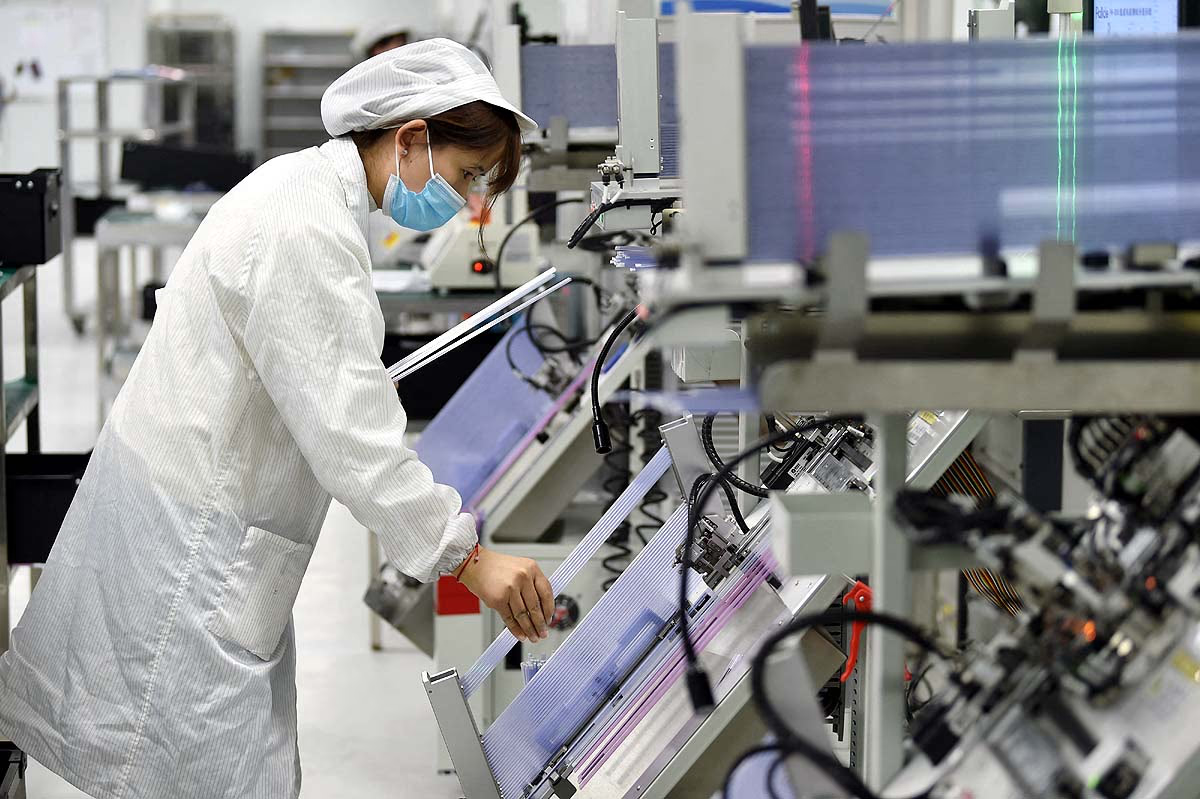
Source: aajtak
China's prototype was finalized in early 2025 within a high-security lab in Shenzhen, an expansive area akin to an entire factory floor. Testing is underway. While the machine currently generates EUV light, it still needs to successfully produce working chips.
Reverse Engineering: A team of former ASML engineers reverse-engineered ASML's EUV machines. These engineers, of Chinese origin, were recruited with generous bonuses and perks.
Huawei's Role: Huawei is coordinating the entire project, with thousands of engineers working across the country.
Read More: From friendship with Elon Musk to disputes with Trump... How Jared Isaacman became NASA's Chief?
Utilizing Old Parts: Parts from old ASML machines were sourced from secondary markets; parts from Japan's Nikon and Canon were also used.
Secrecy: Engineers operate under pseudonyms, with no outward knowledge of the lab's activities. It has been dubbed China's 'Manhattan Project'—akin to America's development of the atomic bomb.
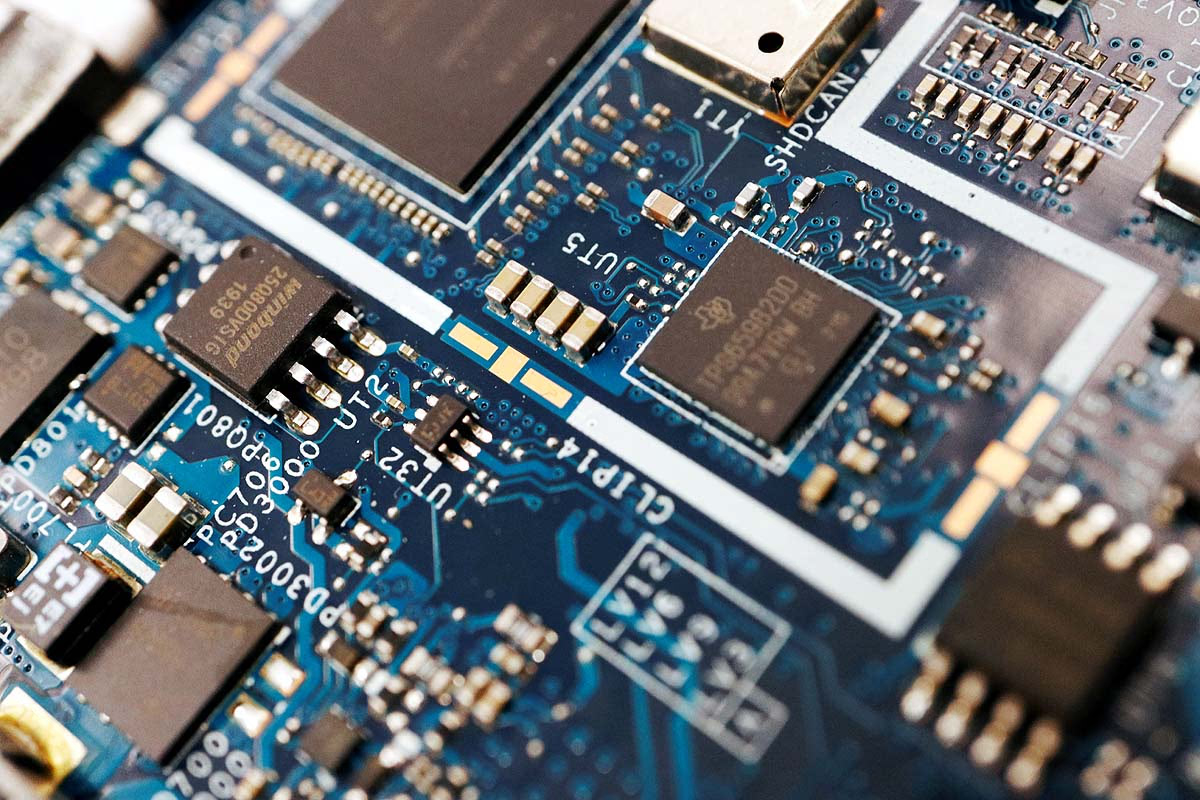
Source: aajtak
While China's machine is still raw compared to ASML, particularly in precision optics (lacking mastery like Germany’s Carl Zeiss), the government's target is to produce chips by 2028, with experts suggesting 2030 is more realistic. Even so, this is years ahead of Western projections.
Since 2018, the US has pressured the Netherlands not to sell ASML's EUV machines to China. None have been sold to date. This breakthrough challenges US restrictions. ASML claims their technology isn't easy to replicate, though they remain vigilant.